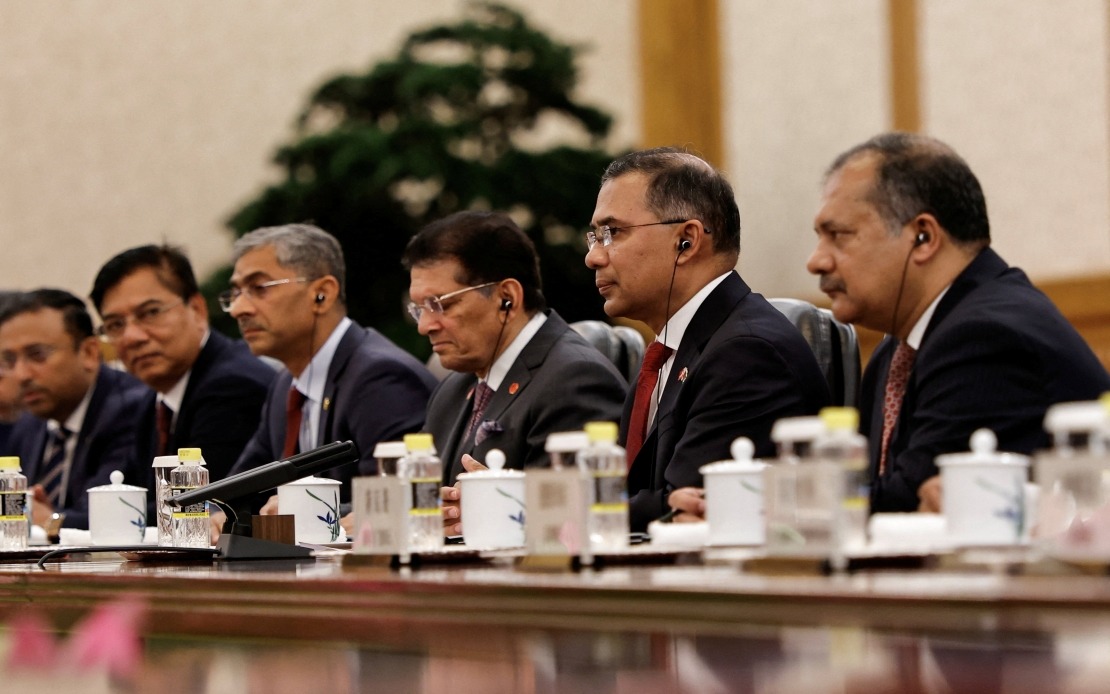
Bangladesh is positioning itself as an increasingly attractive investment destination in South Asia, with twelve Chinese firms committing to US$9.2 billion in capital projects across multiple economic sectors. The pledges emerged following Prime Minister Tarique Rahman's official visit to China from June 22 to 26, underscoring deepening commercial ties between the two nations at a time when both are pursuing strategic economic integration within Asia.
The scale of these proposed investments reflects a calculated strategy by Bangladesh to leverage Chinese capital and technological expertise in addressing infrastructure gaps and expanding manufacturing capacity. Energy generation, port modernisation, highway development, and industrial zones feature prominently among the projects, signalling Chinese appetite for long-term presence in Bangladesh's evolving economy. For policymakers in the region, the investment wave demonstrates how geopolitical positioning can translate into tangible economic benefits, particularly when nations cultivate relationships with major powers seeking expansion opportunities beyond their borders.
The joint communiqué released at the conclusion of Rahman's Beijing visit emphasised collaboration across trade, e-commerce, industrial development, and supply-chain integration. This rhetorical framework positions the investment programme within a broader partnership architecture, suggesting that individual projects are components of a larger reshaping of Bangladesh-China economic relations. The emphasis on upgrading export capacity carries particular relevance for Southeast Asian economies like Malaysia, which compete in similar manufacturing and logistics sectors and must contend with regional supply-chain reconfiguration driven by Chinese investment flows.
Port development emerges as a cornerstone of the partnership, with Mongla Port receiving particular attention. China Civil Engineering Construction Corporation has committed US$650 million to develop and operate an economic zone adjacent to the port, encompassing warehousing and logistics infrastructure designed to facilitate regional trade. This mirrors Chinese strategies elsewhere in Asia, where controlling or managing critical maritime facilities provides commercial and strategic advantages. Bangladesh's agreement to jointly modernise Mongla Port represents a significant shift in the port's operational future and reflects Beijing's continued investment in Indian Ocean infrastructure.
Highway infrastructure constitutes the largest single investment commitment in the package. Sichuan Road and Bridge Group's US$4.5 billion proposal to upgrade the Dhaka-Chattogram corridor through public-private partnership addresses a critical transport bottleneck constraining Bangladesh's internal trade and manufacturing competitiveness. The route connects the capital to Bangladesh's primary port city, making it essential for moving goods to international markets. Similar infrastructure projects across Southeast Asia demonstrate how Chinese firms have become major operators of regional transport networks, positioning Beijing to influence trade patterns and economic geography.
Energy sector investments reflect global trends toward diversified power generation and environmental remediation. Shanghai SUS Environment Company's US$890 million waste-to-energy initiative addresses Bangladesh's solid waste management challenges while generating electricity, a dual benefit appealing to developing economies facing environmental pressures and energy shortages simultaneously. China Future Energy Group's US$250 million gas exploration project taps Bangladesh's hydrocarbon resources, while Huaxin Textile's 200 megawatt solar facility in the Payra economic zone exemplifies the integration of renewable energy into industrial zones—a model gaining traction across Asia as manufacturing bases increasingly prioritise sustainable power sources.
The proposed industrial parks, particularly the Chinese manufacturing hub planned for Chattogram and the Payra Port Industrial Zone projects, extend Chinese economic footprint into Bangladesh's industrial fabric. Zhongxin Environmental Protection Group's US$1.65 billion electronic waste recycling project addresses critical environmental challenges associated with Asia's rapid consumption growth, transforming waste streams into revenue sources. Huaxin Textile's battery manufacturing and recycled fibre operations embed Bangladesh within Chinese-centred supply chains for emerging technologies and circular economy sectors, securing Bangladesh's participation in industries expected to dominate regional trade through the coming decade.
Logistics and cold-chain infrastructure investments, including SF Express's US$180 million warehouse and cold-storage facility at Mongla, align Bangladesh with modernised distribution networks serving South Asian consumer markets. Bangladesh's geographic position between South and Southeast Asia, combined with its lower labour costs compared to developed economies, makes it an attractive location for transhipment and distribution operations. These investments effectively integrate Bangladesh into logistics networks that will service regional demand across multiple countries, potentially enhancing its role as a transit hub.
Bangladesh Commerce Minister Khandakar Abdul Muktadir framed the investment package as a mechanism for addressing the nation's longstanding trade deficit with China, a structural imbalance that has constrained Bangladesh's overall trade position. By attracting Chinese capital into export-oriented manufacturing and logistics sectors, Bangladesh aims to reverse this asymmetry through producing goods for re-export and capturing value-added services. This approach carries lessons for other South and Southeast Asian nations managing similar trade deficits with Beijing and seeking strategies beyond tariff adjustments to rebalance bilateral relationships.
The employment dimensions of these investments warrant particular attention for neighbouring Malaysia and regional economies. The pledged projects are expected to generate tens of thousands of jobs across construction, operations, and manufacturing, absorbing significant labour cohorts and building technical expertise within Bangladesh's workforce. This labour absorption capacity, coupled with wage levels substantially lower than Malaysia's, may accelerate Bangladesh's competitive positioning for labour-intensive manufacturing segments, potentially reshaping regional specialisation patterns.
The timing of these commitments, during a period of geopolitical realignment and supply-chain reconfiguration following global trade disruptions, reflects both Chinese strategic priorities and Bangladesh's receptiveness to deepening economic integration. Unlike developed nations increasingly scrutinising foreign investment, Bangladesh welcomes capital inflows with relatively minimal constraints, providing Beijing with receptive partners for expanding its economic footprint. This asymmetry in investment frameworks across Asia shapes how regional economies compete for capital and defines the architecture of future supply networks.
For Malaysia and other regional players, the Bangladesh investment wave signals intensifying Chinese economic engagement across South Asia and the Indian Ocean littoral. The scale, sectoral breadth, and infrastructure focus of these commitments indicate sustained Chinese interest in reshaping South Asian economic geography through direct investment. Understanding these flows, their employment implications, and their effects on regional trade patterns remains essential for Southeast Asian policymakers navigating an increasingly complex landscape of competing regional powers and cross-border capital movements.

