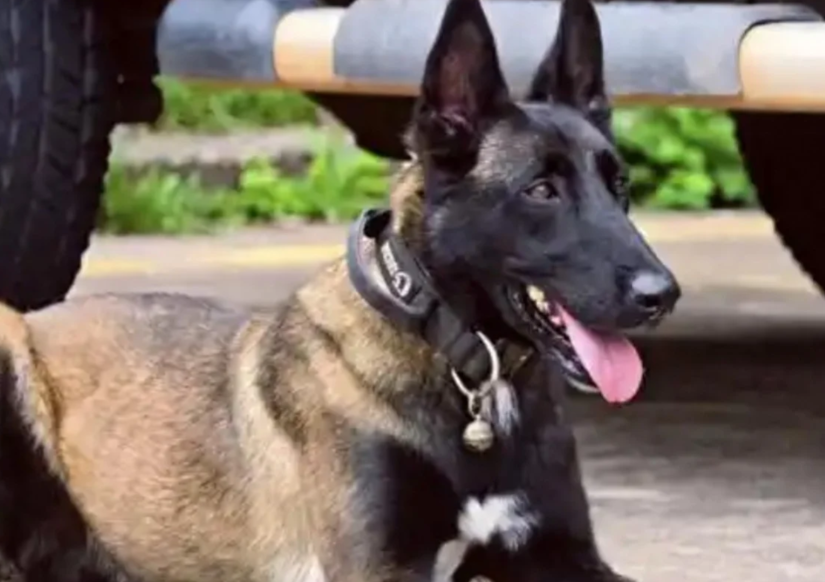
A four-year-old German shepherd named Bulu has become an unlikely sensation across Chinese social media, capturing public affection through an extraordinary display of loyalty that lasted half a year. The narcotics detection dog's refusal to eat or drink whilst separated from its handler, a Yunnan police officer known by the alias Awei, resonated deeply with millions of viewers when footage of their reunion finally emerged online, generating more than 10 million views and nearly 600,000 likes.
The story began in November of the previous year when Awei and Bulu, stationed in Chuxiong in Yunnan province, were dispatched to conduct a raid on an abandoned building suspected of harbouring drug-related suspects. As Bulu detected signs of fleeing individuals, the dog surged ahead into the shadowy corridors filled with debris, with Awei moving swiftly behind. The partnership between handler and dog, honed through specialised training in complex operational environments, appeared to be functioning as intended during those initial moments of pursuit.
Then came the accident that would test their bond. In the darkness and confusion of the chase through the cluttered passageway, Awei lost his footing and plummeted from a second-storey height. First responders discovered him in grave condition, convulsing and vomiting blood whilst drifting in and out of consciousness. Body camera footage from the scene captured an officer's desperate encouragement: "Hold on. We still have battles to fight together." Throughout this ordeal, Bulu remained at Awei's side, circling anxiously and nuzzling his injured handler in frantic attempts to rouse him.
Medical intervention came quickly, but the severity of Awei's injuries—multiple fractures to both head and chest—meant he slipped into a coma upon arrival at hospital. For five long days, he remained unconscious whilst his body fought to heal. Back at the police training base where Bulu was kept during his handler's recovery, the dog's behaviour underwent a marked transformation. The animated working dog became withdrawn and restless, abandoning its normal feeding patterns. Colleagues who oversaw Bulu's care observed that he consumed minimal food and water, a concerning development for an animal accustomed to regular meals and active duties.
What made Bulu's behaviour particularly poignant was his persistent search for Awei across the training facility. Surveillance cameras documented the dog making repeated circuits through locations where he might encounter his handler—the dormitory quarters, the base entrance, and the familiar training routes they had traversed together. On one occasion, Bulu's excitement erupted when a police vehicle returned to the base, and the dog rushed towards it in recognition of a potential reunion, only to have his hopes dashed when informed that Awei was not among those inside.
The separation stretched across approximately six months, a substantial portion of time in a working dog's life. During this extended period, the operation that had led to Awei's injury continued without pause. In a demonstration of investigative persistence, Awei's colleagues successfully apprehended 11 suspects connected to the case whilst simultaneously recovering 4.4 kilogrammes of narcotics and more than 500,000 yuan—equivalent to roughly US$75,000—in illicit financial assets. The completion of this operation represented a significant victory for the Yunnan police, even as personal tragedy had befallen one of their officers.
When Awei finally returned to active duty, authorities arranged for Bulu to be brought forward for the long-awaited reunion. The moment proved as emotionally charged as observers might have anticipated. Upon seeing his handler, Bulu barked and sprinted towards him with unbridled enthusiasm. Awei, dropping his luggage immediately, knelt to embrace his dog. This scene of reunion, captured on video, transmitted across China's social media ecosystem and struck a nerve with viewers who recognised in it a profound illustration of inter-species connection and mutual devotion.
The viral moment has inadvertently shone a spotlight on the broader role of canines within China's law enforcement framework. According to figures released by CCTV News, the nation maintained more than 29,000 active police dogs as of 2024, representing a substantial force of four-legged officers deployed across various law enforcement agencies. These animals represent significant investments in training and specialisation, with typical service careers spanning approximately eight years. However, the demanding nature of their work—particularly when assignments involve sustained high-intensity operations—exacts a physical toll, with many police dogs developing joint and spinal complications over the course of their service.
The question of what happens when these dedicated animals reach retirement age reflects broader values within Chinese policing. Most police dogs complete their careers within the same units where they served, remaining under the care of their original handlers, a continuity that acknowledges the bonds forged through years of partnership. In certain instances, retired police dogs become available for public adoption, transitioning from their law enforcement roles into civilian households where they may enjoy more leisurely existences.
Online commentary surrounding Bulu's story has emphasised the emotional and philosophical dimensions of human-animal partnerships. One notable response expressed: "What Bulu was waiting for was not just its handler, but a comrade-in-arms. I am deeply moved by the bond between humans and animals." Such observations highlight how Bulu's unwavering loyalty and visible distress during separation challenged perhaps more sentimental or romanticised notions of animal devotion, instead presenting a portrait of genuine psychological connection and mutual dependence that transcends species boundaries.
For Malaysian and Southeast Asian observers, the story offers resonance on multiple levels. The region's own law enforcement agencies employ working dogs extensively, and such narratives illuminate the profound relationships that develop between handlers and their canine partners. The incident also underscores the operational risks faced by frontline police personnel across the region, as narcotics interdiction operations remain a persistent priority throughout Southeast Asia. Beyond these practical dimensions, however, Bulu's story has tapped into a more universal recognition of loyalty and fidelity—values that carry particular cultural significance in Asian societies where such qualities have long been celebrated in human relationships and increasingly extended to our connections with animals.

