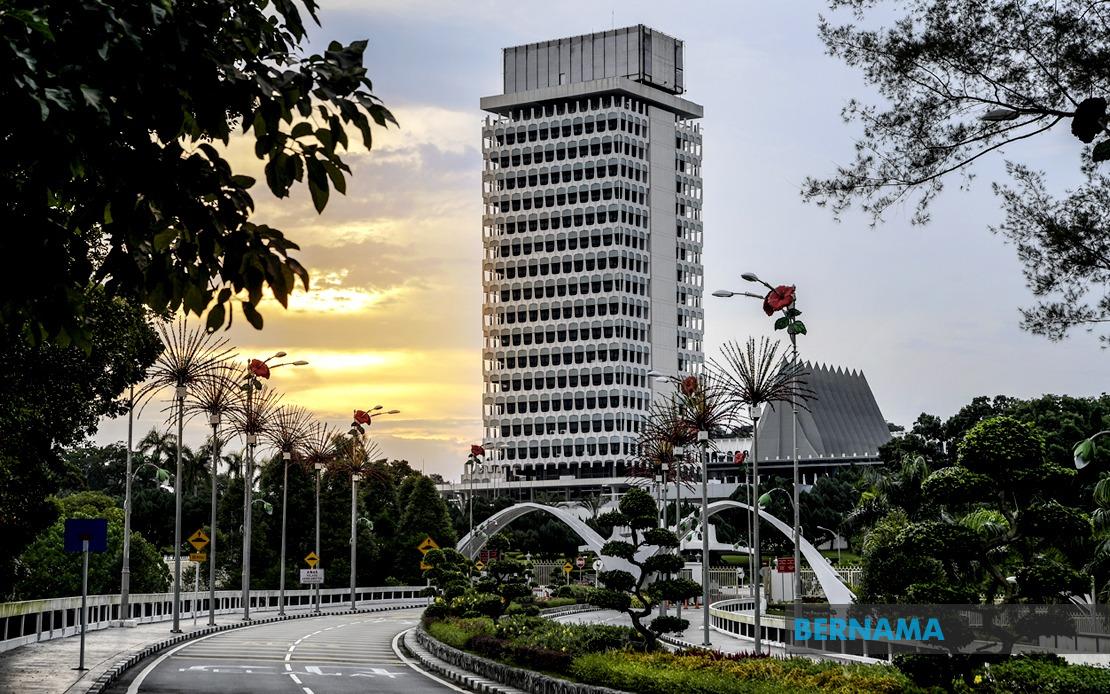
A broad coalition of Malaysian civil society groups has issued a unified call for the 15th Parliament to remain in session through its constitutional expiry on December 18, 2027, positioning political stability as a prerequisite for meaningful institutional reform. The statement, released on August 12, comes from 44 registered non-governmental organisations and 25 individual signatories, collectively arguing that premature parliamentary dissolution would undermine efforts to rebuild democratic foundations and improve governance standards across federal and state administrations. The coordinating organisations include the Centre to Combat Corruption and Cronyism, the Coalition for Clean and Fair Elections, the Institute for Democracy and Economic Affairs, and several other prominent advocacy groups, signalling broad consensus among Malaysia's reform-minded constituencies.
Central to the coalition's position is the contention that Malaysia's democratic architecture requires substantial structural overhaul that cannot be accomplished within compressed political timelines. The groups propose a sweeping agenda encompassing constitutional amendments, new legislation, and procedural reforms that would fundamentally reshape how parliament functions and how power is distributed across Malaysia's multilevel governance system. Rather than viewing these reforms as the preserve of any single political coalition, the civil society organisations frame democratic strengthening as a public good that transcends partisan interest, potentially benefiting any government that inherits improved institutions and more transparent processes.
The proposed constitutional amendments target the concentration of executive authority, most notably through a proposal to impose a ten-year tenure limit on prime ministerial office. Additionally, the organisations call for separating the historically combined roles of Attorney General and Public Prosecutor, a structural change intended to insulate prosecutorial decisions from political influence and strengthen the independence of the justice system. These proposals directly address concerns that have animated Malaysian political discourse for years, particularly following the 1Malaysia Development Berhad scandal and subsequent governance crises that exposed vulnerabilities in institutional checks on executive power.
Beyond constitutional matters, the coalition advocates enacting new legislation to establish an Ombudsman office and guarantee freedom of information, both mechanisms aimed at increasing governmental transparency and creating formal channels for citizen oversight. The proposed Ombudsman Act would provide a dedicated institution for investigating complaints against government bodies, while freedom of information legislation would compel public agencies to disclose records unless specific exemptions apply, shifting the default presumption from secrecy to transparency. These mechanisms have long been considered standard elements of democratic governance in comparable countries, and their absence in Malaysia has been repeatedly cited by international governance assessments as a significant institutional gap.
The civil society statement also addresses electoral architecture and parliamentary procedure, arguing that strengthening parliamentary committees and streamlining budget deliberation processes would enhance legislative effectiveness and accountability. The organisations propose enabling private members' bills to be tabled, debated, and passed more readily, provisions that would expand individual legislators' capacity to initiate policy change independently of cabinet direction. At the state level, they recommend transitioning from first-past-the-post electoral systems to party-list proportional representation for state assemblies, a structural change that would likely increase representation for underrepresented groups including women, youth, indigenous Orang Asli communities, and ethnic minorities currently marginalised by Malaysia's winner-take-all electoral dynamics.
The coalition specifically targets the political problem of development allocations flowing disproportionately to government-aligned legislators while opposition representatives receive minimal constituency funds. Proposed legislation would mandate equitable distribution of member development allocations regardless of political party affiliation, addressing a long-standing source of voter frustration and accusations of discriminatory governance. This recommendation extends to state governments, which the organisations urge to enact parallel legislation ensuring transparent and fair allocation of assemblymen's development funds across all political denominations, effectively preventing the weaponisation of public resources as political reward mechanisms.
The statement explicitly calls upon Prime Minister Datuk Seri Anwar Ibrahim to convene a cross-party leaders' summit encompassing all parliamentary coalitions to formulate a unified agenda for the remainder of the parliamentary term. This framing moves the reform initiative beyond civil society advocacy into the realm of elite political negotiation, placing responsibility squarely on political leadership to construct consensus around democratic renewal. The logic suggests that such consensus, once achieved, would provide insulation for unpopular reforms that opposition parties might otherwise exploit for political advantage, while simultaneously establishing precedent for bipartisan governance on issues transcending ordinary partisan competition.
The coalition's emphasis on voting procedures and electoral accessibility reflects recognition that Malaysia's diaspora and geographically dispersed population faces practical barriers to participation. Recommendations include expanding postal and absentee voting options for overseas Malaysians and those unable to travel to constituency polling stations, modifications that would likely increase overall participation rates while reducing pressure on physical voting infrastructure. These procedural modifications align with international best practices in democratic countries managing geographically dispersed electorates and could significantly impact electoral outcomes given Malaysia's substantial diaspora population.
The organisational breadth underlying this joint statement proves politically significant, spanning religious organisations including Angkatan Belia Islam Malaysia and Pertubuhan IKRAM Malaysia, anti-corruption advocates such as C4 Center, democratic process monitors like Bersih, and economic policy organisations including IDEAS. This coalition construction suggests that democratic reform has transcended narrow activist circles and achieved buy-in among establishment-oriented organisations that traditionally occupy middle ground between government and opposition. The joint statement therefore carries implicit endorsement from multiple institutional constituencies that government officials would typically deem legitimate interlocutors rather than ideological opponents.
The call for advance notice of parliamentary dissolution dates represents a procedural safeguard intended to prevent surprise elections and allow relevant institutions, including the Election Commission, police, and civil service, adequate preparation time. This recommendation acknowledges how emergency parliamentary dissolutions have historically compressed campaign periods, advantaged incumbent governments with superior organisational resources, and compromised election administration capacity. By institutionalising advance notice requirements, the coalition seeks to level the political playing field and reduce governmental capacity to exploit dissolution timing for electoral advantage.
For Malaysian readers and Southeast Asian observers, the statement illuminates ongoing tensions between democratic deepening and political stability in a region where competitive authoritarianism and institutional decay present persistent governance challenges. The civil society perspective essentially argues that short-term political certainty should be subordinated to longer-term institutional strengthening that would benefit all future governments and constrain arbitrary executive action regardless of which coalition holds power. This framing positions democratic reform less as partisan preference and more as collective investment in governance infrastructure, an argument that has gained rhetorical prominence in Malaysian discourse as earlier reform campaigns gradually normalised democracy-strengthening vocabulary among mainstream constituencies.
The success of this coalition's advocacy depends substantially on whether political elites perceive democratic deepening as genuinely beneficial rather than as constraining their discretionary power. The statement's emphasis on cross-party consultation and mutual benefit suggests civil society organisations understand that unilateral pressure proves insufficient and that political leaders require incentives beyond moral suasion to embrace structural constraints on executive authority. Whether Prime Minister Anwar Ibrahim and opposition leaders prove willing to translate these proposals into legislation over the next three years will substantially shape Malaysia's institutional trajectory and potentially influence democratic trajectories across Southeast Asia, where Malaysia's larger relative institutional capacity makes its governance experiments regionally consequential.

