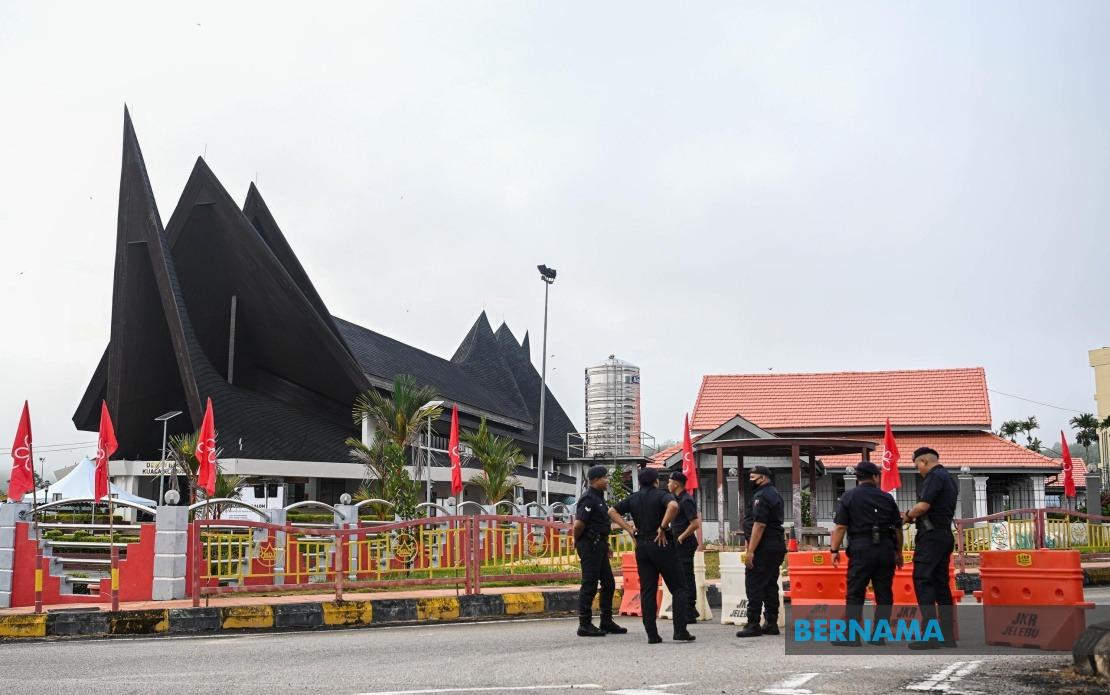
The nomination phase for Negeri Sembilan's 16th state election commenced this morning under ideal weather conditions, marking a critical juncture in the electoral calendar as political parties formally registered their candidates across eight designated nomination centres throughout the state. The Election Commission had orchestrated meticulous preparations to facilitate the one-hour window beginning at 9 am, with officials positioned to process candidate registrations efficiently and transparently. This procedural milestone represents the formal crystallisation of party strategies that had been developing over the preceding weeks, transforming campaign speculation into concrete electoral contests.
The nomination grounds attracted intense scrutiny from the outset, with media representatives establishing positions well before the official start time to capture the unfolding political drama. Simultaneously, party supporters materialised at the venues to demonstrate enthusiasm for their respective candidates, transforming the nomination centres into visible expressions of grassroots engagement. The convergence of these stakeholders underscored the electoral process's broader significance within the state's political landscape and the communities it serves.
Negeri Sembilan's electoral contest involves unprecedented complexity in candidate distribution across competing coalitions and independent entities. Pakatan Harapan's decision to field candidates in all 36 seats positions the coalition as the most ambitious contender, reflecting confidence in its organisational capacity and electoral prospects. By contrast, Barisan Nasional has opted for a more selective approach, contesting 25 seats, while Perikatan Nasional targets 11 constituencies. This differentiated strategy suggests calculated assessments by each coalition regarding viable battlegrounds and resource allocation across the state's diverse electoral geography.
The fragmenting nature of Malaysian electoral competition manifests vividly in the 16th Negeri Sembilan contest through the participation of smaller parties and independent formations. Parti Pribumi Bersatu Malaysia's entry as a solo contender, fielding 24 candidates through its own ticket and two additional candidates via Parti Bersepakat Hak Rakyat Malaysia using the Bersatu logo, illustrates the ongoing reconfiguration of Malaysia's political architecture. Meanwhile, three additional parties—Parti Orang Asli Malaysia, Parti Sosialis Malaysia, and Parti Barisan Jemaah Islamiah Se-Malaysia—each nominated single candidates, contributing to a ballot that will reflect the multiplicity of political voices competing for electoral legitimacy.
The electoral franchise encompasses substantial demographic diversity, with 889,490 eligible voters distributed across three distinct categories. The overwhelming majority comprises 867,151 ordinary voters, representing the traditional civilian electorate. However, the inclusion of 16,884 military personnel and their spouses, alongside 5,455 police personnel, introduces constituencies with potentially distinctive voting patterns influenced by their institutional affiliations and professional concerns. This demographic composition reflects Malaysia's federal structure and the integration of security forces into civilian electoral processes.
Historical context provides crucial interpretative frameworks for understanding the current contest's trajectory and competitive dynamics. The 15th state election in 2023 established a baseline from which parties are now calculating electoral prospects and adjusting strategies. Pakatan Harapan's 17-seat majority in the previous contest positioned it as the incumbent administration, a status carrying both advantages in resource deployment and vulnerabilities to anti-incumbent sentiment. Barisan Nasional's 14-seat representation maintains its traditional role as a substantial opposition force, while Perikatan Nasional's five-seat presence suggests space for potential electoral expansion in the current cycle.
The institutional calendar structures the political timeline with precision, establishing clear temporal anchors for campaign activities and voter preparation. The Election Commission's scheduling of July 28 for early voting accommodates voters with mobility constraints or professional obligations preventing standard polling day participation. The August 1 polling day itself arrives after an extended nomination-to-election interval, providing ample time for campaigning, candidate exposure, and voter deliberation. This extended timeline contrasts with global electoral practices and reflects Malaysia's constitutional and administrative frameworks governing state-level contests.
The geographic distribution of nomination centres across Negeri Sembilan's territory ensures logistical accessibility for candidates and party officials, reducing barriers to participation and enabling systematic candidate registration. This decentralised approach acknowledges the state's spatial diversity and accommodates the practical realities of candidate travel, party coordination, and administrative processing. The eight-centre infrastructure represents institutional investment in facilitating inclusive participation within formally structured procedures.
For Malaysian observers and Southeast Asian analysts, the Negeri Sembilan election illuminates broader patterns of political competition and coalition formation within Malaysia's federal democracy. The contest's outcome will inform assessments of voter preferences, coalition viability, and the sustainability of Malaysia's multiparty political system. Regional implications extend to understanding how Malaysian political development influences democratic practices across Southeast Asia and the dynamics of electoral competition in diverse, multicommunal societies navigating democracy's institutional requirements and citizen participation imperatives.

