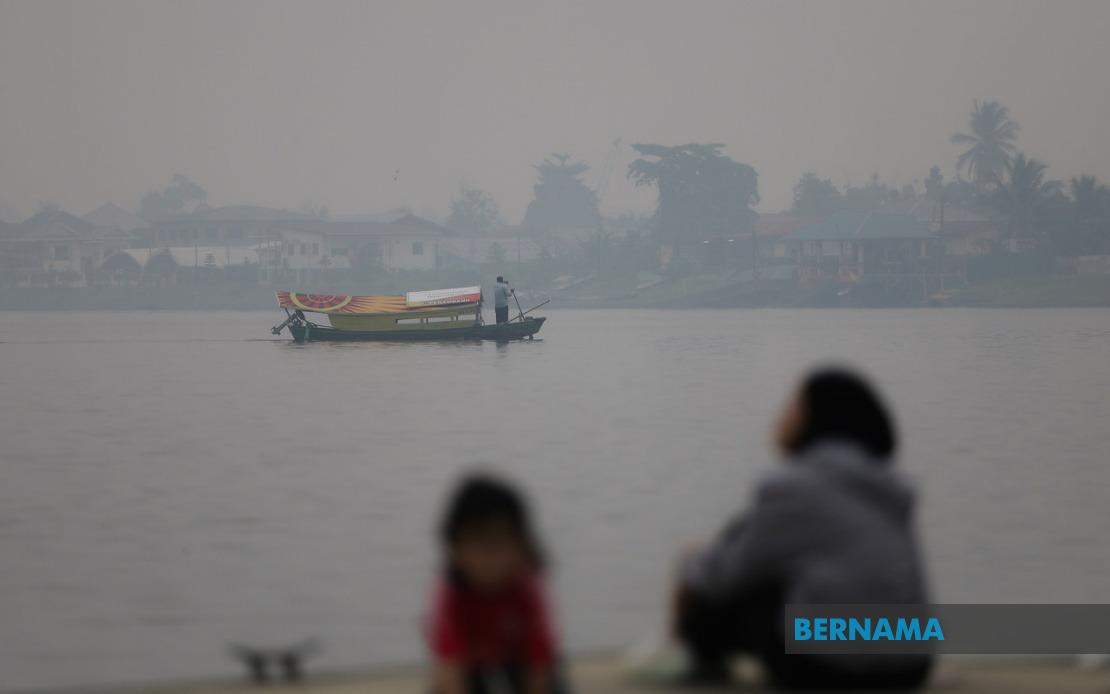
Cloud seeding operations have been mobilised across Malaysia to address the dual crisis of poor air quality and falling water levels at critical reservoirs during an extended dry spell. Deputy Prime Minister Datuk Seri Dr Ahmad Zahid Hamidi announced that the initiative is being executed through a collaborative framework involving the Malaysian Meteorological Department and the Royal Malaysian Air Force, reflecting the scale and coordination required to manage the environmental emergency.
The strategic focus of the programme centres on geographical areas where the Air Pollutant Index has climbed above 150, indicating unhealthy to hazardous pollution levels that pose risks to public health. Simultaneously, operations are being prioritised in regions where dam water supplies have fallen to concerning levels, a dual-targeting approach that acknowledges Malaysia's vulnerability to prolonged dry seasons. The Deputy Prime Minister emphasised that these interventions are essential safeguards against potential disruptions to water supply systems nationwide, particularly acute during the current period of unusually warm weather.
Cloud seeding technology operates on principles of atmospheric science, requiring favourable meteorological conditions to be effective. As Ahmad Zahid explained to journalists, the process cannot succeed through technology alone; operators must continuously monitor cloud formations and track their directional movement to determine whether precipitation will reach the intended areas. The complexity of cloud seeding means that even when atmospheric moisture is present, success depends on precise timing and spatial accuracy—factors beyond human control that mandate constant assessment and adaptation of operational plans.
Operations commenced in Putrajaya on the day of the announcement, with planned expansions into three strategically important states. Sarawak, Kedah, and Perlis were scheduled to receive intensive cloud seeding operations beginning September 3 and extending through September 5, suggesting that these regions face particular pressure from both air quality deterioration and water resource depletion. The concentration of efforts in these areas indicates governmental assessment that they represent priority zones where intervention could yield meaningful results for public welfare.
The situation in Sarawak exemplifies the severity of the haze crisis affecting East Malaysia. Data from the Department of Environment's Air Pollutant Index Management System portal revealed that three locations had breached hazardous thresholds by midday. The Serian Police headquarters monitoring station recorded an API reading of 412—well into the hazardous category where outdoor activities are deemed unsafe for the general population and sensitive groups face acute health risks. Samarahan followed with a reading of 332, still in the hazardous range, while Kuching registered 304, crossing into very unhealthy territory.
Additionally, Sri Aman recorded a very unhealthy API reading of 228, further demonstrating that air quality degradation was affecting multiple population centres across the state simultaneously. Such widespread pollution affects not only residents' daily activities but also has implications for the economy—visibility reductions impact transportation safety, outdoor sectors experience reduced productivity, and tourism declines as both domestic and international visitors avoid hazardous conditions.
The simultaneous challenge of water scarcity adds economic and social urgency to the cloud seeding initiative. Malaysia's hydroelectric generation capacity and domestic water supply infrastructure depend heavily on reliable precipitation and reservoir replenishment. When dam levels fall during extended dry periods, authorities must implement water restrictions that disrupt agricultural operations, industrial processes, and residential consumption. In states like Sarawak, Kedah, and Perlis, where terrain and climate make water storage strategically important, the interplay between haze events and drought conditions creates compounded pressure on resource management systems.
The coordination between METMalaysia and RMAF represents a sophisticated approach to weather intervention that pools meteorological expertise with aerial capability. The Air Force's logistics and aircraft infrastructure enable rapid deployment of cloud seeding agents to targeted zones, while the meteorological department provides real-time atmospheric analysis essential for operational effectiveness. This institutional cooperation demonstrates how Malaysian government agencies address complex environmental challenges through integrated responses rather than isolated sectoral interventions.
Contextualising these developments within broader Southeast Asian weather patterns reveals that Malaysia shares transboundary air quality challenges with neighbouring states. Haze events frequently originate from agricultural burning in neighbouring regions or result from meteorological circulation patterns affecting the entire subregion. Cloud seeding represents one component of Malaysia's adaptive strategy, supplementing diplomatic efforts to reduce transboundary pollution and long-term planning to diversify water resources and strengthen environmental monitoring systems.
For Malaysian residents and policymakers, the intensity of operations underway signals official recognition that current conditions exceed normal seasonal variation. The targeting of areas above API 150 acknowledges that beyond this threshold, public health impacts become measurable and restrictions on outdoor activities become necessary considerations for vulnerable populations including children, elderly citizens, and those with respiratory conditions. The simultaneous focus on dam management reflects awareness that water security cannot be taken for granted and that forward-looking resource planning must account for increasingly variable precipitation patterns.
The announcement of cloud seeding timelines and geographic scope serves multiple purposes beyond immediate operational objectives. It communicates to affected populations that authorities are taking visible action, demonstrates coordination between government institutions, and establishes measurable targets against which environmental outcomes can be assessed. Whether cloud seeding ultimately succeeds in generating meaningful precipitation will depend on meteorological factors beyond human control, but the initiative demonstrates governmental commitment to mobilising available tools when environmental circumstances threaten public welfare.

