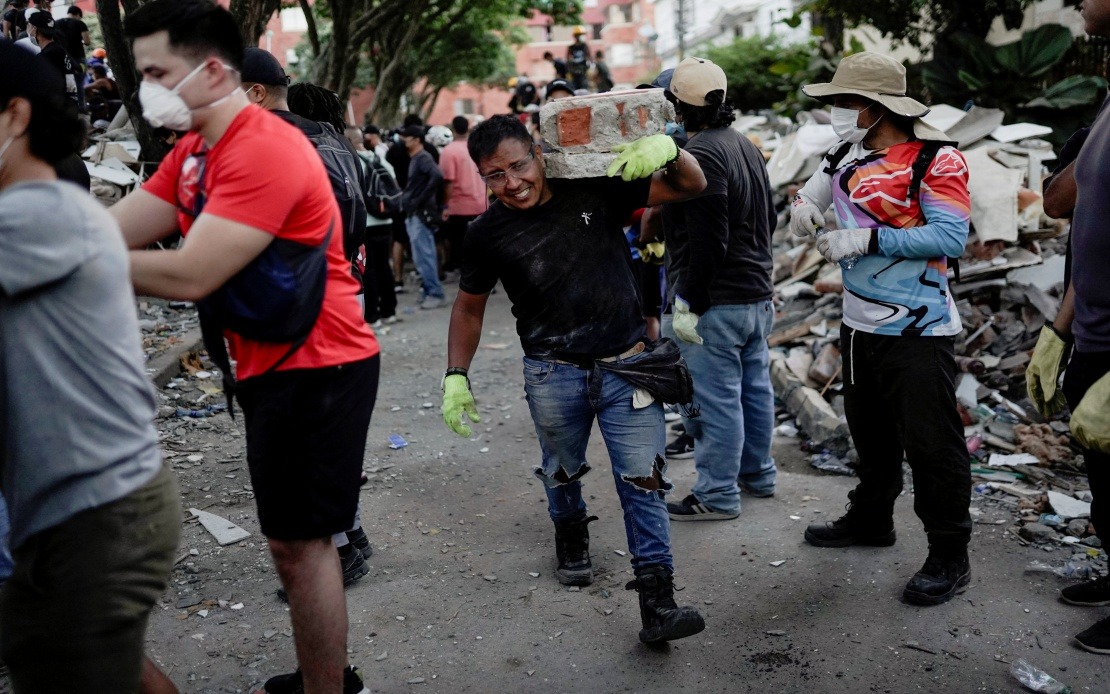
Colombia is grappling with the aftermath of a devastating magnitude 7.4 earthquake that struck its western region, with authorities now confirming at least 234 fatalities across affected capital cities and the injury toll surpassing 1,310. The Colombian Association of Capital Cities, reporting through international news agencies, indicates that 153 building structures have completely or partially collapsed in the cities hardest hit by the tremor, with ongoing search and rescue operations still uncovering victims in the rubble.
The geographic distribution of casualties reveals stark disparities in impact across the disaster zone. Cali emerged as the epicentre of human loss, accounting for 95 deaths according to the latest tallies, while the neighbouring city of Pereira recorded 90 fatalities. Smaller municipalities including Quibdo and Manizales reported additional casualties, reflecting the earthquake's wide-reaching destructive capacity across an extensive region. The variation in death rates across cities reflects differences in building construction standards, population density in affected areas, and the proximity of each municipality to the epicentre.
Cali, as the largest affected urban centre, has become the coordinating hub for the national emergency response. Authorities there have successfully rescued 86 individuals from collapsed structures, though preliminary estimates suggest 239 people remain trapped beneath debris. The city's damage assessment has documented 95 confirmed deaths, 949 individuals injured, and the structural failure or partial collapse of 45 buildings, with an additional 93 structures sustaining significant damage. These numbers underscore the scale of infrastructure destruction concentrated in what has become Colombia's primary disaster zone.
The municipality of Quibdo, though registering fewer deaths with nine confirmed, has suffered widespread damage extending beyond residential areas. The earthquake's impact there encompasses educational facilities, health infrastructure, and critical transportation assets, including damage to the Technological University of Choco and the city's airport. Such broader infrastructure damage multiplies the disaster's long-term economic consequences, potentially impairing the region's capacity to deliver basic services during recovery.
The earthquake's physical parameters, as recorded by the United States Geological Survey, place it among significant seismic events. The tremor occurred at 7:34 am local time, with its epicentre positioned approximately five kilometres east of San Jose del Palmar in Choco Department. The relatively deep origin point at 107 kilometres below the surface suggests the earthquake resulted from complex subduction zone mechanics in this tectonically active region. A substantial magnitude 5.0 aftershock followed just 44 minutes later, further destabilizing structures already weakened by the initial shock and complicating rescue efforts.
Transportation infrastructure across the affected region has suffered considerable disruption, though authorities have begun restoring limited capacity. Airports in Cali, Quibdo, and Armenia have resumed operations following temporary closures, while runways at Pereira, Buenaventura, Cartago, and Manizales are being prepared to accommodate humanitarian and state aircraft, though commercial aviation remains suspended. This transportation bottleneck threatens to slow the delivery of emergency supplies and medical assistance to isolated communities in the mountainous terrain.
Colombian President Abelardo De La Espriella has undertaken urgent site visits to affected regions, arriving in Pereira to coordinate with local officials including Mayor Mauricio Salazar at the established Unified Command Post, with plans to travel onward to Manizales. These presidential movements signal the government's prioritization of the crisis and its commitment to direct oversight of response operations. Finance Minister Miguel Gomez has meanwhile informed lawmakers of the government's intention to declare an economic emergency, a formal mechanism intended to mobilize additional resources and expedite reconstruction funding.
The Colombian government has formally declared a national disaster situation, a critical administrative step that unlocks constitutional provisions allowing rapid mobilization of military resources, suspension of bureaucratic procedures, and access to emergency funds previously allocated for other purposes. This declaration streamlines coordination between federal, departmental, and municipal authorities, enabling the kind of unified command structure now operational in Cali. The Colombian Association of Capital Cities is actively engaged in identifying critical needs across municipalities and facilitating resource distribution to maximize response effectiveness.
International attention and support have materialized swiftly. United Nations Secretary-General António Guterres expressed formal solidarity with the Colombian people, acknowledging the scale of destruction evident in collapsed homes and damaged infrastructure. The UN's coordination apparatus is actively engaging with Colombian authorities to supplement national emergency response capacity with international expertise and resources. Such global humanitarian involvement reflects both the earthquake's significance and the international community's commitment to assisting nations confronting sudden-onset disasters.
For Malaysian observers and Southeast Asian readers, this Colombian earthquake presents instructive lessons regarding disaster preparedness in seismically active zones and rapid emergency response coordination. The Philippines, Indonesia, and Malaysia all occupy tectonically sensitive regions where similar magnitude earthquakes remain probable. Colombia's experience demonstrates both the catastrophic human toll of inadequately engineered structures in earthquake zones and the necessity of pre-positioned emergency response frameworks. The emphasis on declaring formal disaster statuses and establishing unified command structures reflects international best practices that regional governments might examine when strengthening their own disaster management protocols.
The ongoing nature of recovery operations suggests casualty figures may yet rise as rescue teams penetrate deeper into collapsed structures and conduct systematic searches across affected municipalities. Structural safety assessments remain incomplete, with authorities urging residents to avoid damaged buildings pending professional evaluation. The interaction of initial seismic shock, significant aftershock activity, and widespread structural damage creates a complex emergency environment requiring sustained coordination and resource mobilization beyond the immediate rescue phase.

