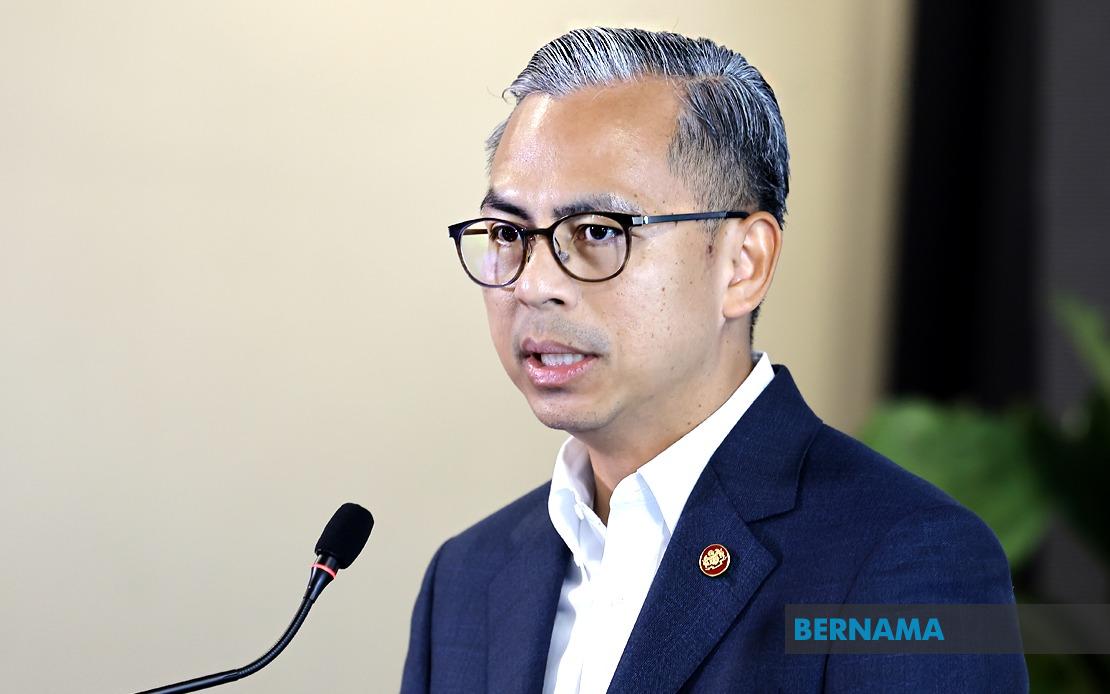
Communications Minister Datuk Fahmi Fadzil has been named the principal recipient among 1,221 individuals set to receive honours, awards and medals from the Penang State Government. The conferment forms part of celebrations marking the 85th birthday of Penang Governor Tun Ramli Ngah Talib, with the investiture ceremony scheduled to begin tomorrow and continue through July 13 to 15. Fahmi, who also serves as the Unity Government's official spokesperson, stands alone as the singular recipient of the highest individual honour in this year's allocation.
The honours system reflects Malaysia's well-established hierarchy of state recognition, with Fahmi receiving the Darjah Panglima Pangkuan Negeri (DPPN), a distinction that carries the prestigious title Datuk Seri. This elevated award places him among the nation's most distinguished recipients of state-level honours. The appointment underscores his dual prominence as both a high-ranking federal minister and a public-facing representative of the coalition government, highlighting the interconnectedness between federal and state-level political recognition.
A broader tier of recognition extends to 19 individuals who will receive the Darjah Gemilang Pangkuan Negeri (DGPN), which similarly confers the Datuk Seri designation. The recipients in this category span diverse sectors of Malaysian public and corporate life. Chief Judge of Malaya Datuk Seri Hashim Hamzah, who presides over the nation's judicial system, features prominently on the list. Corporate leadership representation includes the chairman of MARA Incorporated Sdn Bhd, Datuk Abdul Halim Mohammad, whose role encompasses matters related to Bumiputera economic participation, alongside Datuk Loo Lee Lian, chief executive officer of Invest Penang, the state's principal foreign investment promotion agency.
Additional recipients at the DGPN level demonstrate the breadth of sectors being recognized. Tan Sri D. Murugan, managing director of Pelita Samudra Pertama (M) Sdn Bhd, alongside Datuk Saiful Nizam Mohd Yusoff of Menara Rezeki Sdn Bhd and Datuk Moh See Eng of M Summit Group, represent the corporate and commercial dimensions of the honours system. These individuals operate within Malaysia's business ecosystem, contributing to economic development and employment generation across multiple sectors.
The ceremonial structure accommodates multiple honour tiers beyond these apex awards. Nine individuals will receive the Darjah Yang Mulia Pangkuan Negeri (DMPN), which carries the title Datuk, while a significantly larger cohort of 72 individuals will be conferred the Darjah Setia Pangkuan Negeri (DSPN), also bearing the Datuk designation. This secondary tier includes former Penang police chief Datuk Azizee Ismail and Datuk Amran Hafiz Affifudin, managing director of UEM Group Bhd, reflecting recognition of security and transport sector contributions.
Within the DSPN category, recognition extends to both deceased and serving public figures. The late actor, director and scriptwriter Nordin Ahmad, who contributed significantly to Malaysia's film industry through his work with Cathay-Keris Film Productions, receives posthumous recognition. Among active recipients are Datuk Meor Ismail Meor Akim, who leads the National Disaster Management Agency and bears responsibility for the nation's emergency preparedness, and Datuk Mohd Irwan Mohd Mubarak, chairman of Bank Rakyat, Malaysia's cooperative banking institution serving lower-income populations.
Infrastructure and development sectors gain representation through additional DSPN recipients. Abdul Latiff Abd Aziz, chief executive officer of the Penang Development Corporation, plays a central role in the state's long-term economic planning and project implementation. Adil Putra Ahmad, who directs the SRS Projek Transit Aliran Ringan (LRT) Sdn Bhd, oversees critical public transportation infrastructure development. Mohamed Abdul Rahman, serving as Deputy State Secretary with development portfolio responsibilities, anchors the administrative dimension of this tier's recognitions.
Beyond these elite categories, the honours framework expands significantly across lower tiers designed to recognize broader contributions to Penang's society. A total of 92 individuals will receive the Darjah Johan Negeri, while 31 recipients will be conferred the Bintang Cemerlang Negeri distinction. The ceremonial structure extends further to encompass 194 recipients of the Pingat Kelakuan Terpuji (Good Conduct Medal), 328 recipients of the Pingat Jasa Kebaktian (Service Medal), 463 individuals receiving the Pingat Jasa Masyarakat (Community Service Medal), and 12 recipients of the Pingat Bakti Setia (Loyalty Medal).
According to Penang State Legislative Assembly Speaker and State Government Official Ceremonies Committee chairman Datuk Seri Law Choo Kiang, the investiture will unfold across four ceremonial days, with tomorrow's proceedings followed by continuation on July 13, 14 and 15. The distribution pattern reveals that 101 individuals will receive formal state honours across the various grades, whilst 1,120 others will be awarded medals of merit across the designated categories. This quantitative breakdown demonstrates a deliberate approach to honouring diverse constituencies within Penang's population.
The recipient demographic encompasses a deliberately inclusive cross-section of Malaysian society. Government acknowledgment identifies that honourees represent members of the state and federal civil services, elected politicians, corporate and commercial figures, representatives of non-governmental organisations, local entrepreneurs engaged in small-to-medium business enterprises, and active members of voluntary bodies and community organisations. This composition reflects the government's intention to recognize service and contribution across institutional, commercial and grassroots dimensions of Penang's social fabric.
The honours system itself carries broader significance for Malaysia's administrative and political framework. State honours represent the formal mechanism through which regional governments acknowledge and reward service to their jurisdictions, reinforcing social and civic values while simultaneously building networks of patronage and recognition. For recipients like Fahmi, the conferment signals both personal recognition and strategic political alignment, as federal ministers receiving state honours establish tangible connections to regional constituencies and power structures, particularly relevant in a coalition government requiring constant negotiation and consensus-building among its diverse components.
Penang's historical context adds further dimension to this year's honours distribution. As one of Malaysia's premier economic zones and a state with significant Chinese and Indian populations alongside Malay-Muslim majorities, recognition patterns in Penang honours reflect the state's multicultural composition and its role as a national economic contributor. The inclusion of diverse surnames and professional backgrounds among recipients demonstrates the honours system's function in acknowledging merit and service across communal boundaries, though patterns of recognition invariably invite scrutiny regarding equity and representation.
The timing of these honours, coinciding with the Governor's milestone birthday celebration, transforms individual recognition into a state-level ceremonial event. This confluence allows Penang's political leadership to simultaneously honour the long service of the ceremonial head of state while distributing recognition to constituents and allies. For Malaysian observers and particularly those in Penang, the honours ceremony provides insight into the state government's priorities, its understanding of whom deserves formal recognition, and its relationship with federal-level political figures like Communications Minister Fahmi.

