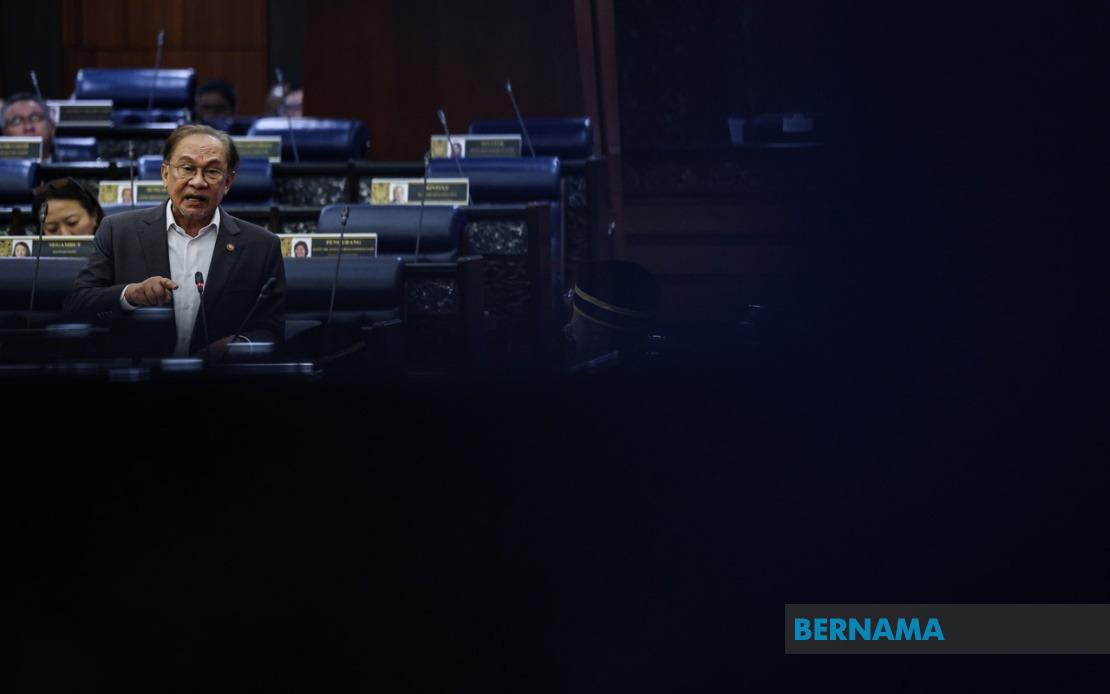
Prime Minister Datuk Seri Anwar Ibrahim has introduced a procedural safeguard intended to protect journalists from hasty prosecution, declaring that complaints lodged against media practitioners will no longer trigger automatic investigations or enforcement measures. Instead, such grievances must first be examined by the Malaysian Media Council (MMM), which will serve as an independent arbiter before authorities can proceed with legal action. The announcement, made during Minister's Question Time in parliament on July 7, represents a significant shift in how the government intends to balance press accountability with safeguards against arbitrary prosecution.
Anwar framed the mechanism as essential to ensuring fairness, transparency, and independence in any proceedings brought against media professionals. He emphasised that the introduction of this filtering process prevents journalists from being subjected to investigations or criminal prosecution without proper scrutiny, addressing longstanding concerns that media practitioners face disproportionate legal jeopardy compared to other professions. The Prime Minister's position reflects mounting international pressure on Malaysia regarding press freedom, with critics arguing that existing legislation creates a chilling effect on journalism.
Under this new framework, journalists themselves are no longer at risk of automatic legal consequences simply because a complaint has been filed against them or their organisation. The MMC will conduct the first level of review, examining whether alleged misconduct by a media organisation warrants further action. Only after the council's assessment will authorities determine whether to proceed with formal investigation or prosecution. This represents a departure from previous practice, where complaint receipt could swiftly trigger enforcement mechanisms without independent examination.
The Prime Minister acknowledged during parliamentary exchanges that no nation grants absolute freedom to the press, and that both journalists and government officials operate within legal constraints. However, he rejected the notion that media organisations should be easily drawn into legal proceedings simply because a government agency feels criticised by their reporting. This distinction carries particular weight in Malaysia's political context, where tensions between officials and journalists have periodically erupted into legal disputes.
The backdrop to Anwar's announcement involves provisions under the Sedition Act 1948 and the Official Secrets Act 1972, both of which permit the prosecution of journalists under certain circumstances. Critics of these colonial-era statutes contend that they effectively constrain press freedom by creating legal liability for reporting on sensitive matters, particularly those touching on national security or public order. The question posed by Datuk Mohd Isam Mohd Isa (BN-Tampin) during parliamentary proceedings specifically raised Malaysia's legal architecture regarding press prosecution, prompting the Prime Minister's clarification.
The establishment of the MMC itself represents an institutional response to calls for greater protections around journalistic practice. By positioning the council as a mandatory intermediary, the government creates a buffer zone that requires independent examination of allegations before enforcement authorities can act. This approach acknowledges that not every complaint reflects genuine misconduct and that some grievances may reflect political friction rather than actual breaches of journalistic ethics.
For Malaysian journalists and media organisations, the announcement carries immediate practical implications. News outlets can now point to this formal process when facing pressure from officials or other complainants, citing the requirement to allow the MMC to examine allegations first. This procedural step provides breathing room for the media industry and creates an institutional checkpoint designed to prevent weaponisation of sedition and official secrets legislation against critical journalism.
The Malaysian media landscape has experienced periods of tension between press freedom advocates and government authorities seeking to regulate reporting. By establishing this intermediate review mechanism, the administration signals a willingness to recalibrate enforcement approaches without necessarily repealing or amending the underlying statutes themselves. This represents a pragmatic middle ground that preserves the legal framework while constraining its potential for abuse.
Regionally, Malaysia's approach invites comparison with other Southeast Asian democracies grappling with similar tensions between press accountability and editorial independence. The MMC model offers a template whereby governments can maintain regulatory authority while building in procedural safeguards that reduce arbitrary enforcement. Singapore, Indonesia, and Thailand have wrestled with analogous questions, and Malaysia's institutional innovation may influence regional thinking about press regulation.
Anwar's emphasis that journalists should not be easily prosecuted because their reporting generates criticism reflects a deliberate recalibration of government messaging around media relations. By distinguishing between legitimate accountability for media misconduct and illegitimate suppression of critical journalism, the Prime Minister attempts to position his administration as more press-friendly than its predecessor. The practical effectiveness of this commitment depends entirely on whether enforcement authorities respect the MMC's role and refrain from circumventing the new mechanism.
For Malaysian civil society, international press freedom monitors, and the journalism community itself, the announcement warrants close scrutiny regarding implementation. The true test of this procedural innovation lies not in parliamentary statements but in whether authorities adhere to the framework when faced with sensitive reporting. The coming months will reveal whether the MMC functions as a genuine independent arbiter or becomes merely a perfunctory checkpoint in prosecutions the government is determined to pursue regardless.

