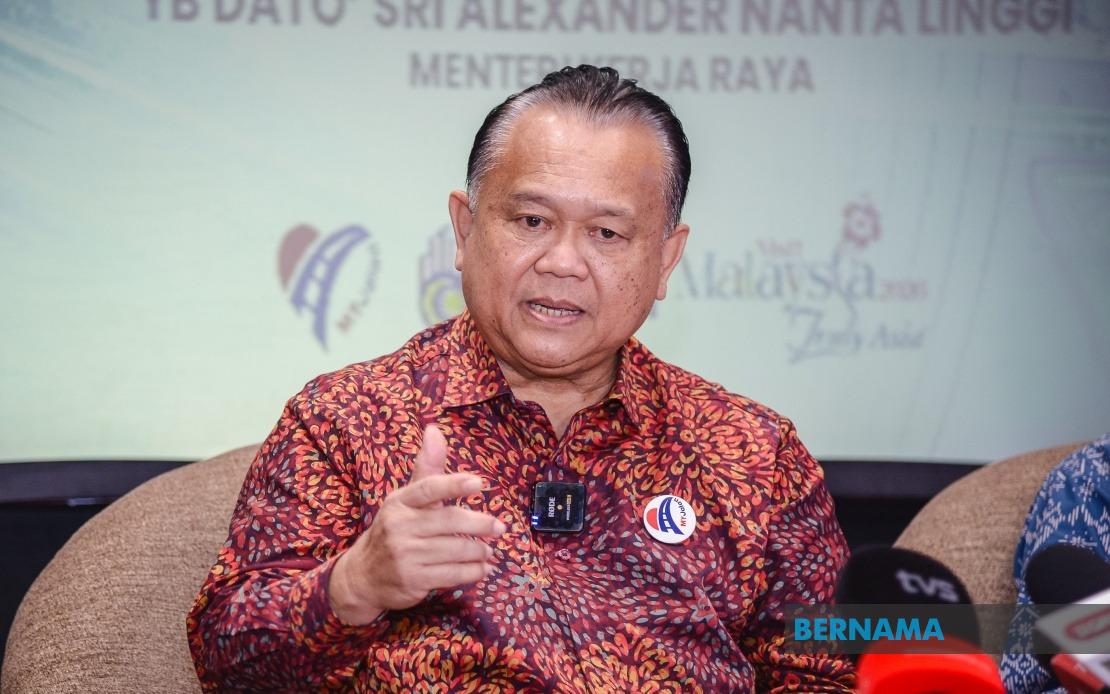
Malaysia's Works Ministry (KKR) is shaping Budget 2027 with input from the construction sector, having collected 30 strategic proposals from industry stakeholders aimed at strengthening the nation's infrastructure framework. Minister Datuk Seri Alexander Nanta Linggi outlined the comprehensive consultation process during an industry dialogue in Putrajaya, signalling the government's intention to align construction priorities with the broader MADANI Economy agenda. This approach reflects a deliberate shift in how Kuala Lumpur evaluates infrastructure investment—moving beyond simple expenditure metrics to measure the tangible outcomes each ringgit of public funding delivers.
The ministry has crystallised five transformation pillars for the construction sector in the coming fiscal year. These encompass reinforcing the road infrastructure network whilst delivering projects with substantial economic multiplier effects, advancing sustainable development through alignment with Malaysia's energy transition objectives, accelerating digital adoption via Building Information Modelling and artificial intelligence platforms, strengthening the domestic contracting ecosystem from G1 through G4 operators, and elevating road safety standards through the MYJalan initiative. Rather than treating these as isolated initiatives, Nanta framed them as interconnected elements within a unified vision for how Malaysia approaches infrastructure planning, execution, asset management and maintenance across the nation.
Central to the ministry's repositioning is a fundamental recalibration of competitive dynamics within the construction market. Rather than allowing price to remain the dominant differentiator among bidding companies, Nanta emphasised that local firms must cultivate capability through advanced technologies including the Industrialised Building System and green construction methods. This strategic pivot recognises that competing solely on cost leaves Malaysian contractors vulnerable to international players with lower labour expenses. By incentivising productivity enhancements, technological sophistication and superior quality outcomes, the government aims to position domestic enterprises for genuine value creation and international competitiveness—enabling them to transition from low-margin contract work towards higher-value design, innovation and specialised services.
The scale of industry engagement underscores the government's consultation depth. Through August 6, the Works Ministry received 117 total submissions addressing sector concerns and Budget 2027 considerations, with 87 originating directly from construction industry participants. This feedback reveals recurring pain points across the sector. Industry representatives highlighted the necessity for improved governance structures and contract administration protocols, workforce development initiatives that expand both skill levels and inclusive opportunity access, and mitigation strategies targeting operational expenses, material procurement costs and logistics inefficiencies. These concerns reflect genuine structural challenges facing Malaysian construction firms, particularly smaller operators competing against larger, better-capitalised entities.
Sustainability and environmental stewardship emerged as additional priorities from industry consultations. Construction stakeholders advocated for accelerated implementation of environmental, social and governance standards alongside increased utilisation of domestically-sourced materials. This dual emphasis aligns with Malaysia's climate commitments whilst potentially benefiting local suppliers and manufacturers. The requests suggest industry recognition that ESG practices, once perceived as compliance burdens, increasingly constitute competitive advantages in securing contracts—particularly among multinational clients and government procurement frameworks embedding sustainability criteria.
Nanta acknowledged that the construction industry landscape encompasses participants at vastly different developmental stages. Small contractors, specialist consultancies, workers and ancillary service providers face particular vulnerabilities regarding cash flow constraints, technological access barriers, skills gaps and protracted administrative approval processes. The minister's observation that not all industry players begin from equivalent positions reflects pragmatic understanding that sector-wide transformation requires targeted support mechanisms. Creating pathways for smaller operators to migrate towards higher capability levels strengthens the entire ecosystem rather than concentrating market share among established giants.
The ministry's perspective on budget constraints reveals sophisticated thinking about resource allocation in Malaysia's fiscal environment. Rather than permitting financial limitations to truncate development ambitions, Nanta argued that budgetary discipline should catalyse greater creativity in priority-setting and project selection. This mindset contrasts sharply with merely paring back infrastructure programmes when revenue projections disappoint. Maximising impact per ringgit invested demands rigorous project evaluation, efficient delivery mechanisms and strategic sequencing—essentially treating constrained resources as a forcing function for improved planning rather than capitulation to reduced development scope.
Budget 2026 provided the Works Ministry with RM10.692 billion in total allocation, representing 3.3 per cent growth on the preceding year's budget. Development expenditure accounted for RM9.607 billion of this amount, supporting both new infrastructure initiatives and continuation of established projects across Malaysia's extensive portfolio. These figures establish the fiscal baseline against which Budget 2027 planning occurs. The ministry's ability to maintain growth whilst delivering enhanced project outcomes depends substantially upon the efficiency gains and technological productivity improvements that the five-pillar transformation strategy seeks to catalyse throughout the construction ecosystem.
The formal Budget 2027 presentation to parliament is scheduled for October 9, providing a two-month window for the Works Ministry to integrate industry feedback into final budget formulations. This timeline necessitates rapid assessment of the 30 wishlists and 87 direct industry submissions to identify themes, assess feasibility and align recommendations with government economic priorities and fiscal parameters. The consultation process itself—involving sustained dialogue with diverse construction stakeholders—represents a methodological shift towards more inclusive policy development. Rather than construction policy emerging solely from ministry headquarters in Putrajaya, authentic industry participation shapes the contours of infrastructure investment and sector development initiatives.
For Malaysian construction firms and related industries, the emerging Budget 2027 framework signals several strategic implications. Companies investing in BIM, IoT systems and AI-enabled project management will likely find themselves positioned advantageously within government procurement preferences. Organisations embracing green building practices and ESG frameworks align themselves with both government priorities and evolving market expectations. Contractors capable of demonstrating superior productivity metrics and quality outcomes gain competitive differentiation beyond price competition. The explicit commitment to strengthening G1-G4 contractors suggests government willingness to create structured progression pathways, potentially through targeted financing, technical assistance or dedicated procurement allocations for emerging firms.
The broader Southeast Asian context adds perspective to Malaysia's infrastructure transformation approach. Regional competitors including Singapore, Thailand and Indonesia are similarly pursuing digital infrastructure, green building standards and advanced project management methodologies. Malaysia's deliberate construction sector modernisation positions domestic companies to participate effectively in increasingly sophisticated regional infrastructure projects whilst potentially exporting expertise and services throughout Southeast Asia. The emphasis on international competitiveness rather than merely domestic market share reflects recognition that Malaysia's construction industry must operate within an integrated regional economy.
Minister Nanta's framing of infrastructure investment as impact-driven rather than merely expenditure-focused represents conceptual maturation in how government assesses public spending. This philosophical shift, if implemented consistently, could fundamentally alter how Malaysia evaluates infrastructure programmes—measuring success through economic multiplier effects, productivity enhancements and quality outcomes rather than simply project completion metrics. For an economy seeking to transition towards higher-value-added sectors and improved international competitiveness, such reorientation proves essential.

