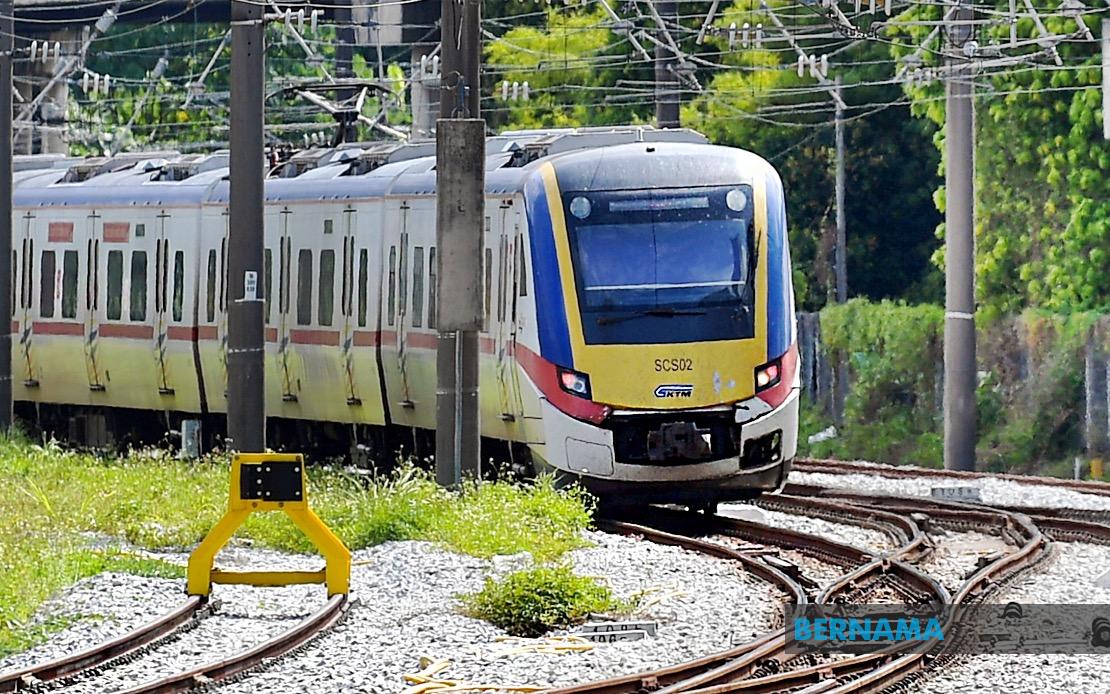
Rail operations across the Klang Valley came to an abrupt halt on July 23 when a wooden construction structure fell from a third-party worksite and struck the overhead power lines running between Batang Benar and Labu stations, forcing Keretapi Tanah Melayu Berhad (KTMB) to suspend services across a critical segment of its network. The incident highlighted vulnerabilities in construction site safety protocols and exposed gaps in coordination between contractors and railway operators—issues that will resonate with millions of Malaysians relying on the Klang Valley's rail infrastructure for daily commutes.
The impact on passenger services was immediate and extensive. KTM Komuter trains originating from Pulau Sebang and heading towards KL Sentral could only proceed as far as Seremban Station, while northbound services to either KL Sentral or Batu Caves were restricted to departures from Bangi Station onwards. This created a service blackhole spanning the Bangi to Seremban corridor, with no direct rail connectivity available for the affected 15-kilometre stretch. For the tens of thousands of daily commuters on this route—many of whom depend on the affordable rail option for their commutes—the disruption threatened to cascade into delays across other modes of transport and potentially cost businesses and individuals significant time and productivity losses.
To mitigate the chaos, KTMB mobilised shuttle bus services as a temporary workaround, though such alternatives invariably struggle to match the capacity and predictability of rail transport. Three shuttle buses were designated to operate between Seremban, Tiroi, Batang Benar, Labu and Bangi stations, providing at least some connectivity for stranded KTM Komuter passengers. Electric Train Service users faced similar constraints, with seven shuttle buses deployed at KL Sentral, Bandar Tasik Selatan, Kajang and Seremban to bridge the gap. The railway operator also extended compensation to ETS passengers unwilling to continue their journeys, offering full refunds—a gesture acknowledging the severity of the disruption but one that offers limited solace to those with time-sensitive commitments.
The underlying cause revealed troubling shortcomings in how construction works near critical infrastructure are managed. KTMB's preliminary investigation determined that the contractor hired by the Public Works Department (JKR) for a wayleave project had fundamentally breached safety protocols. Most significantly, the contractor failed to submit a comprehensive work schedule and, more critically, neglected to notify KTMB of the exact timing of the bridge construction activities on the day the structure fell. Such lapses suggest either indifference toward railway safety requirements or systemic confusion about responsibility boundaries between different government agencies.
The railway operator outlined the formal safeguards that should have been in place. Under KTMB's Site Entry Permit Standard Operating Procedure, any construction work granted approval for sites adjacent to railway infrastructure requires on-site monitoring by three technical representatives: one from the Regional Engineer department, one from Signalling and Communications, and another from Electrification. These specialists are tasked with ensuring that construction activities do not jeopardise overhead systems, signalling equipment, or other critical infrastructure. The fact that these oversight mechanisms appear not to have been invoked—or were invoked but failed to prevent the incident—points to deeper governance issues in how third-party contractors are supervised.
This incident carries implications beyond the immediate inconvenience to commuters. The Klang Valley rail network represents one of Malaysia's most significant transport investments and serves as a backbone for the regional economy. Disruptions to this system ripple through supply chains, affect workers' productivity, and undermine confidence in public transport infrastructure. For the government and KTMB, the episode underscores the tension between permitting development and construction activities while simultaneously maintaining the integrity of existing transport networks. Similar tensions exist across Southeast Asia, where rapid urbanisation and infrastructure expansion often strain coordination between different agencies and contractors.
The damage to the overhead line system, while ultimately repairable, required KTMB to mobilise repair crews and manage a complex logistics operation to restore services. The railway operator committed to prioritising restoration work, but no specific timeline was provided—a vacuum of information that inevitably fuels passenger frustration. In the modern era, when rail operators can provide real-time tracking of trains and instant updates through digital channels, the absence of definitive service restoration estimates appears as a missed opportunity to manage public expectations more transparently.
The contractor's failures raise questions about the adequacy of current safety vetting processes for firms undertaking work near critical national infrastructure. If a JKR contractor could commit such elementary oversights—failing to provide a work schedule and notify the railway operator of construction timing—the standards applied to contractor selection and briefing may require revision. KTMB's apology acknowledged the incident as "unforeseen," yet many such incidents are, in fact, foreseeable if proper protocols are enforced and communication channels are actively used.
Looking forward, this disruption serves as a test case for how Malaysian authorities coordinate across agencies when safety is compromised. The JKR, KTMB, and the relevant contractors must conduct thorough reviews not only of this specific incident but of their broader protocols. For commuters in the Klang Valley and beyond, the episode is a stark reminder of how fragile modern transport networks can be when oversight lapses. The railway system's resilience—and public confidence in it—depends not only on robust infrastructure but on the discipline and accountability of everyone with responsibility for its protection.

