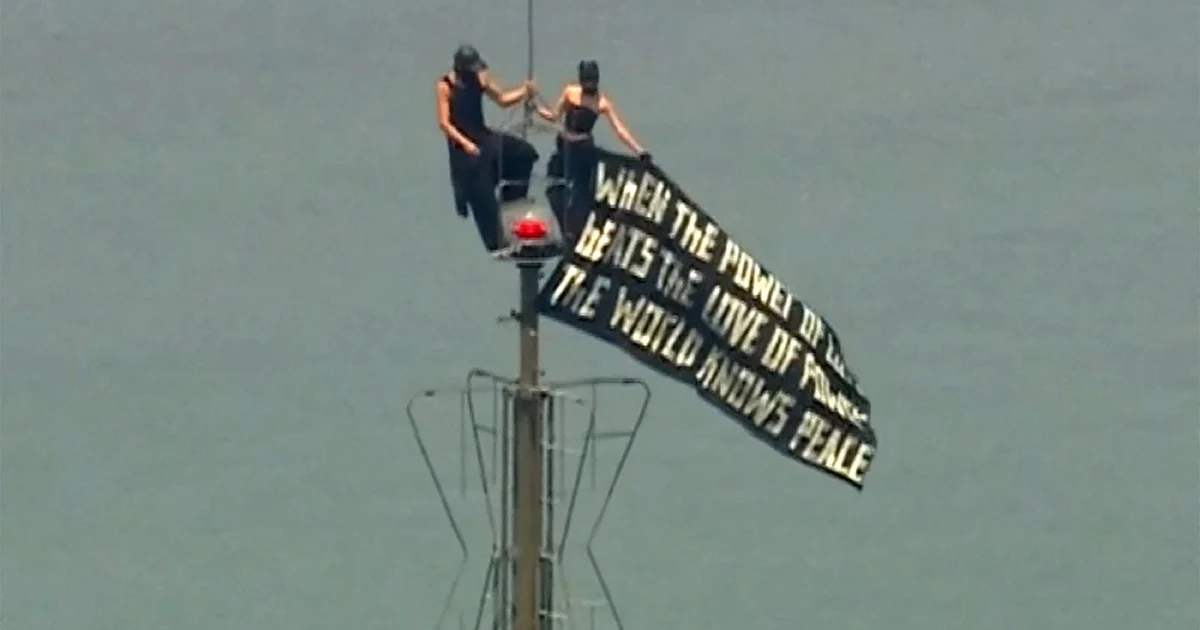
A man and woman were taken into custody on Wednesday following an unauthorized ascent to the antenna crowning New York's Empire State Building, in what appears to have been a deliberately staged engagement moment that bypassed the building's extensive security protocols.
The couple's climb to one of Manhattan's most recognizable landmarks underscores both the romantic allure of high-altitude proposals and the considerable security vulnerabilities that persist at major tourist destinations across North America. The Empire State Building, which attracts approximately 4 million visitors annually, has long been a destination for marriage proposals, though typically conducted within designated observation areas and gift shops on lower floors where romance can be celebrated without legal consequence.
The pair's decision to bypass ordinary channels and ascend to the antenna—the vertical spire that extends upward from the building's roof—represented a dramatic escalation of the conventional proposal approach. The structure itself has been a lightning rod for both daredevil stunts and security concerns throughout its decades of operation. Authorities have not yet disclosed how the climbers navigated past multiple security checkpoints, elevator systems, and barrier installations designed to prevent exactly this type of unauthorized access.
Employing the building as a backdrop for a marriage proposal taps into deep-seated romantic imagery. The Empire State Building has featured in countless films, photographs, and popular culture references as the quintessential New York romantic location. For some couples, staging an engagement at such an iconic venue—especially one achieved through dramatic, rule-breaking means—becomes part of the proposal's narrative. However, this particular couple's romantic impulses collided directly with New York City law enforcement priorities and building management protocols.
The arrest raises important questions about how major metropolitan landmarks balance public access with security imperatives. The Empire State Building operates within a complex regulatory environment that includes New York State building codes, local ordinances, federal security guidelines, and corporate policies established by the building's ownership and management companies. Each layer of regulation theoretically should prevent unauthorized rooftop access, yet the incident demonstrates that determined individuals can still navigate around such safeguards.
For Malaysian and Southeast Asian readers, this incident carries relevance as tourism to major American cities remains significant, particularly among young professionals and affluent travelers seeking Instagram-worthy experiences. The boundaries between aspirational tourism, social media documentation, and legal compliance have become increasingly blurred globally. Visitors from the region should understand that what might seem like an acceptable romantic gesture in one cultural context can trigger serious legal consequences in the United States, where trespassing charges, assault on police, and other criminal statutes carry substantial penalties including fines and potential imprisonment.
The Empire State Building management has faced similar security incidents periodically throughout its operating history. Each incident prompts review of existing protocols, though the fundamental challenge remains: maintaining accessibility for the millions of tourists who pay for observation deck visits while preventing unauthorized access to restricted zones. Building administrators must weigh the financial implications of tightened security (which could deter visitors) against their liability exposure should an unauthorized climber suffer injury or cause damage.
Security experts have long flagged tall buildings in major metropolitan areas as vulnerable to various types of unauthorized access attempts. While some climbs are motivated by romance or personal challenge, others have been linked to activism, photography, or genuinely dangerous pursuits. The heterogeneity of motivations complicates security responses—not all unauthorized building access represents equivalent risk levels, yet security systems typically cannot easily distinguish between romantic climbers and those with more sinister intentions.
The couple's arrest appears to have proceeded without injury, and they now face the consequences of their decision. The American criminal justice system will process their case according to standard procedures, likely involving charges related to trespassing, building code violations, and potentially disorderly conduct. Their legal outcome will depend on their jurisdiction's specific statutes, prosecutorial discretion, and any mitigating circumstances that defense counsel can marshal.
As social media continues to incentivize increasingly dramatic life moments, documented and shared globally, the tension between romantic self-expression and legal boundaries will likely persist. The Empire State Building climb reflects this broader cultural moment where individuals sometimes prioritize the creation of memorable, shareable experiences over adherence to institutional regulations. Whether the couple's engagement was actually formalized remains unclear from available reporting, but their arrest has certainly provided them with a memorable story—though perhaps not the one they envisioned when planning their rooftop adventure.

