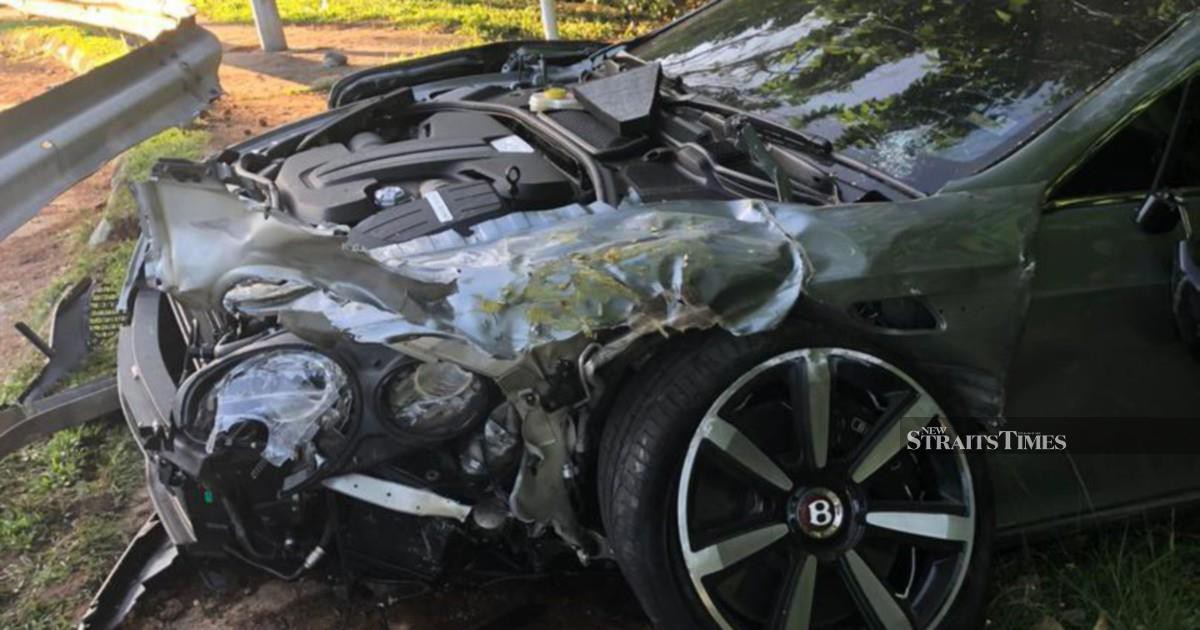
The Court of Appeal in Putrajaya has reinforced a significant ruling regarding motor insurance liability in Malaysia, affirming the High Court's direction that an insurance provider remit RM900,000 to a businessman as compensation for his severely damaged luxury vehicle. The decision, delivered on a case spanning six years, involved a Bentley Continental GTS V6 MDS and represents a substantial validation of the earlier judgment that had determined the insurer's obligation to meet the full indemnity claim.
The appellate court's confirmation of the High Court decision underscores the judiciary's consistent interpretation of insurance contractual obligations when vehicles sustain accident-related damage. This case carries particular significance for Malaysian motorists holding comprehensive insurance policies on high-value vehicles, as courts have demonstrated willingness to enforce strict compliance with policy terms and damage settlement requirements. The drawn-out nature of the dispute—extending over six years from the initial accident to the final appellate judgment—highlights the complexity of resolving major insurance claims involving premium vehicles.
Bentley Continental models represent the upper echelon of automotive luxury in Malaysia, with pricing typically well above RM500,000 for new models. The RM900,000 compensation figure suggests either substantial repair costs that approached or exceeded the vehicle's replacement value, or that the claim encompassed both repair expenses and additional damages recognised by the courts. In cases involving high-performance luxury vehicles, repair facilities capable of handling such marques often charge premium labour rates and parts costs that can rapidly accumulate.
The insurance sector in Malaysia operates under regulatory frameworks overseen by Bank Negara Malaysia and the Insurance Commissioner, which establish minimum standards for claim processing and settlement timelines. When disputes arise over compensation amounts for damaged vehicles, the burden typically falls on claimants to demonstrate the legitimacy and extent of their losses through repair quotations, expert assessments, and documentation of vehicle condition pre-accident. The fact that this case advanced through both the High Court and Court of Appeal suggests the insurance company contested the claim's validity or quantum, necessitating judicial intervention.
For Malaysian vehicle owners with high-value cars, this judgment provides reassurance that courts will enforce insurance policies faithfully when disputes escalate to litigation. The decision affirms that insurers cannot simply deny or substantially reduce payouts without substantial justification, and that comprehensive coverage should deliver on its promised protection. However, the six-year timeline also demonstrates that pursuing such claims through the court system demands patience, legal expertise, and sustained commitment to the legal process.
The Court of Appeal's confirmation adds precedential weight to the interpretation that insurance companies must honour their contractual obligations even when facing substantial payouts for premium vehicle damage. This ruling may influence how insurance providers approach similarly contested claims involving luxury vehicles, potentially encouraging earlier settlement rather than prolonged litigation that ultimately reaches the appellate level. The judicial affirmation signals that courts view insurance contracts as binding agreements that must be honoured according to their terms.
Beyond the specific parties involved, this decision carries implications for Malaysia's insurance industry and its reputation for fair claim settlement. International vehicle owners and those holding policies with Malaysian insurers gain confidence from court rulings that enforce contractual promises. Such judgments contribute to consumer trust in the insurance system and demonstrate that Malaysia's judiciary provides effective remedies when insurers fail to meet their obligations.
The case also reflects broader economic dynamics affecting high-net-worth individuals in Malaysia who invest in premium automobiles. For such vehicle owners, comprehensive insurance represents a critical financial safeguard, and judicial clarity regarding claim settlement provides important protection. The ruling validates the purpose of comprehensive policies—to restore the insured to their pre-loss position—even when that restoration requires substantial financial outlay.
Insurance professionals and claims adjusters monitoring this decision will note the court's evident scrutiny of insurer arguments contesting major claims. The ruling suggests that when disputes reach judicial examination, courts conduct rigorous assessment of evidence and policy language, ultimately favouring claimants with properly documented losses. This may encourage insurers to strengthen their internal assessment processes to distinguish between meritorious and frivolous claims before disputes escalate to court.
Looking forward, this judgment contributes to the developing jurisprudence around motor insurance claims in Malaysia. Each appellate decision refines the legal framework governing insurer responsibilities, damages calculation, and claimant rights. As Malaysia's automotive market continues attracting owners of increasingly expensive vehicles, the clarity provided by court decisions becomes proportionally more valuable in managing disputes over premium vehicle losses.
The businessman's successful navigation through both the High Court and Court of Appeal vindicated his determination to pursue full compensation through judicial channels. While the six-year journey underscores the system's deliberative pace, the final outcome affirmed that the courts recognised his claim as legitimate and the RM900,000 quantum as justified. For similar claimants facing insurance disputes, this precedent offers both encouragement and a practical roadmap for seeking judicial remedy when negotiations prove unsuccessful.

