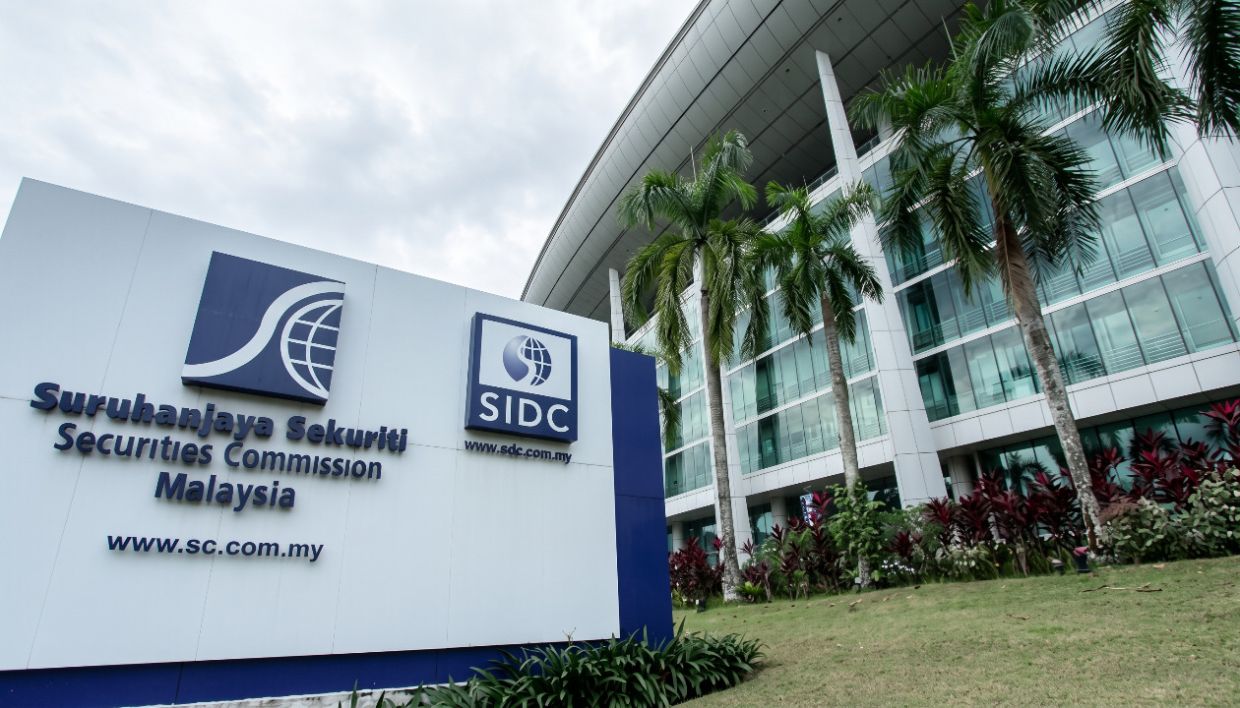
Malaysia's Court of Appeal has delivered a significant setback to businessman Wong Shee Kai, commonly known as Ricky Wong, by dismissing his legal challenge against a sweeping asset freeze affecting him, associate Teh Sew Wan, and their company Wong SK Holdings Sdn Bhd. The appellate court's decision on Monday to reject the freeze order and overturn an earlier interim injunction means that up to RM169.2mil in assets and properties will remain locked during the ongoing civil proceedings brought by the Securities Commission Malaysia. The three-judge panel, comprising Justices Datuk Ravinthran N. Paramaguru, Datuk Dr Choo Kah Sing, and Datuk Leonard David Shim, ruled against the appellants while ordering them to shoulder RM200,000 in legal costs.
The asset freeze originated from a complaint filed by the Securities Commission in 2020, which alleged that Wong and his associates had engaged in breaches of the Capital Markets and Services Act 2007. The High Court initially granted an ex parte injunction on May 8, 2020, providing preliminary protection for the regulator's investigation without requiring the defendants to be present at the hearing. This temporary measure was later formalised into a more comprehensive inter partes injunction on April 28, 2022, after both sides had presented their arguments. The expanded order not only prohibited Wong and Teh from accessing or disposing of the identified assets but also prevented third parties from knowingly facilitating any transactions involving the frozen holdings.
The scope of the Securities Commission's enforcement action underscores growing regulatory vigilance in Malaysia's capital markets. Securities fraud remains a persistent challenge for developing financial systems, where sophisticated schemes can undermine investor confidence and distort market integrity. By freezing assets at an early stage of investigation, regulators aim to prevent defendants from dissipating funds that represent potential restitution for harmed investors or compensation for regulatory breaches. The freezing mechanism also signals to the broader business community that the commission possesses meaningful enforcement tools and willingness to deploy them against alleged violators regardless of their business standing.
The appellants mounted a vigorous legal defence through prominent counsel. Wong and Wong SK Holdings were represented by Tan Sri Muhammad Shafee Abdullah from his eponymous law firm, while Teh engaged Tan Sri Cecil W. M. Abraham to argue his case. This deployment of senior advocates suggests the defendants viewed the matter as strategically important and potentially precedent-setting. However, the court's dismissal of their applications indicates that the appellate bench found the Securities Commission's case sufficiently compelling to maintain the restrictive measures pending trial. The decision preserves the regulator's position without prejudging the ultimate merits of the underlying securities fraud allegations.
Wong's status as a fugitive adds a criminal dimension to the proceedings. According to the Securities Commission, he remains at large and is simultaneously wanted in connection with criminal charges under two major statutes: the Anti-Money Laundering, Anti-Terrorism Financing and Proceeds of Unlawful Activities Act 2001 and provisions within the Capital Markets and Services Act itself. This parallel criminal exposure distinguishes his case from typical civil enforcement matters and suggests that investigators have uncovered behaviour meeting thresholds for both regulatory breach and potential criminal culpability. The combination of civil asset freezes and outstanding criminal warrants typically indicates serious allegations spanning financial crime and proceeds laundering.
The Securities Commission's public appeal for information about Wong's whereabouts reflects the operational challenges facing enforcement agencies when defendants evade jurisdiction. Malaysia's geographical position within a highly connected Southeast Asian region, combined with modern travel and communications infrastructure, creates conditions where individuals facing serious charges can potentially relocate across borders relatively quickly. Public disclosure of wanted status can sometimes yield leads from former associates, business contacts, or financial institutions that process suspicious transactions. Such transparency also serves a deterrent function by demonstrating that flight from jurisdiction does not terminate regulatory exposure or criminal liability.
The trial proceedings themselves remain in their preliminary stages and carry implications extending beyond the individual defendants. Scheduled to resume on September 1, 2026, at the Kuala Lumpur High Court, the litigation will likely consume substantial judicial resources and establish interpretive guidance on how Malaysian courts assess complex securities violations. The charges involve alleged breaches of Section 179 of the Capital Markets and Services Act 2007, a provision governing conduct in the securities markets. The scope and specifics of the alleged contraventions remain to be fully ventilated during trial, but the Securities Commission's decision to pursue freezing injunctions suggests evidence of substantial misconduct affecting multiple investors or transactions.
From a regional perspective, the case reflects broader efforts across Southeast Asia to strengthen capital markets regulation and combat financial crime. Singapore, Thailand, and other regional financial centres have similarly strengthened enforcement capabilities in response to cross-border fraud schemes and mounting investor protection demands. Malaysia's willingness to maintain restrictive asset measures through appellate review demonstrates institutional commitment to securities regulation even when cases become legally protracted. The precedential value of the Court of Appeal's decision may influence how future defendants approach similar challenges, potentially discouraging frivolous appeals and encouraging settlement discussions.
The legal teams involved in the matter represent the intersection of corporate law practice and public interest enforcement. The Securities Commission retained external counsel from Messrs Lim Chee Wee Partnership, specifically Datuk Lim Chee Wee and Kwan Will Sen, supplementing the regulator's in-house legal resources with Mohd Hafiz Mohd Yusoff and Loo Kit Ming Keith. This hybrid approach reflects contemporary regulatory practice where government agencies augment institutional capacity through strategic engagement with specialist private practitioners. The appellants' reliance on senior counsel from established commercial law firms demonstrates the resource intensity of mounting appellate challenges in financial crime cases.
The RM200,000 cost award to the Securities Commission carries both symbolic and practical significance. Cost orders in appellate proceedings typically reflect the court's assessment that the appeal lacked sufficient merit to warrant appellate intervention. By awarding costs to the regulator, the bench signalled disapproval of the appellants' legal position while requiring them to fund the commission's defensive litigation expenditure. In the context of already-frozen assets, such costs may compound the financial constraints facing the defendants during trial preparation, potentially affecting their ability to mount comprehensive defences or settle matters advantageously.
Looking forward, the case trajectory hinges on developments in the ongoing High Court trial and Wong's continued absence from jurisdiction. If the trial proceeds without the lead defendant's participation, the court may ultimately issue default judgments against him while determining liability against Teh and the corporate entity on the merits. The frozen assets may ultimately satisfy any judgments against the entities, assuming they generate sufficient value realisation. Conversely, if Wong can be located and compelled to return to Malaysia, or if extradition arrangements activate, the criminal proceedings may subsume or inform the civil proceedings' outcome. Until then, the asset freeze remains firmly in place, with the appellate court's decision foreclosing the defendants' immediate avenues for challenging it.

