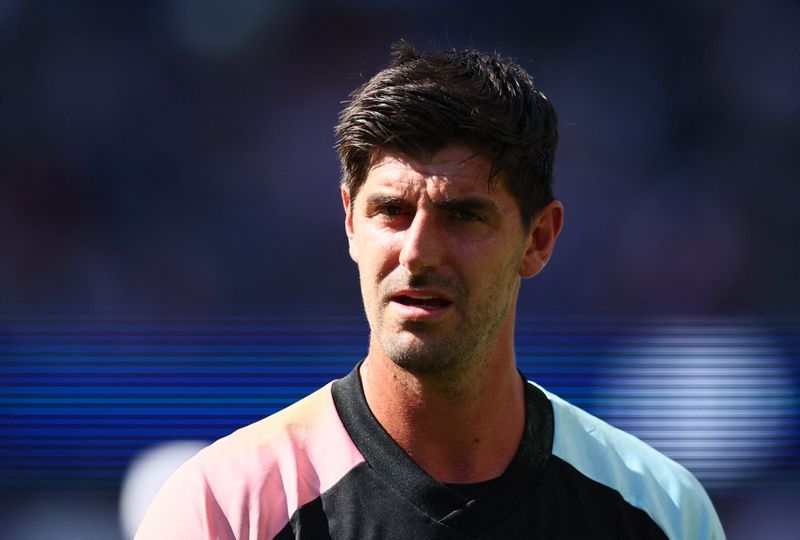
Belgium goalkeeper Thibaut Courtois has given his backing to Mark van Bommel's appointment as national team coach, expressing confidence that the former Dutch international will command respect from his squad. The 34-year-old Real Madrid shot-stopper made the remarks at a sponsorship event in Brussels, just weeks after Van Bommel replaced Rudi Garcia, whose tenure ended following Belgium's disappointing World Cup quarter-final elimination.
Van Bommel's appointment came swiftly as the Belgian Football Association moved to draw a line under Garcia's disappointing campaign. The French-born Garcia and the federation mutually agreed not to extend his contract after the team's early exit at the tournament, prompting a rapid search for his successor. Van Bommel, who had gained recognition for his coaching work at Antwerp, emerged as the federation's choice to steer the Red Devils into a new era.
Courtois indicated that Van Bommel's candidacy had been widely discussed within football circles before his formal appointment, suggesting a degree of inevitability about the decision. However, the goalkeeper stressed that what truly sets Van Bommel apart is his personal experience operating at the game's highest level. Having enjoyed a distinguished playing career as a former Dutch international, Van Bommel brings credibility that extends beyond tactical knowledge and strategic planning.
The emphasis Courtois placed on Van Bommel's elite-level background speaks to a broader dynamic within professional football where players respond more readily to coaches who have themselves competed at the pinnacle of the sport. This lived experience of international competition, pressure, and high-stakes matches creates an immediate understanding between coach and player that cannot be easily replicated. For a Belgium squad that has endured significant disappointment, having leadership that genuinely comprehends their challenges represents a tangible asset.
Curtois acknowledged that several of Belgium's established players had already formed positive impressions of Van Bommel, though he did not elaborate on the specific conversations that had taken place. This preliminary buy-in from within the squad suggests a smoother transition than might have otherwise occurred, potentially enabling Van Bommel to hit the ground running rather than spending his first weeks establishing authority and credibility.
Yet uncertainty clouds whether Courtois himself will feature prominently under Van Bommel's stewardship. Following Belgium's World Cup exit, the goalkeeper had signalled his desire to continue his international career, but attached an important condition: he wanted to skip the upcoming Nations League fixtures to recover and manage his workload. This conditional availability reflects the modern reality facing aging elite athletes who must balance continued contribution with physical sustainability.
Courtois revealed that his ultimate decision will hinge on negotiations with Van Bommel, indicating that the new coach's willingness to accommodate his requests will prove decisive. Rather than drawing a definitive line, Courtois left the door open to further discussions, stating that after reaching some understanding with Van Bommel regarding the Nations League, he would then evaluate whether to continue beyond that point. This measured approach demonstrates the goalkeeper's respect for the decision-making process while signalling his preference for a managed decline rather than an abrupt retirement.
The goalkeeper's reflections on Belgium's World Cup elimination revealed the narrow margins that separate advancement from exit. Courtois himself suffered an injury during the last-eight clash against Spain in Los Angeles on July 10, forcing his withdrawal from the match. His replacement, Senne Lammens, subsequently made an error that allowed Spain to secure a 2-1 victory and eventual tournament triumph. Courtois has since maintained that his injury should not have necessitated his removal from the field, suggesting he could have continued functioning effectively despite physical discomfort.
Courtois elaborated on his reasoning, noting that while goal kicks became problematic due to his injury, he retained the ability to execute sideways passes and participate meaningfully during open play. The decision to substitute him therefore appeared conservative, though Courtois acknowledged Garcia's stated position that only fully fit players should participate. This apparent friction regarding team selection has emerged as one of several controversial decisions that haunted Garcia's tenure and ultimately contributed to his departure.
However, Courtois stopped short of openly criticising his former coach, emphasizing that no genuine animosity existed between them despite the disappointment surrounding Belgium's exit. The goalkeeper framed the substitution decision as regrettable but ultimately defensible from a team perspective, suggesting that Garcia's overall management remained reasonable even if specific tactical choices provoked debate. This restraint may reflect either Courtois's diplomatic instincts or genuine acceptance that international football necessitates difficult calls that cannot satisfy all parties.
For Malaysia and Southeast Asian observers, Courtois's approach to career management offers valuable perspective on how elite athletes navigate the twilight of their professional lives. The discussion around conditional availability and selective participation reflects evolving attitudes toward workload management that increasingly influence player-coach relationships at the highest levels. Van Bommel's response to Courtois's requests will likely signal how he intends to balance squad harmony with competitive demands during his tenure.
Belgium's leadership transition also highlights the precarious nature of international football management, where a single tournament's disappointing result can terminate even established coaches' tenures. For Southeast Asian nations pursuing improved results in continental and global competitions, the Belgian example demonstrates both the rapid pace of change at elite levels and the importance of securing coaching appointments who possess both tactical acumen and earned respect from their charges. Van Bommel's background in Dutch football, combined with his personal playing pedigree, positions him as a coach capable of commanding such respect as he begins his transformational project with Belgium.

