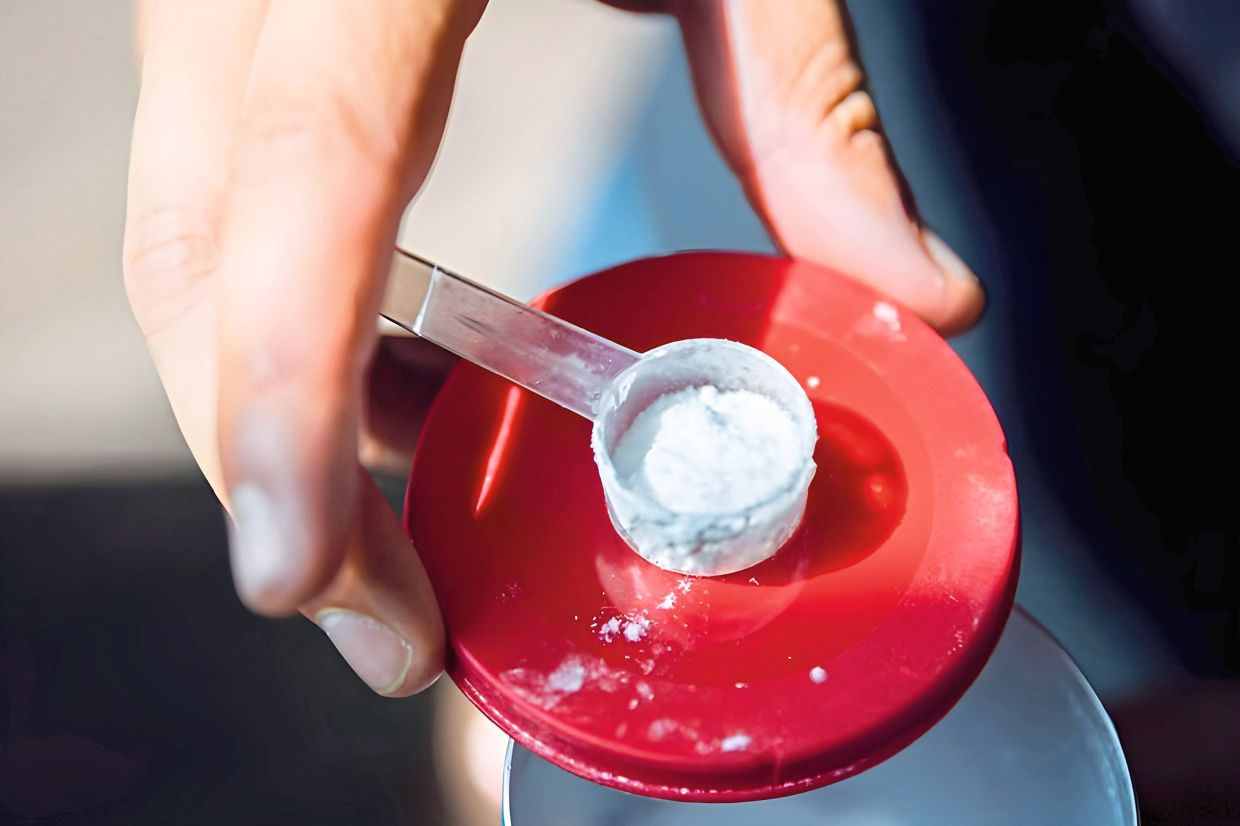
One of the fitness industry's most stubborn myths has finally met its match: a definitive scientific study showing that creatine, one of the world's most popular dietary supplements, does not cause baldness. The rumour has haunted supplement users for more than 15 years, influencing countless decisions by gym-goers and athletes who chose to forgo what experts regard as one of the safest and most effective performance enhancers available. Now, fresh evidence from 2025 research published in peer-reviewed literature provides the clarity that millions of fitness enthusiasts have been waiting for.
The anxiety surrounding creatine and hair loss originated from a single 2009 study that would prove far more influential than its scope warranted. Researchers observed that creatine supplementation appeared to increase the conversion of testosterone into dihydrotestosterone, commonly known as DHT. The authors cautiously recommended further investigation given how extensively the supplement was being used globally. However, the study contained a critical limitation that would shape public perception for years: the researchers never actually measured whether participants experienced any hair loss, and notably, none of the subjects reported losing hair during the trial. Despite this lack of direct evidence, the theoretical connection between DHT and androgenetic alopecia—the medical term for pattern baldness—was enough to trigger widespread concern among consumers.
The persistence of this myth illustrates how scientific findings can become distorted as they travel through popular culture. A speculative mechanism observed in a single study, presented with appropriate scientific caution, transformed into conventional wisdom among fitness communities. The rumour became self-perpetuating, with each retelling adding weight to an allegation that was never actually substantiated by empirical evidence. For more than a decade, potential creatine users faced a choice based on fear rather than facts, and the supplement industry struggled against a narrative that lacked rigorous scientific backing.
The new 2025 randomised controlled trial was specifically designed to address this gap. Researchers recruited 45 healthy resistance-trained men aged 18 to 40 and randomly assigned them to two groups with equal rigour. One group received five grams of creatine monohydrate daily—the most common and extensively researched form of the supplement—while the control group received an identical quantity of maltodextrin, a carbohydrate placebo that provided no supplementation benefit. Both groups maintained their regular diets and exercise routines, ensuring that the study isolated the effects of creatine itself rather than confounding variables.
The measurement protocols employed in this trial represented a significant methodological advance over previous research. Blood samples collected at the beginning and after 12 weeks of supplementation measured total testosterone, free testosterone, and DHT levels with precision. To assess hair health directly, researchers employed two sophisticated technologies: the Trichogram test, which microscopically examines hair follicles, and the FotoFinder system, an advanced imaging technology that quantifies hair density, counts individual follicular units, and measures cumulative hair thickness. This multi-layered approach ensured that any effects on hair growth would be detected through multiple independent measures.
The results proved decisive. Among the 38 participants who completed the full 12-week study, researchers found no statistically significant differences between the creatine group and the placebo group across any measured parameter. DHT levels remained unchanged. The DHT-to-testosterone ratio showed no meaningful variation. Most importantly, every measure of hair follicle health—density, follicular unit count, and cumulative thickness—demonstrated no difference between supplemented and unsupplemented subjects. The research team concluded they had conducted the first study to directly and comprehensively assess hair follicle health in the context of creatine supplementation, providing what they characterised as strong evidence against the longstanding claim.
Expert commentary from leading researchers has reinforced these findings with broader perspective. Jose Antonio, an exercise physiologist at Nova Southeastern University in Florida, emphasised that creatine stands virtually alone among supplements in the depth and consistency of supportive research. The available evidence base, built across decades and thousands of subjects, validates both its safety and efficacy when used as directed. For Malaysian readers familiar with the supplement market, this represents reassurance from the scientific mainstream that one of the most popular performance aids carries no hidden risk to physical appearance.
Medical professionals across relevant specialties have aligned behind these conclusions. Registered dietitian Kate Patton of Cleveland Clinic acknowledged that while individuals with specific health concerns should consult with their primary care physician or an endocrinologist before beginning any supplementation regimen, the evidence firmly contradicts the hair loss narrative. She stressed that while creatine does not increase testosterone levels—contrary to another common misconception—it also demonstrably does not cause hair loss. This dual clarification addresses both the source and the alleged consequence of the original 2009 study.
For those considering creatine supplementation for the first time, practical guidance from nutrition specialists can optimise results and manage expectations. Carolyn Brown, a nutrition counsellor at Indigo Wellness Group, noted that early water retention is entirely normal and often misunderstood. Most individuals experience between two and four pounds of additional water weight in the first week, a physiological response to increased cellular hydration rather than fat accumulation. This initial change should not be mistaken for adverse effects. Brown also recommends consistency with form and brand, specifically advocating for creatine monohydrate as the most thoroughly researched and reliable option among the many variants available commercially.
The mechanism through which creatine enhances athletic performance requires coupling with appropriate exercise. Paul Greenhaff, a professor of muscle metabolism at the University of Nottingham, cautioned that creatine functions as a cellular energy enhancer that works in concert with training stimulus. The supplement contains no calories and exerts no direct effect on fat metabolism, meaning that passive supplementation without corresponding physical activity yields no benefits whatsoever. This distinction matters for individuals considering creatine as a standalone weight loss or appearance modification tool.
The broader significance of settling this particular myth extends beyond supplement science. Dr Jason Mitchell, executive vice president and chief medical officer at the American healthcare organisation Geisinger, described creatine as a rare supplement that genuinely lives up to its scientific reputation. Characterising it as safe and extensively studied, Mitchell noted that rigorous investigation has substantiated its claimed benefits far more convincingly than most dietary supplements. For fitness enthusiasts across Malaysia and the region, this represents authoritative reassurance that one of the world's most popular performance supplements need not compete with anxieties about physical appearance.
The 15-year journey from initial theoretical concern to definitive empirical refutation illustrates how science eventually self-corrects, even when popular misconceptions take deep root. Individuals who delayed or avoided creatine supplementation based on baldness concerns can now make informed decisions free from that particular fear. As global fitness communities continue expanding across Southeast Asia, access to accurate supplement information becomes increasingly valuable. The resolution of this myth provides both practical guidance and a reminder that persistent claims, however widespread, warrant scientific scrutiny before influencing personal health decisions.

