Cuban President Miguel Diaz-Canel launched a scathing attack on fresh American sanctions against the island nation, equating Washington's geopolitical strategy to a revival of 1950s McCarthyism. Speaking from Hamilton, Canada, the Cuban leader characterised the intensifying US campaign against what he termed a worldwide "radical left" as a dangerous ideological crusade that echoes the anti-communist witch hunts of Senator Joseph McCarthy's era, when American political and social institutions targeted alleged communist sympathisers without substantive evidence.
Diaz-Canel's remarks, posted on the social media platform X, extended his criticism beyond McCarthyism to encompass broader historical comparisons. He drew parallels between transnational far-right political movements being promoted globally and fascist ideologies, specifically invoking the spectre of 1930s Hitlerite fascism. The Cuban president further referenced Operation Condor, the infamous Cold War-era coordination between right-wing military regimes across Latin America during the 1970s and 1980s, which resulted in widespread human rights abuses, disappearances, and extrajudicial killings. By invoking these historical references, Diaz-Canel positioned contemporary geopolitical tensions within a longstanding pattern of Western-backed right-wing authoritarianism.
Central to the Cuban leader's argument is his contention that Washington and allied powers employ anti-left rhetoric as justification for what he characterises as systematic aggression and abuse. He questioned whether allegations levelled against leftist movements and governments serve as convenient pretexts for implementing "new abuses and greater aggression" on the international stage, suggesting that the ideological framing of left-right conflict masks deeper strategic interests in domination and resource control.
Diaz-Canel identified what he views as the fundamental threat to global stability: the "philosophy of dispossession" that he argues guides far-right transnational movements. This framing positions the political conflict not merely as ideological disagreement but as a clash between competing visions of economic and social organisation, where right-wing actors systematically seek to strip resources, sovereignty, and self-determination from populations and nations.
The Cuban president's indictment extends across multiple geopolitical flashpoints, holding Washington and its allies responsible for diverse crises spanning continents. He attributed responsibility for the Gaza genocide to American and allied powers, citing not only direct military support but complicity through diplomatic protection. Additionally, Diaz-Canel referenced extrajudicial killings, persecution and murder of migrants, and the bombing of a girls' school in Iran as evidence of a broader pattern of violence perpetrated or enabled by Washington-aligned interests. Underpinning all these grievances, he highlighted the decades-long American economic embargo against Cuba itself, characterising it as a protracted campaign of economic strangulation designed to undermine the island's political system.
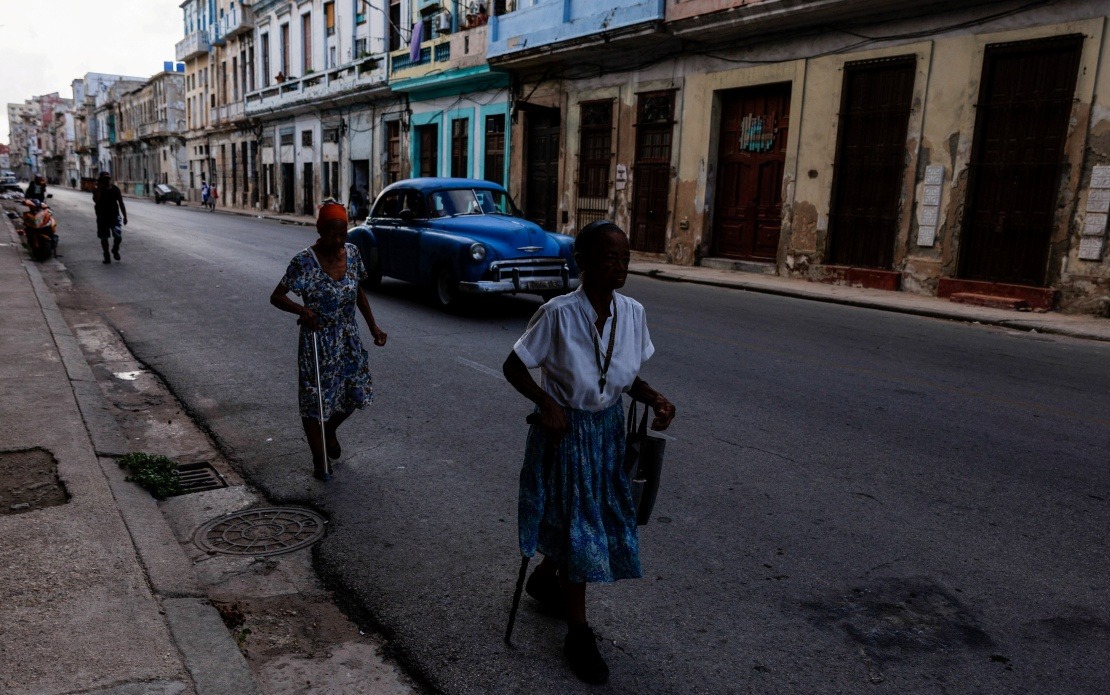
The timing of Diaz-Canel's statement reflects escalating pressure on Cuba's fragile economy. The Caribbean nation currently confronts its most severe economic crisis since the Soviet Union's collapse in the early 1990s. The first half of 2026 witnessed sharp economic contraction, while the electricity sector has become critically unstable. Average daily power outages have reached approximately twenty hours, with the electricity deficit climbing to 1,955 megawatts—a catastrophic shortfall that forces authorities to implement rolling blackouts affecting every sector of society from hospitals to factories.
Cuban officials consistently attribute the economic deterioration to American sanctions policy. Cuban authorities argue that Washington has deliberately disrupted oil supplies flowing to the island, leveraged its economic dominance to pressure multinational companies to cease business dealings with Cuba, and systematically restricted the country's capacity to access international credit markets and financing mechanisms. This combination of direct sanctions and secondary sanctions—penalties targeting third parties that interact with Cuba—creates a comprehensive economic siege that constrains development and living standards.
The Trump administration accelerated these measures significantly. On May 1, 2026, President Donald Trump signed an executive order imposing additional sanctions targeting Cuban government officials and state entities, justified on grounds of alleged internal repression and purported threats to American national security and foreign policy objectives. Earlier in January 2026, Trump had escalated further, signing an executive order declaring a national emergency status and establishing mechanisms to impose tariffs on goods from any country that supplies or sells oil to Cuba—an extraordinarily broad measure designed to coerce third nations into enforcing the American embargo.
For Malaysian and broader Southeast Asian observers, this confrontation between Washington and Havana resonates beyond Caribbean geopolitics. The sanctions regime against Cuba exemplifies the coercive economic instruments that the United States has deployed against various nations perceived as challenging American hegemony, a pattern Southeast Asia has witnessed firsthand through sanctions against Myanmar, Vietnam's human rights policies, and pressure on China. Diaz-Canel's invocation of McCarthyism speaks to concerns shared across developing nations about the deployment of ideological rhetoric—whether anti-communist, anti-authoritarian, or framed as human rights advocacy—as cover for geopolitical competition and economic coercion.
Moreover, the Cuban crisis illustrates fundamental tensions within the global system regarding national sovereignty and economic self-determination. Small and medium-sized nations with limited economic diversity remain vulnerable to economic isolation when they decline alignment with American foreign policy preferences. Cuba's experience demonstrates how sanctions designed ostensibly to promote political reform instead intensify hardship for ordinary populations while entrench leadership positions by creating rally-around-the-flag effects during crises.
Diaz-Canel's broader argument about transnational far-right movements also deserves attention from regional analysts. The rise of right-wing populist and nationalist movements across diverse geographic contexts—from Europe to Asia to the Americas—does suggest coordinated ideological and sometimes material support networks that transcend traditional state boundaries, even as these movements claim to defend national sovereignty. Understanding these patterns proves essential for smaller nations attempting to navigate great power competition without sacrificing their own independence or values.
The Cuban-American confrontation ultimately reflects unresolved contradictions in international relations: the tension between American assertions of a rules-based international order and Washington's willingness to employ unilateral coercive measures against states refusing subordination; between rhetoric emphasising democracy and human rights versus support for authoritarian allies; and between proclaimed commitment to national sovereignty and active interference in other nations' internal affairs. For policymakers across Southeast Asia, these contradictions demand careful analysis when assessing American security partnerships and the reliability of international legal frameworks that purport to constrain powerful states.

