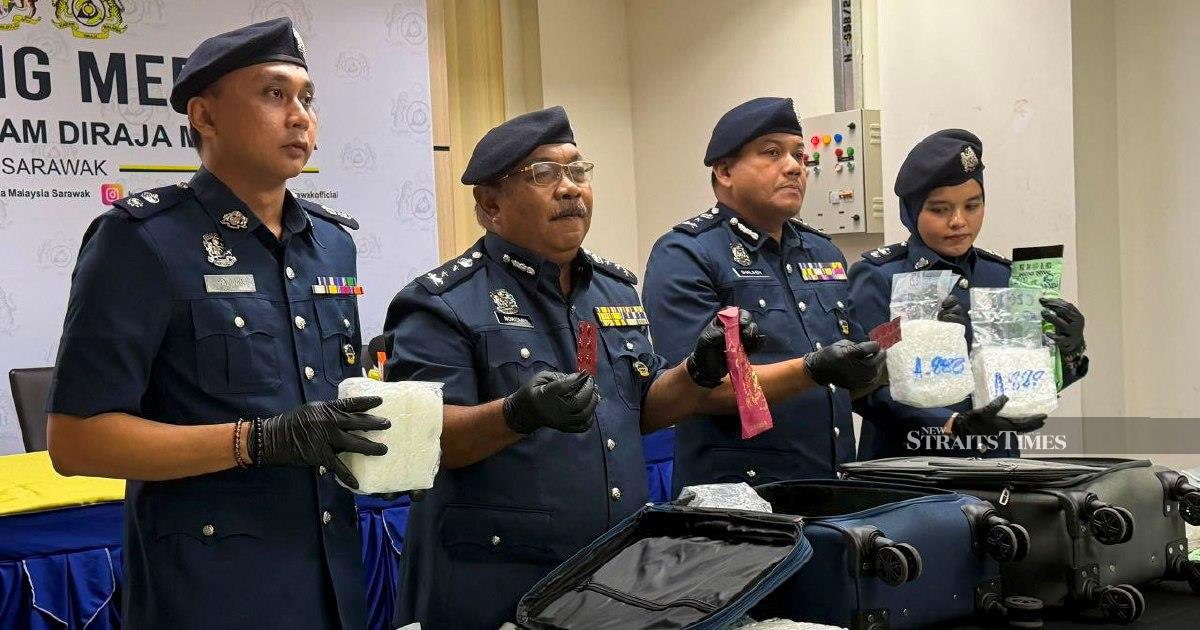
The Sarawak Customs Department has successfully thwarted what authorities characterize as a major drug smuggling operation at Kuching International Airport, culminating in the apprehension of two men on July 9. The interception represents a significant enforcement victory for the regional customs authority and underscores the ongoing challenges posed by transnational drug trafficking networks attempting to utilize Malaysian entry points.
The seized contraband carries an estimated street value of RM1.32 million, indicating the scale of the attempted smuggling venture. While detailed specifics regarding the drug types, quantities, and packaging methods employed by the smugglers remain under official review, customs officials have confirmed that the shipment was identified during routine screening procedures at the airport's cargo and passenger processing facilities. The seizure demonstrates the effectiveness of intelligence-led enforcement operations combined with systematic border security protocols.
The two detainees are currently being held for questioning and further investigation by customs authorities, with preliminary inquiries focusing on the origins of the shipment, intended destinations within Malaysia or the region, and the broader network potentially supporting the operation. Such investigations typically extend beyond immediate arrests, as customs and law enforcement agencies seek to dismantle supply chains and identify other participants in what may constitute a more extensive smuggling organization.
Kuching International Airport serves as a major aviation hub for East Malaysia and maintains considerable passenger and cargo traffic connecting Sarawak to regional and international destinations. The airport's strategic importance as a transportation nexus has historically made it an attractive target for smuggling operations, necessitating continuous vigilance and resource deployment by customs authorities. Regular interdiction operations like this one form a critical component of Malaysia's counter-narcotics strategy.
The seizure arrives amid heightened international focus on drug trafficking across Southeast Asia, where sophisticated criminal networks exploit porous maritime boundaries, remote border areas, and commercial transportation channels to move contraband. The region remains a critical transit zone for narcotics originating from the Golden Triangle and destined for markets across Asia and beyond. Malaysian authorities have progressively enhanced inter-agency coordination and cross-border intelligence sharing to combat these networks more effectively.
Sarawak, as Malaysia's largest state by area, presents unique enforcement challenges given its extensive borders with Indonesia and Brunei, significant river systems, and dispersed population centers. Customs authorities operating throughout the state must balance comprehensive border security with the practical demands of managing legitimate commercial and passenger flows. The successful interdiction at Kuching International Airport reflects sustained investment in detection capabilities and personnel training.
The operation also highlights the role of modern customs screening technology in modern drug enforcement. X-ray systems, advanced scanning equipment, and detector dog units deployed at major airports have proven instrumental in identifying concealed contraband that might otherwise escape detection. The integration of these technological tools with experienced customs officers and intelligence analysis creates layered defenses against smuggling attempts.
International cooperation remains essential to disrupting drug trafficking at its source. Malaysia's customs and law enforcement agencies maintain formal and informal relationships with counterparts throughout Asia-Pacific and beyond, facilitating information exchange regarding known smugglers, emerging trafficking routes, and contraband movement patterns. These networks often prove decisive in connecting individual seizures to broader criminal enterprises.
The successful outcome at Kuching International Airport will likely prompt additional scrutiny of similar operations at Malaysian airports and entry points. Customs departments across the country typically share operational intelligence derived from successful interdictions, allowing other agencies to refine their screening procedures and allocate resources more strategically. This intelligence-sharing mechanism has progressively improved enforcement effectiveness nationwide.
The case underscores the persistent challenge Malaysian authorities face in protecting their borders against determined smuggling organizations possessing substantial financial resources. Despite continued interdiction successes, traffickers continuously adapt their methods, employ new concealment techniques, and exploit emerging vulnerabilities in security systems. This ongoing adaptation requires equally dynamic responses from enforcement agencies, necessitating regular equipment upgrades, training updates, and procedural refinements.
For Sarawak's business and tourism sectors, successful customs operations like this one provide assurance that airport security remains robust and that legitimate travelers and cargo operators face minimal disruption. The balance between security effectiveness and operational efficiency remains critical for maintaining the airport's competitiveness and supporting economic activities dependent on reliable international connectivity.
Authorities have indicated that investigations into the case remain ongoing, with additional details anticipated as the inquiry progresses. The potential involvement of any other persons or organizations in the smuggling network will likely receive particular investigative attention. Once investigations conclude, the matter may proceed to prosecution, with sentencing guidelines for drug trafficking offenses in Malaysia imposing substantial penalties including extended imprisonment and substantial fines.

