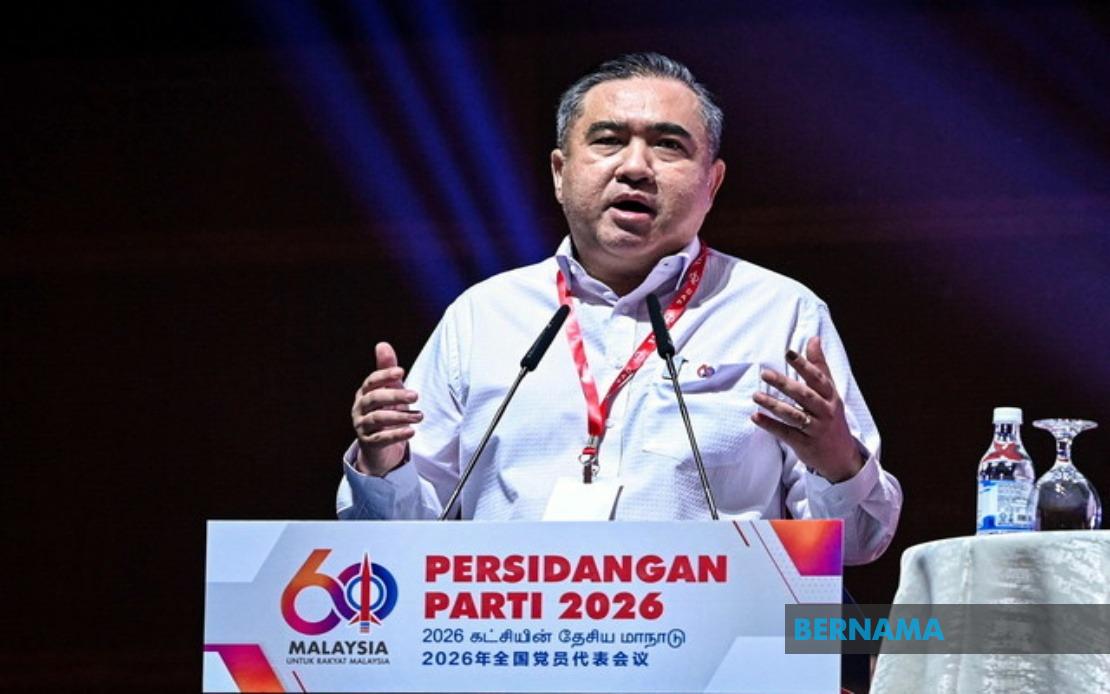
The Democratic Action Party has formally endorsed the government's intention to repeal the Universities and University Colleges Act (AUKU) 1971, marking a significant step in fulfilling long-standing opposition pledges on student freedoms. Speaking at the DAP 2026 National Conference at the Putrajaya International Convention Centre, party secretary-general Anthony Loke positioned the move as evidence of the ruling coalition's commitment to substantive reform rather than mere electoral consolidation. Loke framed the issue in expansive terms, suggesting that the party's participation in government offered a tangible opportunity to reshape Malaysian institutions according to principles the opposition had championed throughout its time outside cabinet.
Prime Minister Datuk Seri Anwar Ibrahim had announced the repeal initiative the previous day during the PKR 2026 National Congress, attributing the decision to representations submitted by student leaders advocating for comprehensive legislative change. The Cabinet is scheduled to consider the proposal the following Wednesday, setting the stage for formal consideration of what would represent one of the most significant amendments to higher education governance in recent years. Anwar's framing emphasised the expansion of democratic space and freedom for student movements, a position that resonates across the political spectrum among those who view AUKU as an antiquated mechanism of state control over campus life.
The significance of this moment extends beyond procedural shifts. AUKU has evolved considerably since its enactment in 1971, though critics contend that core restrictive provisions remain entrenched. The legislation has undergone seven amendments over five decades, each iteration responding to particular pressures or political moments. The 2012 amendment represented a watershed, permitting students to engage in political party activities beyond campus boundaries—a concession that reflected changing attitudes toward student political expression. However, advocates for comprehensive repeal argue that incremental reform has proven insufficient to address systemic constraints on student autonomy and democratic participation.
More recent modifications have continued this pattern of targeted adjustment. In 2024, amendments shifted disciplinary authority away from university vice-chancellors, vesting it instead in Student Disciplinary Committees—a decentralisation that proponents contend provides fairer procedural safeguards. Simultaneously, amendments to Section 15A expanded the financial autonomy of student representative councils and related bodies, permitting them to solicit and accept contributions according to established regulations. These changes suggest that the legislative framework has become increasingly porous to student input, yet the absence of full repeal means underlying restrictions on assembly, speech, and political organising persist in statutory form.
Loke's remarks at the DAP conference moved beyond simple celebration of the AUKU decision, however, pivoting toward a broader agenda encompassing educational equity. He explicitly urged Anwar to extend the reformist momentum to address systemic disparities in higher education access, emphasising the imperative of ensuring equal opportunity regardless of racial background. This intervention reflects longstanding DAP advocacy on affirmative action and meritocratic principles in university admissions and resource allocation. For Malaysian readers, this positioning invokes ongoing tensions between policies anchored in constitutional provisions regarding bumiputera preferences and arguments favouring needs-based or achievement-based distribution of educational opportunity.
The convergence of student movement demands with DAP legislative priorities illustrates how protests and policy advocacy intersect within Malaysia's political ecology. Campus activism, particularly during periods of heightened concern about governance and freedoms, has historically catalysed legislative debate. That student leaders successfully mobilised formal channels to submit memoranda and detailed proposals suggests the existence of structured pathways for youth participation in policy formation—a positive development for democratic engagement, though observers might debate whether such mechanisms genuinely shape outcomes or operate primarily as legitimatory exercises.
For Southeast Asian observers tracking Malaysia's institutional trajectory, the AUKU debate occupies particular importance. Across the region, tensions persist between state-controlled models of higher education and pressure for academic freedom and student autonomy. Thailand, Indonesia, and the Philippines have all grappled with comparable issues, and Malaysia's approach—whether toward full repeal or continued amendment—potentially influences how neighbouring governments approach similar questions. A complete AUKU repeal would position Malaysia as comparatively progressive on this dimension, though implementation details and any successor regulatory frameworks would ultimately determine whether the change produces genuinely transformative outcomes.
The practical implications of repeal merit careful consideration. Dismantling AUKU entirely would require establishing alternative governance architectures, whether through amendments to other legislation, university autonomy frameworks, or industrial relations law as it applies to student workers and activists. Institutions accustomed to operating within AUKU's parameters—university administrations, security services, and disciplinary bodies—would face substantial reorientation. Moreover, the vacuum created by repeal could theoretically be filled by restrictive measures embedded in other statutes, suggesting that the symbolic victory of abolition might not automatically translate into substantive expansion of freedoms without complementary reforms.
Loke's rhetorical move to connect student freedoms with educational equity reflects DAP's positioning as a reformist force concerned with both democratic participation and distributive justice. By linking AUKU repeal to broader questions about access and racial parity in higher education, the party signals recognition that institutional change operates across multiple dimensions simultaneously. For Malaysian readers evaluating political claims and competing visions for the nation's development, this fuller framing offers more nuance than simple celebration of a single legislative repeal, inviting reflection on how freedom and equality mutually reinforce or occasionally tension with one another in practice.

