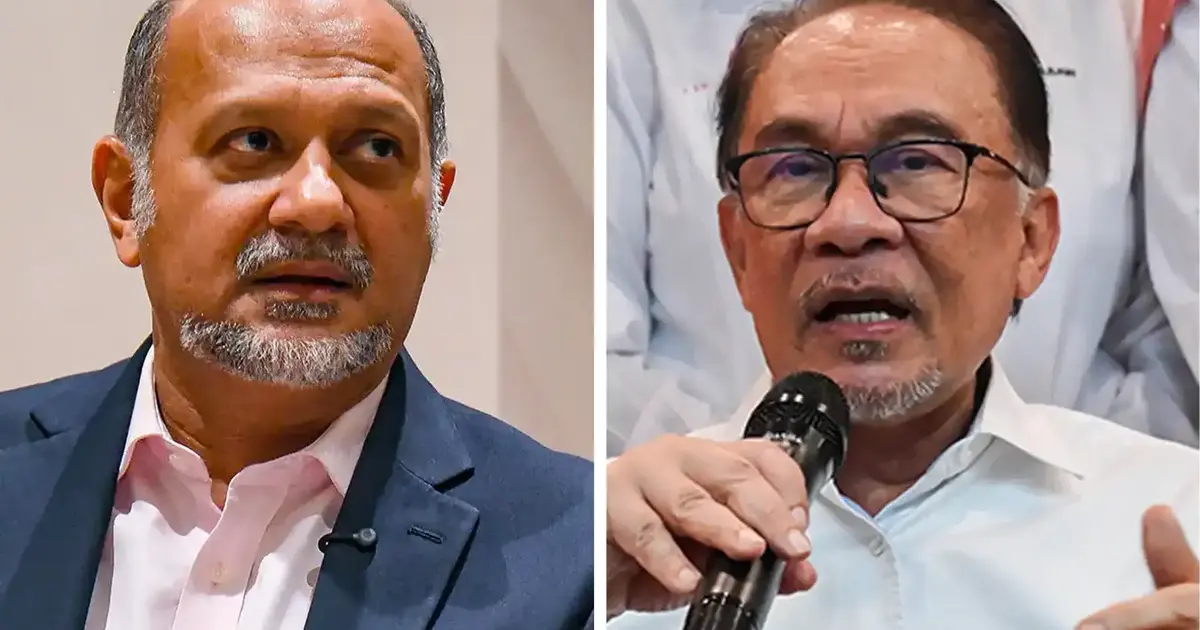
The Democratic Action Party has escalated its campaign to secure equal financial allocation for all Members of Parliament, urging Prime Minister Anwar Ibrahim to embed the commitment in legislation rather than leaving it to executive discretion. DAP's Gobind Singh Deo indicated the party has engaged Anwar multiple times on this issue, signalling growing frustration with the slow pace of implementation despite repeated dialogue at the highest political levels.
The push for equitable parliamentary funding represents a fundamental question about resource distribution and democratic fairness in Malaysia's legislative system. Currently, MPs operate under funding arrangements that can vary significantly depending on political affiliation, seniority, or other administrative factors. DAP's insistence on converting this into law reflects concerns that voluntary commitments, however well-intentioned, remain vulnerable to reversal or inconsistent application across different administrations.
Gobind Singh Deo's public articulation of this demand signals that behind-the-scenes discussions have not yielded the outcomes DAP seeks. The emphasis on making it legally binding rather than relying on administrative practice suggests the party views legislative certainty as essential protection for smaller opposition parties that may lack the political leverage to secure favourable treatment through informal channels. For Malaysian MPs, particularly those representing less populous constituencies or those from less politically dominant parties, equal funding would represent a significant shift in how parliamentary resources are distributed.
The equal funding principle carries implications beyond simple budget arithmetic. MPs requiring adequate resources to serve constituents effectively need funds for office operations, staff, research capabilities, and community engagement. Disparities in these allocations create asymmetries in parliamentary capacity, potentially disadvantaging certain regions or political groups. A legislative guarantee would establish a non-negotiable baseline applicable across all 222 parliamentary constituencies regardless of the ruling party's composition.
From a governance perspective, enshrining equal MP funding in law would align Malaysian practice more closely with principles of parliamentary democracy observed in established democracies where such arrangements are standard. It would reduce the temptation for dominant parties to weaponise funding allocations as a means of political control or pressure on backbenchers. The transparency inherent in statutory arrangements also facilitates public scrutiny and accountability in how taxpayer resources support the legislative branch.
The timing of DAP's renewed push occurs within Malaysia's current political context where coalition mathematics remain fluid and no single party commands overwhelming dominance. This creates a window where opposition parties can advocate for structural reforms that protect the interests of minority voices in Parliament. Once electoral fortunes shift significantly, such opportunities for implementing fairness mechanisms often narrow considerably. DAP's strategic emphasis on legislating the principle thus reflects pragmatic political calculation about the current balance of power.
Implementing statutory equal funding would require defining what constitutes equitable allocation and determining which expenditure categories should be included. Should allocations cover basic office rental, personnel costs, technology infrastructure, or all of these equally? The technical architecture of such legislation matters considerably for its real-world impact. Poorly designed statutory provisions could create unintended consequences or difficulties in implementation, whereas carefully crafted legislation could establish a durable framework serving parliamentary functioning across decades.
For Malaysian voters, particularly those in smaller constituencies or from less dominant political parties, equal MP funding offers practical consequences. It potentially ensures their elected representatives enjoy comparable resources to serve local needs, respond to constituency inquiries, and maintain constituent services. This democratisation of parliamentary capacity could enhance the quality of representation across the nation's diverse constituencies and reduce systemic advantages based on political affiliation rather than actual needs.
The DAP's initiative also intersects with broader discussions about parliamentary reform and institutional strengthening in Malaysia. As the nation navigates questions about checks and balances, executive power, and legislative independence, the question of adequate and equitable parliamentary resourcing becomes relevant. Strengthening individual MPs through equal funding mechanisms represents one dimension of building a more robust legislative branch capable of meaningful oversight and representation.
Prime Minister Anwar Ibrahim's response to this legislative proposal will signal his administration's commitment to systemic parliamentary reform beyond electoral pledges. Should the government embrace statutory equal funding, it would represent a significant institutional achievement demonstrating willingness to constrain executive discretion in favour of legislative equity. Conversely, resistance or indefinite delay might suggest the administration's broader support for parliamentary reform faces practical limitations or political complications not apparent in public statements.
The trajectory of this issue in coming parliamentary sessions will likely reflect both DAP's persistence in advocating for legislative measures and the government's capacity or willingness to implement structural changes affecting resource distribution. For Southeast Asian observers monitoring Malaysia's democratic institutions, this debate over parliamentary funding mechanisms offers insights into how coalition governments navigate reform initiatives and whether political commitment translates into institutional change. The stakes extend beyond budgetary considerations to questions about democratic quality and fair representation in the nation's legislative process.

