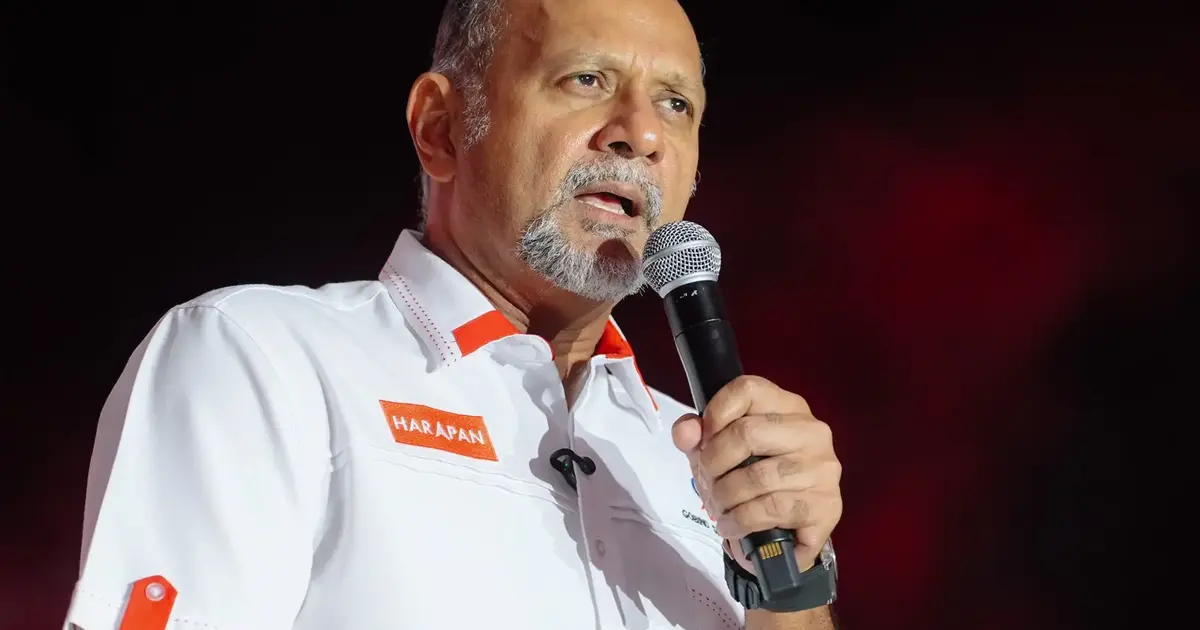
Malaysia's Digital Minister and DAP national chairman Gobind Singh Deo has demanded clarity from the Attorney General regarding what he characterises as an unexplained delay in the official response to the Durian Tunggal shooting case. The high-profile demand underscores growing frustration within government circles over the pace of investigation into an incident that has attracted national attention and raised serious questions about law enforcement protocols.
The intervention by Deo, a prominent voice within the ruling coalition and a senior member of the Democratic Action Party, suggests the matter has transcended routine police procedure to become a concern for the political leadership. By publicly directing his request to the Attorney General rather than conventional law enforcement channels, Deo is signalling that the case requires intervention at the highest prosecutorial level, a step typically reserved for matters of significant public interest or constitutional importance.
Deo's determination to escalate the issue further demonstrates his conviction that the case warrants urgent executive attention. He has indicated his intention to place the matter on the agenda for tomorrow's Cabinet meeting, a formal setting where federal ministers gather to address matters of national governance. This manoeuvre transforms what might otherwise remain an administrative issue into a topic for whole-of-government discussion and potential direction-setting from the Prime Minister and Cabinet colleagues.
The timing of Deo's intervention reflects broader concerns about accountability and responsiveness within Malaysia's criminal justice system. Public confidence in investigations depends heavily on visible momentum and transparent communication from authorities. When inexplicable delays occur, particularly in cases that command public attention, the perception of official indifference or incompetence can mount rapidly, eroding public trust in institutional competence.
For Malaysian readers and the broader Southeast Asian region, this episode illustrates the interconnected nature of political accountability and judicial process. Even in jurisdictions with relatively sophisticated legal frameworks, delays and bureaucratic friction can impede investigations. The willingness of a Cabinet minister to formally challenge such delays through government channels suggests a commitment to institutional oversight, though it also hints at potential gaps in normal supervisory mechanisms.
The Durian Tunggal shooting case has captured public and media attention as a significant incident warranting thorough investigation. The delay that has prompted Deo's intervention appears to have extended beyond what officials consider routine or justifiable. Whether the slowdown stems from evidentiary complexities, competing investigative priorities, or administrative bottlenecks remains unclear from available information, making the Attorney General's explanation potentially vital to understanding how such cases are being managed.
Deo's approach of raising concerns directly with the Attorney General, followed by Cabinet-level escalation, follows established protocols for ministerial intervention in matters touching on public administration and justice. However, the public nature of his challenge suggests he believes the situation requires more than quiet bureaucratic resolution. By placing the matter in the political domain, he is effectively leveraging his position to demand action-oriented responses rather than procedural explanations.
The Cabinet meeting referenced by Deo represents a significant forum where decisions affecting government policy direction are made collectively. Introducing the Durian Tunggal case at this level indicates his belief that the matter deserves resources, attention, and possibly ministerial directives that might accelerate progress. Such escalation can sometimes serve as a catalyst for administrative movement that routine channels fail to achieve.
From a governance perspective, Deo's intervention raises important questions about how Malaysia's criminal justice system handles high-profile cases when political actors perceive delays or inaction. The balance between allowing investigative processes to unfold independently and ensuring timely progress remains a perpetual challenge in mature democracies. Ministers have legitimate oversight responsibilities, yet excessive political interference can compromise investigative integrity. Deo's approach of demanding transparent explanation rather than demanding specific outcomes represents a measured middle ground.
The broader context for this episode includes ongoing discussions within Malaysian society about institutional effectiveness and public accountability. Citizens increasingly expect their elected representatives to actively oversee government agencies and ensure they perform their functions efficiently. Deo's action aligns with such expectations, demonstrating that senior officials take responsibility for monitoring the performance of justice institutions.
The Attorney General's forthcoming explanation will likely shape not only how the Durian Tunggal case proceeds but also signal broader messages about the willingness of prosecutorial authorities to respond to ministerial scrutiny and public concern. Whether the response addresses specific bottlenecks or promises enhanced oversight mechanisms, it will carry implications for how similar cases may be handled in future and what standards of responsiveness the justice system is prepared to maintain.
For observers of Malaysian politics and administration, this situation illustrates how checks and balances operate within the Cabinet system. While formal separation of powers theoretically insulates the judicial system from executive influence, practical governance requires mechanisms for elected officials to inquire into performance and progress. Deo's action demonstrates such mechanisms at work, with implications extending beyond Durian Tunggal to broader questions of institutional accountability and administrative efficiency across Malaysia's public sector.

