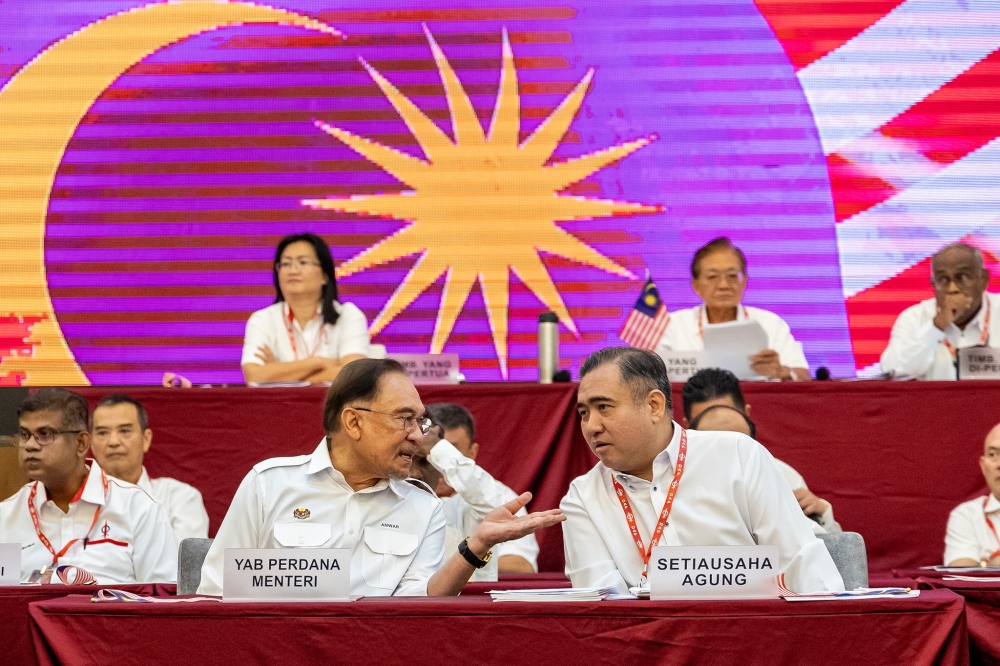
DAP secretary-general Anthony Loke has decisively shut down talk of his party abandoning Prime Minister Datuk Seri Anwar Ibrahim's Pakatan Harapan coalition, despite growing tensions over the pace at which promised reforms are being implemented. Speaking in Kuala Lumpur on July 17, Loke stressed that the Democratic Action Party remains fully invested in the ruling alliance and has no intention of breaking ranks, even as frustrations mount within the party over governance delays.
The reassurance from Loke comes at a time when Pakatan Harapan faces mounting criticism from both within its own ranks and across the opposition benches regarding the speed of institutional and political reforms initiated since the coalition assumed office. DAP, historically positioned as a reform-oriented party championing institutional accountability and systemic transparency, has found itself constrained by the realities of leading a diverse, multi-ethnic coalition government that must balance competing interests across multiple political partners and constituencies.
In remarks that reveal the practical constraints of coalition governance, Loke acknowledged a fundamental truth about Malaysian politics: advancing ambitious reform agendas requires compromise and patience when power is shared among parties with different ideological emphases and electoral constituencies. The DAP leader's statement suggests that while the party may harbour reservations about the velocity of change, party leadership has concluded that remaining within the coalition serves DAP's long-term strategic interests more effectively than a confrontational stance outside government would.
The timing of Loke's clarification is significant, coming as Pakatan Harapan navigates the complexities of sustaining a coalition that includes not only DAP but also PKR and Amanah, each bringing distinct political cultures and policy priorities to the table. Coalition governments inherently operate at the speed of their slowest partner, and balancing reform ambitions with the need to maintain political stability and secure backing from smaller coalition components has proven more challenging than some anticipated during the initial euphoria following the 2022 general elections.
DAP's particular frustration likely stems from the party's identity as Malaysia's most consistent advocate for meritocratic governance, anti-corruption measures, and institutional reform. The party's urban-based, largely middle-class support base has long expected rapid, visible progress on these fronts. Yet the messy business of executing reform across a complex federal system, with significant state-level variations and embedded institutional resistance, has necessarily tempered the pace of transformation. What theoretically makes sense as reform policy can encounter fierce bureaucratic resistance, resource constraints, or require legislative amendments that take time to navigate through parliament.
Loke's candid acknowledgement that slower reform represents the price of governing in coalition form represents an important moment of political maturity for DAP. Rather than maintaining rhetorical maximalism about what Pakatan Harapan should accomplish, the party's leadership has opted for the more pragmatic calculation that preserving coalition stability, maintaining government, and implementing whatever reforms remain achievable in this context outweighs the symbolic satisfaction of departing government to register a protest about pace. This reflects a recognition that DAP exercises more influence over policy from within government than it would from opposition benches.
The broader Malaysian political context makes DAP's commitment to Pakatan Harapan particularly consequential. The alternative coalition arrangement would likely involve UMNO and other components of the previous ruling structure, a prospect that DAP strategically opposes based on fundamental differences regarding governance philosophy and institutional accountability. From this perspective, accepting slower reform while remaining in a Pakatan Harapan government represents the lesser of available political costs, even if it disappoints sections of DAP's base who yearn for more aggressive transformation.
Regionally, this consolidation of Pakatan Harapan's coalition stability carries implications for Malaysia's political trajectory. A fractured ruling coalition would create openings for alternative configurations that might prove less progressive on economic and social policy matters that concern Singapore, Indonesia, and other neighbours invested in Malaysia's institutional stability and governance quality. International investors and regional partners have grown accustomed to the Pakatan Harapan framework and the relative predictability it provides compared to previous arrangements.
Looking ahead, the challenge for DAP will involve managing internal party expectations while remaining credibly committed to the reform agenda within coalition constraints. The party must demonstrate to its supporters that remaining in government allows it to advance incremental reforms that would be impossible in opposition, while also maintaining sufficient independence to credibly claim it has not been co-opted by coalition partners. This delicate balancing act will define DAP's political positioning through the remainder of this parliamentary term and potentially beyond.

