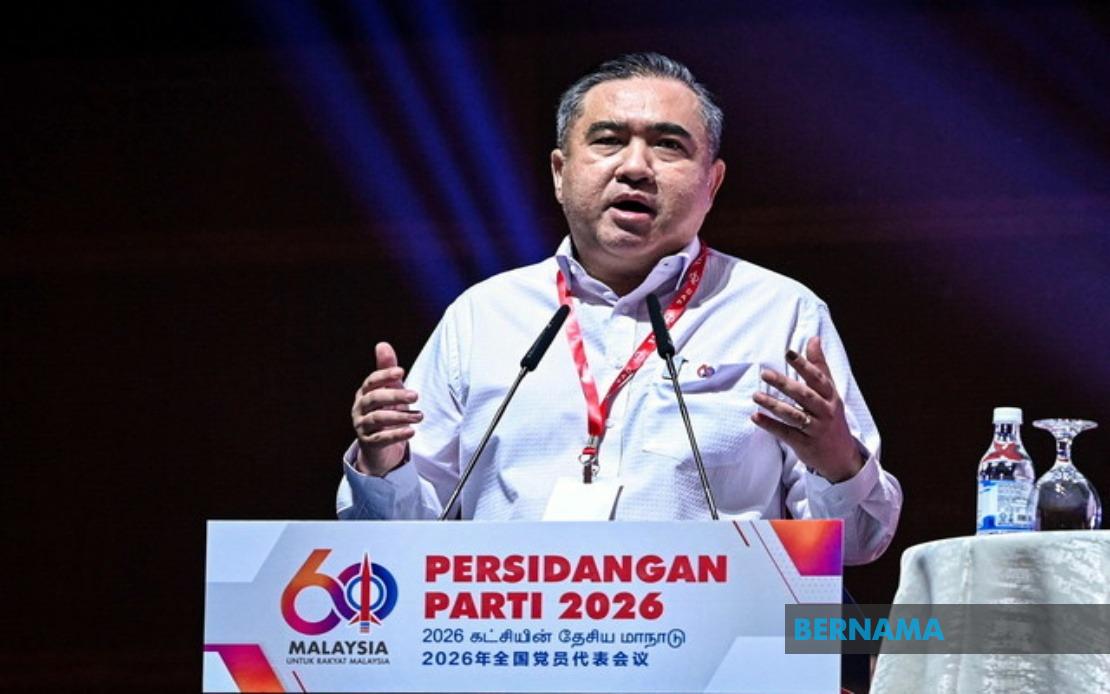
The Democratic Action Party has committed to maintaining its role within Malaysia's federal government throughout the remainder of the 15th Parliamentary term, marking a significant statement of coalition stability at a critical juncture for the ruling alliance. The decision emerged from deliberations at the DAP 2026 Party Conference held at the Putrajaya International Convention Centre, where party leadership sought explicit grassroots endorsement for continued participation in the Unity Government framework.
Party Secretary-General Anthony Loke brought the matter before delegates through a special motion, recognising the importance of securing clear party consensus on such a consequential commitment. Rather than relying on traditional voice voting methods, the party opted for a secret ballot process, underscoring the procedural rigour applied to this decision and its significance for internal party dynamics. The confidential voting mechanism allowed delegates to express their preference without external pressure or observation, ensuring the integrity of the mandate sought from party grassroots.
The electoral results delivered a decisive endorsement of the leadership's coalition strategy. Of 2,106 ballot papers issued, 1,857 delegates voted in favour of remaining within government, representing an 88.2 per cent majority of those present at the conference. Substantially fewer delegates, numbering 242, voted to withdraw from the coalition, whilst seven ballots were spoilt. The voting patterns suggest substantial internal consensus around continued participation, though the minority dissent indicates ongoing reservations within party ranks regarding coalition engagement.
DAP's current influence within the federal administration reflects its position as a significant coalition component. The party holds five Cabinet-level appointments, with Anthony Loke serving as Transport Minister, Steven Sim overseeing Entrepreneur and Cooperatives Development, Gobind Singh Deo managing the Digital portfolio, Nga Kor Ming responsible for Housing and Local Government, and Hannah Yeoh representing the Prime Minister's Department and Federal Territories. This ministerial representation provides DAP substantive policymaking capacity across multiple government sectors.
Beyond Cabinet positions, DAP influences government policy through seven deputy ministerial roles distributed across various portfolio areas. These include Teo Nie Ching in Communications, Datuk Chan Foong Hin in Agriculture and Food Security, Wong Kah Woh in Education, and Liew Chin Tong in Finance. Additional deputy ministers Kulasegaran, Lim Hui Ying, and Mordi Bimol manage portfolios in the Prime Minister's Department (Law and Institutional Reform), Women, Family and Community Development, and Youth and Sports respectively. The depth of DAP representation across both ministerial and parliamentary secretary positions indicates meaningful participation in government operations.
The conference assembly comprised 4,264 delegates representing 1,704 branches across Malaysia, demonstrating the nationwide participation in party decision-making processes. This broad base of delegate participation ensures that the mandate reflects sentiment across DAP's organisational structure rather than reflecting positions held exclusively by the party hierarchy. The scale of the conference and voting exercise underscores DAP's commitment to consultation with grassroots members on matters substantially affecting the party's political trajectory.
The timing of this commitment carries particular significance within Malaysia's broader political context. The explicit reaffirmation of coalition loyalty at this juncture provides reassurance to coalition partners regarding DAP's intentions and helps stabilise the broader Unity Government framework. Such declarations become increasingly important as parliamentary terms progress and political pressures mount from various quarters, including both internal party dynamics and electoral considerations looking toward future contests.
DAP's continued participation in government provides the party with direct influence over policy implementation across multiple sectors relevant to urban communities, where DAP maintains substantial electoral support. Transport infrastructure development, digital economy initiatives, housing provision, and local government administration directly impact constituency interests that DAP represents, particularly in Peninsular Malaysia's major urban centres. Maintaining these portfolios enables DAP to demonstrate concrete policy achievements to constituents.
The coalition context within which this decision operates reflects Malaysia's evolving political landscape following recent electoral cycles. The Unity Government framework represents a relatively novel arrangement in Malaysian politics, requiring sustained cooperation among distinct political parties with differing ideological orientations and electoral bases. DAP's commitment to participate until parliamentary term conclusion provides temporal clarity regarding coalition durability and reduces uncertainty about potential political disruptions.
The minority opposition from 242 delegates, whilst substantially smaller than the pro-government vote, highlights residual concerns within party membership regarding coalition participation. Such dissent likely reflects ideological reservations about cooperation with Barisan Nasional components, concerns regarding policy compromises necessitated by coalition dynamics, or doubts about electoral viability of the current arrangement heading toward the subsequent general election. Party leadership will likely need to address these concerns through ongoing dialogue and demonstrable policy achievements.
Looking forward, DAP's commitment extends only to the current parliamentary term's conclusion, preserving the party's flexibility regarding future coalition arrangements. This temporal limitation reflects political realism regarding the contingent nature of Malaysian coalition politics, where circumstances and electoral outcomes substantially influence viable partnership combinations. The decision thus represents committed participation bounded by realistic timeframes rather than open-ended alliance commitments.
The conference decision also strengthens DAP's negotiating position within the broader coalition framework. By securing explicit grassroots approval for continued participation, party leadership operates from a position of validated internal consensus when engaging coalition partners on policy matters or ministerial appointments. This reinforced mandate enhances DAP's credibility in coalition discussions and provides coverage for compromises necessitated by multi-party governance arrangements.

