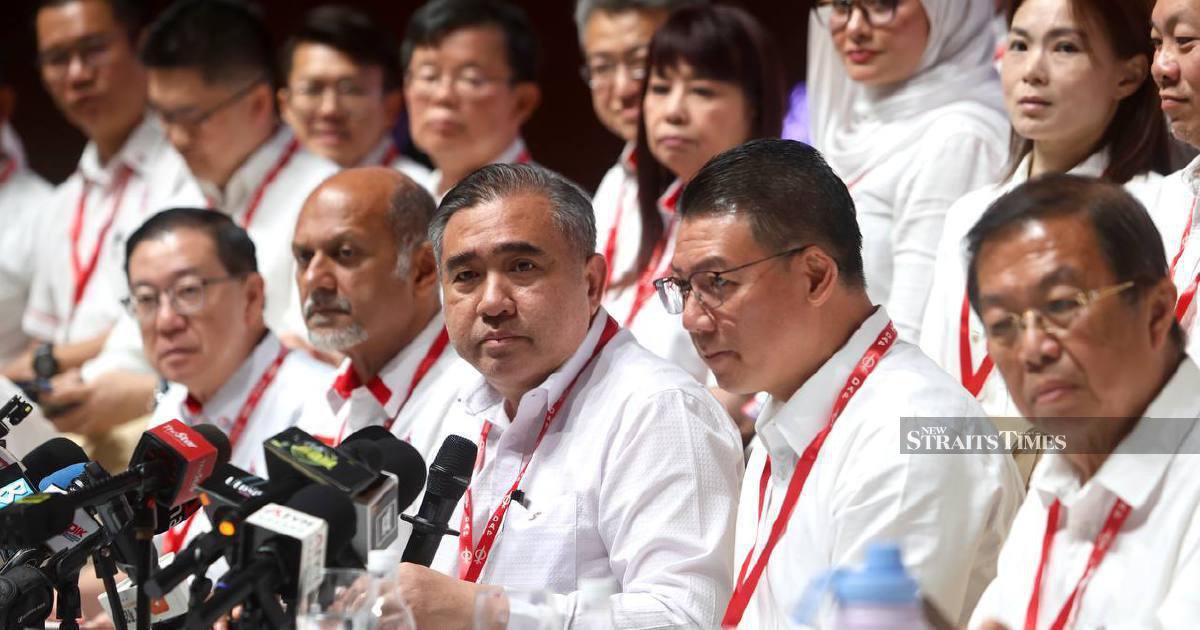
The Democratic Action Party has signalled its intention to maintain its working relationship with Umno, setting aside internal party tensions triggered by the recent discharge not amounting to an acquittal decision involving Barisan Nasional chairman Datuk Seri Ahmad Zahid Hamidi. This statement comes at a critical juncture for Malaysia's governing coalition as it seeks to navigate the delicate balance between partnership cohesion and party-level political disagreements.
The DNAA ruling in Zahid's case has emerged as a divisive issue within DAP ranks, with some party members expressing concern about the legal outcomes affecting the coalition's credibility and anti-corruption credentials. However, party leadership appears determined to compartmentalise these grievances and preserve the broader political architecture that has kept the Pakatan Harapan-Umno coalition functioning since the 2023 general election. This pragmatic approach underscores a fundamental reality of Malaysian coalition politics: maintaining government stability often requires overlooking individual controversies that might otherwise rupture inter-party relations.
The tension surrounding Zahid's case reflects a deeper challenge within Malaysia's political ecosystem, where questions about the independence of the judiciary and the accountability of high-ranking officials intersect with coalition management. DAP, traditionally positioned as an anti-corruption watchdog, faces criticism from its base when it chooses continuity over confrontation. The party's calculation appears to hinge on the belief that sustaining the coalition provides greater long-term benefits than pursuing a principled stand that could destabilise the government and potentially return more corrupt administrations to power.
Umno's position within this dynamic is equally complicated. As the dominant Malay-Muslim party in the coalition, Umno wields significant structural power, yet its own stability has been questioned by court proceedings against its senior figures. Zahid's discharge, while not a full acquittal, has offered the party some breathing room, though the legal cloud over its leadership remains concerning for international observers and domestic critics who view it as undermining institutional credibility. For DAP, the calculation involves recognising that destabilising Umno could ultimately destabilise the entire coalition architecture.
The decision to continue cooperation despite these tensions demonstrates a maturation in Malaysian coalition politics, where parties increasingly recognise that governing requires compromise and tolerance of ideological friction. This mirrors patterns seen across Southeast Asian democracies, where multi-ethnic coalitions must often subordinate individual grievances to collective governance objectives. Malaysia's 2018 political transition, while heralded as a democratic awakening, ultimately led to a return of many familiar faces and structures, suggesting that revolutionary change is constrained by the practical necessity of maintaining functional governance.
DAP's position is particularly delicate because it represents a significant urban, Chinese-majority voter base that is acutely sensitive to corruption issues and judicial independence. Party leaders must convince their supporters that working alongside figures touched by corruption allegations does not represent a betrayal of the party's foundational principles. This communication challenge extends beyond simple public relations—it involves articulating a coherent vision of how anti-corruption goals can be pursued even within frameworks that seem to compromise those very principles.
The broader implication for Malaysian governance structures is that informal agreements and behind-the-scenes negotiations often matter more than public declarations. Zahid's DNAA, while legally distinct from an acquittal, has effectively removed an immediate threat to his political career and the stability of Umno leadership. For the coalition to function, DAP must find a way to live with this outcome, however unsatisfying it may be to party purists. This accommodation reflects the reality that Malaysia's political system, despite democratic forms, remains heavily influenced by pragmatic power-sharing arrangements rather than purely meritocratic or accountability-driven processes.
The tension also illustrates how coalition partners often maintain divergent narratives about the same events. Umno, understandably, frames the DNAA as a vindication of Zahid's position, while some DAP members view it as a failure of the justice system. Rather than force a confrontation that would require either party to dramatically alter its public stance, leadership in both parties has opted for strategic silence and a focus on forward momentum. This approach preserves coalition functionality but comes at the cost of failing to provide clarity on crucial questions about judicial independence and accountability.
Moving forward, the stability of this arrangement depends significantly on whether additional legal complications emerge for Umno figures or whether the coalition faces external pressures that could destabilise its internal equilibrium. If the government delivers tangible improvements in economic management, reduced corruption in daily governance, or meaningful reforms in key areas, the Zahid DNAA issue will fade as a contentious point. Conversely, if governance performance deteriorates or further legal proceedings affect coalition partners, the accumulated tensions could eventually rupture the arrangement. For now, DAP has chosen the path of pragmatic engagement, betting that the costs of coalition maintenance are lower than the costs of dissolution.
This decision will likely frustrate civil society organisations, international observers concerned with accountability, and DAP's reform-minded supporters who view such compromises as fundamentally incompatible with anti-corruption campaigns. Yet from a purely political survival standpoint, DAP's leadership has concluded that maintaining a voice within government—even alongside figures whose legal status remains ambiguous—provides more opportunity to push for accountability and reform than would be available from opposition benches. Whether this calculation ultimately proves correct will become evident only as the coalition matures and faces the inevitable crises that test such arrangements.

