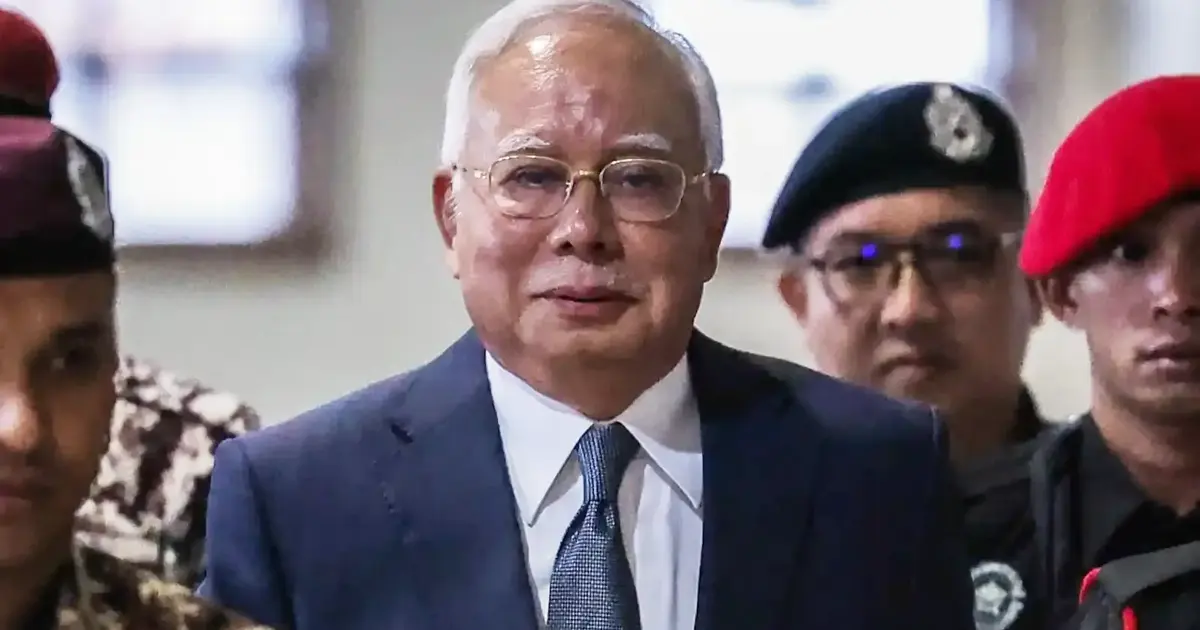
The political landscape has grown increasingly fraught as coalition partners find themselves at odds over whether Malaysia's imprisoned former Prime Minister Najib Razak deserves executive clemency. DAP politician Ong Hui Xue has directly challenged the Malaysian Chinese Association, a key component of the governing Pakatan Harapan coalition, to take a definitive public position on the matter as senior Umno figures ramp up their advocacy.
Ong's intervention reflects mounting unease within the coalition over the apparent contradiction between the Umno-led opposition's openly campaigning for Najib's release and the government's stated commitment to the rule of law. The questioning exposes fault lines in Malaysia's political firmament that have been lurking beneath surface unity. By pressing MCA to declare itself, the DAP politician is testing whether the Chinese-majority party will align with Umno's narrative or distinguish itself through principled opposition to what critics view as an attempt to overturn judicial outcomes through executive intervention.
The push for Najib's pardon has gained momentum in recent months, with several prominent Umno personalities publicly advocating for his exoneration. These efforts represent a significant shift in Malaysian politics, where the former premier's conviction and imprisonment once appeared settled matters. The intensity of the current campaign signals that Umno perceives strategic advantage in rehabilitating Najib's public image and potentially restoring him to political relevance. Whether this reflects genuine support among Umno's grassroots or a calculated move by party leadership remains contested.
MCA's historical positioning as a moderate voice within coalition politics makes its response to Ong's challenge particularly significant. The party has traditionally balanced pragmatism with stated concern for governance standards, occupying a centrist space that can become uncomfortable when major political figures face conviction. The silence on Najib's case could be interpreted either as diplomatic discretion or as tacit acceptance of Umno's position, depending on one's political vantage point. Ong's public demand for clarification effectively eliminates the option of continued ambiguity.
The constitutional question underlying these efforts merits examination. Malaysia's Yang di-Pertuan Agong possesses constitutional authority to grant pardons, but this power has traditionally been exercised sparingly and with careful consideration of judicial independence. Using executive clemency to overturn a court conviction of a former head of government would represent an unprecedented intervention into the judiciary's domain. Legal scholars and governance observers have raised concerns that normalising such actions would fundamentally alter the relationship between executive, judicial, and legislative branches.
Najib's case carries particular weight because it emerged from investigations into the 1Malaysia Development Berhad scandal, one of the largest corruption cases in Malaysian history. The complexity of the charges, the scale of alleged misappropriation, and international dimensions of the investigation through bodies like the US Department of Justice created expectations that judicial processes would be allowed to conclude without executive interference. A pardon granted before the appeals process fully concludes would send disquieting signals about Malaysia's commitment to anti-corruption efforts at the highest levels.
From a Southeast Asian perspective, how Malaysia handles this situation carries implications beyond its borders. Regional observers have watched closely as the nation navigates the tension between accountability and political pragmatism. Countries throughout the region face similar pressures when powerful figures encounter legal consequences, and Malaysia's approach may influence how neighbouring states balance these competing imperatives. A precedent of granting clemency to high-ranking convicted officials could weaken regional anti-corruption norms already under pressure from various directions.
The coalition dynamics reveal broader challenges facing Pakatan Harapan since its 2018 victory. The partnership between ideologically disparate parties—from the socially conservative Islamic PAS to the liberal DAP—has always required careful navigation of contentious issues. Najib's case sits at the intersection of multiple fault lines: urban versus rural interests, Malay-Muslim constituencies versus pluralist constituencies, and principled governance versus political expedience. MCA's position will indicate whether the coalition can maintain unified messaging or whether it will fragment further on fundamental questions of institutional integrity.
Ong's challenge should be understood not merely as partisan sparring but as an attempt to force the coalition to confront its own internal contradictions. By demanding that MCA declare itself, the DAP politician is asking whether Malaysian political culture can accommodate both the rule of law and the elevation of political convenience. The response from MCA leadership will reveal much about the current state of Malaysian governance and where the balance between these competing values actually rests in practice, regardless of official rhetoric.
For Malaysian voters, clarity from coalition partners on such matters carries practical importance. Electoral choices depend partly on assessments of whether parties genuinely believe in stated principles or whether those principles shift with circumstantial advantage. Public statements of position, particularly when they come at political cost, provide evidence of where parties actually stand when pressure intensifies. Ong's intervention therefore serves a democratic function beyond mere political theatre, even as it undoubtedly also advances DAP's strategic interests.

