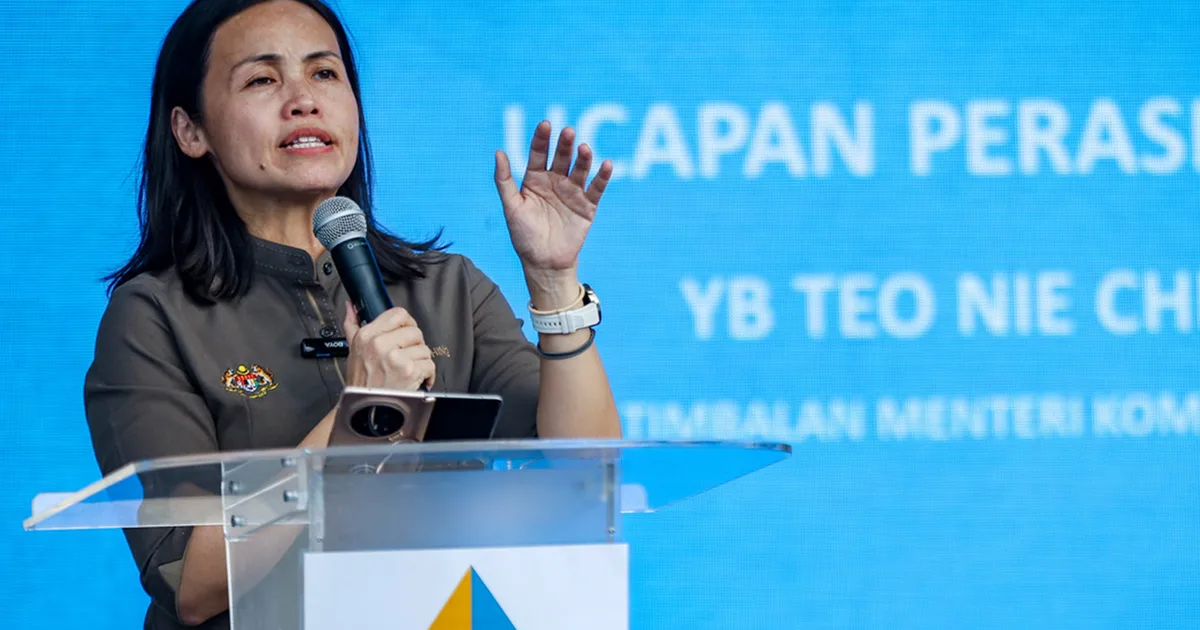
A prominent DAP politician holding the position of deputy minister has come forward to denounce what she characterises as a deliberate smear campaign, alleging that newly established social media accounts were created with the express purpose of disseminating false information linking her to gang-related activities. The targeting represents a notable escalation in online political attacks, raising fresh concerns about the misuse of digital platforms for character assassination in Malaysian politics.
The deputy minister's complaint highlights a troubling pattern in Malaysian political discourse, where social media has increasingly become a battleground for personal attacks divorced from policy substance. Rather than engaging opponents on their political positions or governance record, critics are resorting to coordinated disinformation campaigns that exploit the borderless nature of online platforms. The creation of accounts specifically designed for this purpose suggests a calculated strategy rather than spontaneous criticism, pointing to potential coordination among hostile actors.
This development occurs within a broader context of intensifying digital hostility directed at female political leaders in Malaysia. Women in politics, particularly those from opposition parties, have historically faced disproportionate online harassment compared to their male counterparts. Such campaigns frequently deploy personal and defamatory allegations rather than substantive political critique, creating a hostile environment that can deter women's political participation and undermine their effectiveness in public office.
The gang-related allegations in particular warrant scrutiny given their serious criminal implications. Unsubstantiated claims linking public figures to organised crime can cause significant reputational damage and distract from legitimate governance concerns. In Malaysia's political landscape, where questions of credibility and public trust remain paramount following various corruption scandals, such unfounded accusations represent a dangerous weaponisation of the justice system's vocabulary against political opponents.
Social media platforms bear considerable responsibility for enabling such coordinated attacks. While these companies have implemented policies ostensibly designed to combat inauthentic behaviour and coordinated disinformation, enforcement remains inconsistent and often reactive rather than preventative. The relative ease with which actors can create multiple accounts and deploy them in concert against a specific target suggests that existing safeguards are insufficient to protect public figures from systematic defamation campaigns.
From a Malaysian governance perspective, this incident underscores the pressing need for comprehensive digital literacy initiatives and media regulation frameworks that balance free expression with protection against malicious falsehoods. The current regulatory environment lacks clear mechanisms for holding online actors accountable when they engage in defamatory campaigns, leaving individual targets to pursue costly legal remedies. A more proactive approach would establish clearer consequences for coordinated disinformation while preserving legitimate political discourse.
The timing and execution of such campaigns also merit investigation. Orchestrated smear tactics often intensify around politically significant moments—whether parliamentary sessions, policy announcements, or electoral periods. Understanding when and why particular figures become targets of coordinated attacks can reveal broader patterns in Malaysia's political communication ecosystem and identify whether certain groups or interests benefit from undermining specific leaders' credibility.
For the DAP as a political organisation, such attacks present both challenges and opportunities. While they occupy opposition benches, the party's members holding ministerial positions represent significant achievements in Malaysia's power-sharing arrangements. Consequently, they become lightning rods for coordinated attacks from those hostile to the current political configuration. The party must balance defending its members' reputations with avoiding the appearance that it weaponises state resources against online critics.
The broader implications for Southeast Asian democracies are considerable. Malaysia's experience with coordinated social media disinformation campaigns mirrors challenges seen across the region, from Thailand to the Philippines to Indonesia. As online platforms become increasingly central to political communication, the capacity of bad actors to deploy false allegations against opponents threatens to erode public discourse quality and institutional trust across the entire region.
For ordinary Malaysians attempting to navigate political information, incidents like this underscore the importance of source verification and critical consumption of social media content. When unverified allegations surface online, particularly those making serious criminal claims, citizens should demand evidence before accepting narratives that may originate from coordinated disinformation efforts. This individual responsibility complements institutional reforms needed at platform and regulatory levels.
The deputy minister's public disclosure of this campaign serves an important function in raising awareness about coordinated online attacks and encouraging greater scrutiny of social media accusations. By naming the problem explicitly, she contributes to a growing recognition that Malaysia's digital political space requires greater protection against systematic defamation. Whether this raises sufficient pressure for meaningful platform reforms or regulatory action remains to be seen, but the conversation itself represents progress in addressing a serious threat to democratic discourse.

