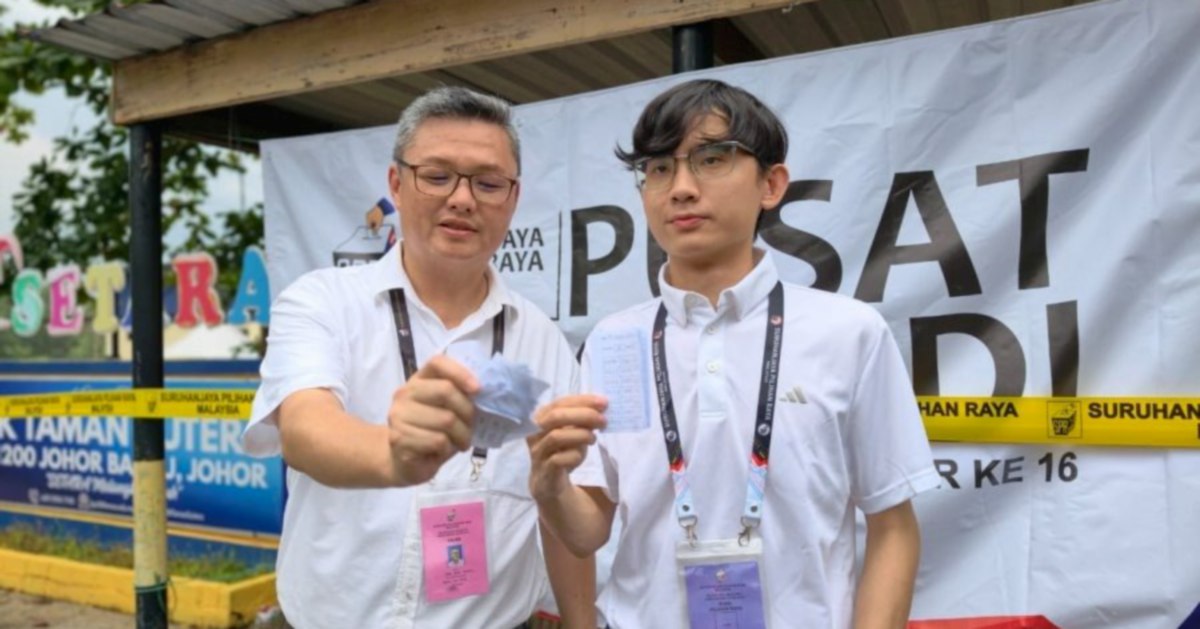
The Pakatan Harapan-backed Democratic Action Party candidate in the Perling constituency has filed a serious accusation against opposing political operatives, claiming they engaged in systematic recording of individual voter identification numbers without authorisation. Tee Boon Tsong made the allegation in Johor Baru, raising fresh concerns about electoral integrity and compliance with Malaysia's established voting procedures.
The assertion carries significant legal weight, as the alleged conduct would constitute a breach of the Election Offences Act, which contains strict provisions governing the conduct of party representatives and monitoring personnel inside polling stations. Malaysian election law places explicit restrictions on what information polling agents may collect and how they may document observations, with voter serial numbers classified as sensitive information that cannot be lawfully recorded for partisan advantage. The specific targeting of this data suggests a pattern rather than isolated incidents, according to Tee's account.
Understanding the mechanics of this alleged violation requires examining how polling stations operate in Malaysia's electoral system. Polling agents from competing parties are permitted to observe proceedings to ensure fairness, but they function under clear operational boundaries. Their role centres on general observation of voting procedures, checking that regulations are followed, and ensuring the secrecy of the ballot is maintained. Recording individual voter serial numbers crosses a fundamental line, as such data could potentially be used to trace voting patterns, identify particular voters for follow-up contact, or construct detailed demographic profiles linked to specific individuals.
The timing of Tee's allegation places additional scrutiny on election management practices in this particular contest. The Perling seat represents a politically competitive area where multiple parties have invested resources and attention. Any credible evidence of systematic irregularities would undermine public confidence in the electoral process and warrant immediate investigation by the relevant authorities. Electoral Commission officials would need to examine polling station logs, video surveillance footage, and witness statements to establish whether such recording actually occurred and to what extent.
The implications for Perling voters extend beyond the immediate controversy. If polling agents were indeed documenting serial numbers, ordinary citizens who exercised their democratic right may now face concerns about their voting privacy. Some voters might worry that their electoral choices could be cross-referenced or analysed based on the recorded data, even if such analysis never materialised. This undermines the fundamental principle of ballot secrecy that undergirds democratic legitimacy in Malaysia. The breach of trust, even if eventually proven unsubstantiated, creates lasting damage to confidence in electoral administration.
For the Democratic Action Party, the allegation serves multiple functions within its political narrative. DAP, as part of the Pakatan Harapan coalition, has long positioned itself as a defender of democratic institutions and electoral fairness. Highlighting potential breaches by competitors aligns with this positioning and may mobilise the party's base to believe that vigilance against irregularities protects their interests. However, the party also faces pressure to substantiate the claim thoroughly; unsubstantiated accusations can backfire and damage credibility if the evidence ultimately fails to materialise or proves circumstantial.
The Electoral Commission bears primary responsibility for investigating such allegations promptly and transparently. The commission's handling of the matter will signal to both party operatives and ordinary voters whether institutional safeguards actually function to protect electoral integrity. A thorough investigation should examine whether standard procedures were followed during the Perling polling, whether any unusual patterns emerged in agent behaviour, and whether the specific serial numbers recorded could be cross-referenced with voter lists or outcome data. The commission must also clarify what penalties apply if violations are confirmed.
Broader Southeast Asian context illuminates why such allegations matter for Malaysia's political health. Across the region, election administration faces recurring challenges around transparency, agent conduct, and the boundary between legitimate observation and improper influence. Countries that allow such concerns to fester without rigorous investigation risk erosion of institutional credibility. Malaysia's election management has generally maintained international standards, but isolated incidents—or clusters of allegations—can undermine that reputation if not addressed systematically.
The legal framework governing election offences in Malaysia provides tools for addressing such allegations, but their effectiveness depends on enforcement. The Election Offences Act establishes clear prohibitions and penalties, yet complaints about agent conduct sometimes languish without decisive resolution. For voters and political participants to have confidence in electoral institutions, alleged violations must receive serious investigation, transparent findings, and appropriate consequences proportional to the breach severity. Tee Boon Tsong's allegation will therefore serve as a test case for whether the system responds adequately when misconduct is alleged.

