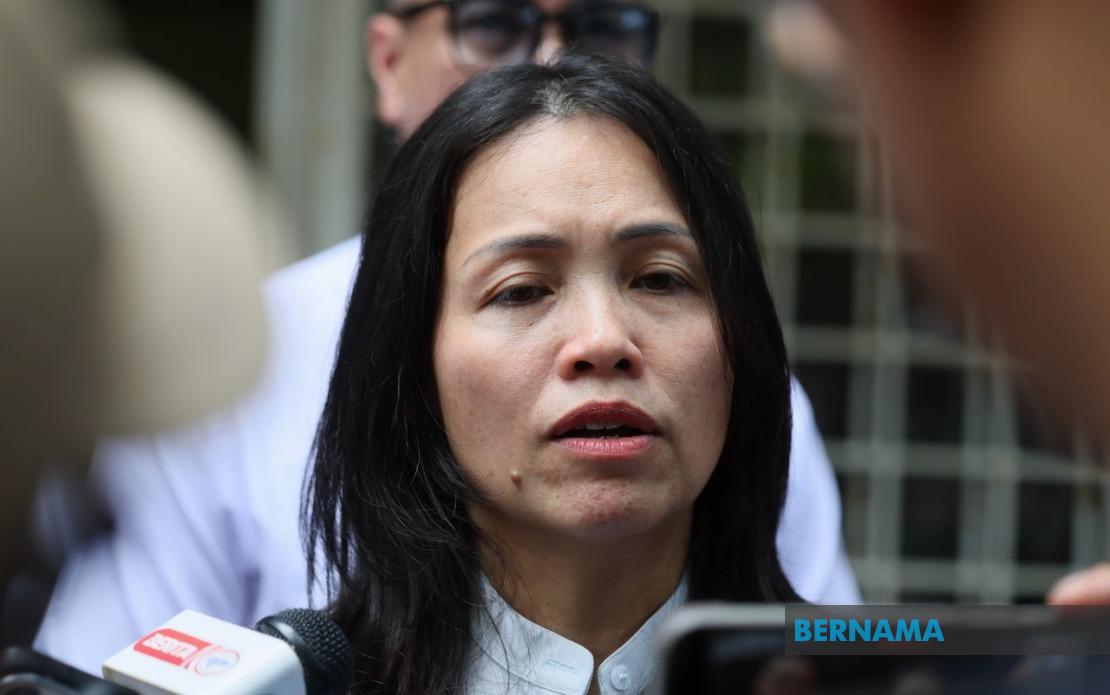
The Democratic Action Party in Johor is sounding the alarm over what it describes as a coordinated smear campaign employing doctored campaign materials, with party leadership urging voters to see through the tactic as polling day approaches. Johor DAP chairman Teo Nie Ching issued the warning after discovering that posters featuring potential party candidates have been deliberately altered to misrepresent them, a move she characterises as both mendacious and calculated to sow discord within Malaysia's multi-ethnic electorate.
The manipulation involves digitally modifying images to falsely depict candidates as Muslim women wearing headscarves that appear improperly positioned, according to Teo's account. This specific form of alteration targets the sensitivities that exist around religious representation and cultural practices, weaponising both to create a false narrative. The approach represents a particularly insidious variant of negative campaigning, as it does not merely attack policy positions or political records but instead manufactures false associations designed to trigger reflexive community anxieties.
Teo, who also serves as Wanita DAP chief and Deputy Communications Minister, contends that the poster manipulation is deliberately engineered to alienate non-Malay voters, with the Chinese community explicitly identified as the intended target. By creating images that suggest DAP candidates possess characteristics at odds with how they wish to present themselves, the tactic seeks to undermine confidence in the party among communities concerned about representation and religious sensitivity. This approach exploits legitimate questions about how various groups are portrayed in Malaysian politics, turning these concerns into ammunition for political advantage.
The DAP leadership has moved swiftly to condemn what it characterises as a breach of fundamental political norms. In a Facebook statement, Teo emphasised that DAP maintains respect for all religious traditions and explicitly rejected the notion that Muslim religious practices should be trivialised or weaponised for electoral gain. She stressed that the party views such manipulations as morally indefensible attacks not only on DAP but implicitly on women more broadly, given the gendered nature of the imagery being altered.
This incident emerges within a broader context of Malaysian electoral politics where negative campaigning and information manipulation have become increasingly commonplace. The Johor state election, scheduled for July 11, follows the dissolution of the State Legislative Assembly on June 1, with nomination day set for June 27. The electoral landscape in the state remains highly competitive, with Barisan Nasional holding substantial ground ahead of the contest.
Before dissolution, the Johor State Legislative Assembly comprised 56 seats distributed across multiple parties. Barisan Nasional controlled the largest bloc with 40 seats, while Pakatan Harapan held 12 seats, Perikatan Nasional maintained three, and MUDA claimed one. This configuration means that DAP, as part of the broader Pakatan Harapan coalition, enters the election as a challenger seeking to expand its foothold in a state where Barisan Nasional has maintained dominance.
The timing of the poster manipulation raises questions about the intensity of campaigning and the desperation some political actors may feel as the election draws nearer. With less than a month separating the announcement from polling day, such tactics may reflect anxiety among certain quarters about the direction of voter sentiment or the effectiveness of conventional campaign messaging. The reliance on altered imagery rather than substantive political argument suggests a political player making a calculated bet that emotional appeals rooted in religious and ethnic sensitivities will prove more influential than policy platforms.
For Malaysian voters navigating the information landscape during election season, incidents like this underscore the importance of critical media literacy and verification practices. The ease with which digital images can be modified, combined with the rapidity with which manipulated content spreads across social media platforms, creates an environment where false information can achieve significant reach before corrections materialise. This dynamic particularly affects voters who encounter campaign materials through informal digital channels rather than official party sources.
Teo's call for voters to reject such tactics and embrace messages of harmony, unity, and peace reflects the broader challenge facing Malaysian politics in maintaining electoral integrity and civility during competitive campaigns. The appeal to all racial communities to condemn the poster manipulation attempts to transform what might otherwise be dismissed as a minor campaign incident into a moment of broader reflection about acceptable political conduct. Whether such appeals can overcome the partisan loyalties and communal divisions that shape electoral behaviour remains an open question.
The incident also highlights the particular vulnerability of female candidates to such tactics, as the manipulation specifically targets women's appearance and religious presentation. This gendered dimension adds a layer of concern regarding whether women entering electoral politics face heightened risks of character assassination through image manipulation compared to their male counterparts. The willingness of some political actors to exploit religious identity through altered imagery demonstrates how multiple vectors of vulnerability—gender, religion, ethnicity—can be weaponised simultaneously in competitive elections.