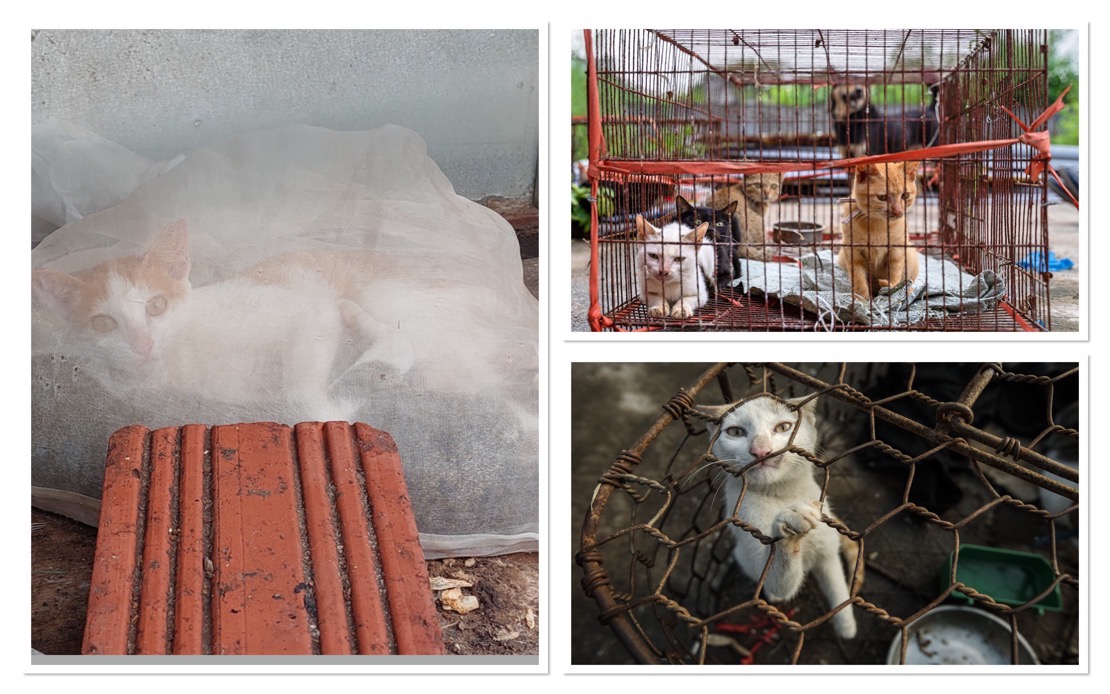
A darkly persistent trade in cat meat continues to flourish across Vietnam, Cambodia and Laos, driven by deeply rooted cultural beliefs about prosperity and healing despite decades of awareness campaigns and growing public resistance. International animal welfare organisations estimate that roughly one million cats meet their end each year in Vietnam through theft, trafficking and slaughter, with smaller but still significant numbers killed in remote areas of Cambodia and Laos. The trade remains largely unregulated in these countries, operating in the shadows with little legal consequence for those involved.
Superstition forms the bedrock of this illicit commerce. In Vietnamese culture, consumption of cat meat at particular times of the lunar calendar is believed to reverse bad fortune or attract positive luck, while traditional beliefs attribute healing and health-restoring properties to the flesh. These cultural convictions, passed down through generations, continue to sustain demand despite the fact that cat meat constitutes a minor part of regional diets rather than a nutritional necessity. Jon Rosen Bennett, the official overseeing dog and cat welfare advocacy at FOUR PAWS, explained to regional media that the practice persists primarily for cultural and social reasons rooted in tradition rather than dietary staple status.
The contradiction between public sentiment and actual consumption patterns reveals a striking disconnect. Survey data compiled by FOUR PAWS shows that approximately 90 percent of Vietnamese respondents expressed support for banning the dog and cat meat trade altogether. An even more striking figure indicates that more than 90 percent of respondents rejected the notion that cat meat consumption represents an authentic aspect of Vietnamese culture. This suggests that the trade represents the preferences of a determined minority rather than widespread communal demand, yet continues unabated due to the absence of enforceable legal frameworks.
The economics of the trade operate on razor-thin margins that make it attractive to criminal networks. During investigations conducted in 2020, FOUR PAWS researchers documented that live cats commanded between US$6 and US$8 per kilogramme in the Vietnamese marketplace—equivalent to roughly RM25 to RM33. Processed cat meat fetched considerably more, ranging from US$10 to US$12 per kilogramme or RM41 to RM49, with black cats commanding premium prices due to their purported exceptional luck-bringing or medicinal potency. These price differentials incentivise large-scale trafficking operations targeting the most vulnerable animals: strays and household pets stolen from streets and homes.
Recent law enforcement operations have illuminated the scale and sophistication of organised trafficking networks. In late June, Ho Chi Minh City police dismantled a criminal gang engaged in inter-provincial smuggling operations, confiscating approximately 500 cats and detaining nine gang members accused of systematic theft and illicit sales spanning three years. The rescue revealed that these networks operate with considerable organisational capacity, moving animals across provincial boundaries and maintaining supply chains to markets and butchers. Such incidents underscore that the trade functions as an entrenched criminal enterprise rather than scattered opportunistic activity.
Vietnam's legal vacuum represents a critical enabler of the trade's continuation. Unlike several neighbouring jurisdictions that have implemented partial restrictions or bans, Vietnam maintains no nationwide legislation prohibiting the slaughter, sale or consumption of cat meat. This absence of legal deterrent removes barriers for traffickers and slaughterers, allowing the practice to persist with minimal official opposition. The lack of statutory protection extends beyond cats to dogs as well, with regional estimates suggesting that more than 10 million canines fall victim to slaughter annually across all of Southeast Asia.
Public health dimensions of the trade extend far beyond animal welfare concerns. The massive undocumented trafficking of living animals across provincial and international borders creates conditions conducive to disease transmission. Bennett emphasised that the large-scale movement of cats and dogs through unregulated channels poses serious epidemiological risks, particularly regarding rabies and other zoonotic pathogens capable of jumping to human populations. These health threats persist regardless of whether the animals ultimately reach consumption markets, making the trade a public health liability for entire regions.
International organisations have intensified advocacy efforts to combat the practice. FOUR PAWS launched an online public reporting platform in early June as part of its broader awareness campaign against the dog and cat trade in Cambodia specifically, though similar initiatives operate across the region. These digital mechanisms aim to enable citizens to report suspected trafficking, slaughter operations and illegal sales directly to authorities and advocacy groups. Such technological approaches represent attempts to circumvent official indifference by creating alternative channels for accountability and enforcement.
The persistence of the trade despite overwhelming evidence of public opposition underscores the challenges facing animal welfare advocates in the region. While traditional beliefs remain potent cultural forces, the gap between public opinion and actual consumer behaviour suggests that enforcement of existing laws and establishment of clear prohibitions could substantially reduce the practice. The majority sentiment against consumption provides a foundation upon which legal frameworks could be constructed, yet political will to implement such measures remains inconsistent across Indochina. For Malaysian observers, the cat meat trade serves as a cautionary example of how traditional beliefs divorced from modern values can perpetuate harmful practices when legal protections remain inadequate. Regional cooperation on animal welfare standards could leverage the public consensus already present across these societies to translate sentiment into enforceable policy.

