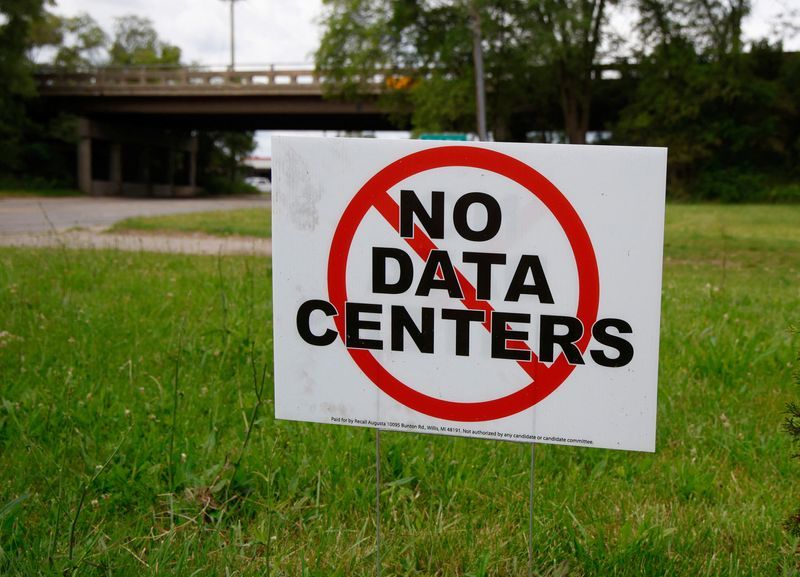
The mounting opposition to America's accelerating data centre construction has reached a critical juncture, with a nationwide day of protest scheduled to mobilise demonstrators across at least 125 locations. The coordinated action, organised by the grassroots movement HumansFirst, represents the first unified national attempt to channel the frustration that has been building at grassroots level as artificial intelligence infrastructure expands at unprecedented pace. This moment signals that data centre development has transcended local grievances to become a genuine political issue capable of mobilising voters across traditionally divided communities.
HumansFirst, helmed by figures including Amy Kremer who previously played leadership roles in the modern Tea Party movement, has deliberately drawn parallels between the current data centre backlash and the right-wing populist upsurge that coalesced around fiscal concerns in 2009. The comparison underscores how organisers view resistance to AI infrastructure as fundamentally about citizens exercising democratic oversight over decisions that affect their communities. Protesters frame their objections around what they characterise as an "unaccountable" and "liberty-infringing" development model in which local officials frequently execute non-disclosure agreements with technology corporations, effectively silencing public debate before communities can mobilise opposition.
The political dimension becomes more pronounced when examining polling data that reveals deep public scepticism about the trajectory of data centre proliferation. A Reuters/Ipsos survey conducted in June found that only one-third of Americans endorse the current pace of data centre construction, whilst a mere 14 percent would welcome such facilities being developed in their own neighbourhoods to support artificial intelligence operations for technology giants including Meta, Alphabet, Amazon, Microsoft, and Elon Musk's xAI venture. These numbers underscore that opposition transcends ideological boundaries—a rarity in American politics—suggesting data centres may crystallise into one of the few truly bipartisan issues with electoral salience.
The geographic distribution of Saturday's protests reveals telling patterns about where anxiety runs deepest. Texas, despite its reputation as a technology-friendly conservative stronghold and major data centre hub, leads with 16 scheduled demonstrations. Georgia, a crucial battleground state, follows with 11 protests, whilst California, Florida, and Pennsylvania each expect seven actions. This dispersal across red states, blue states, and swing states alike reinforces that frustration with data centre expansion represents something beyond conventional partisan politics—residents across the ideological spectrum share common anxieties about their communities' futures.
Among the most visceral concerns animating protests is water consumption, particularly acute in drought-prone regions already confronting climate-induced scarcity. A proposed data centre in California's Imperial County epitomises this tension, with projections suggesting annual water extraction of 260 million gallons from the already-stressed Colorado River. Left-leaning activists like Ivan DelSol have framed such consumption as fundamentally dystopian, raising moral questions about deploying finite freshwater resources to power digital infrastructure whilst many communities face water insecurity. This resonates strongly with South East Asian contexts where rapid industrialisation has similarly strained water supplies, making the American experience potentially instructive for Malaysian policymakers evaluating their own technology infrastructure strategies.
Energy demand represents another axis of concern driving the protest movement. As data centres expand, they consume vast quantities of electricity, exacerbating grid stress and threatening to inflate power bills for ordinary residents—particularly problematic during periods of extreme weather when cooling demand peaks. Citizens have mobilised around these concerns precisely because the costs and consequences of data centre expansion are distributed across entire communities whilst profits accrue to distant technology corporations. This asymmetry fuels resentment that transcends traditional left-right divides.
Notably, the industry association representing data centre operators, the Data Center Coalition, has remained largely silent on the burgeoning protests, declining immediate comment to Reuters. Previously, the coalition has maintained that member companies are "committed to being responsible neighbours," yet this rhetoric appears increasingly disconnected from community experiences characterised by opaque decision-making, signed non-disclosure agreements that prevent public scrutiny, and environmental impacts experienced acutely by residents whilst developer commitments remain unverifiable.
Amy Kremer has emphasised that anti-data centre sentiment genuinely reflects non-partisan concern rather than ideologically-driven opposition. She has notably criticised Republican politicians for according "Big Tech" preferential treatment whilst offering little consideration to constituents harmed by unchecked expansion. Yet simultaneously, organisers reject Democratic-proposed solutions including moratoriums on new approvals, believing such blunt instruments fail to address underlying concerns. Instead, HumansFirst advocates for transparent development processes, genuine protection of environmental and community health, substantial job creation emphasising well-paid unionised positions, and accountability mechanisms ensuring corporations honour commitments or face consequences.
First-time activist Eva Cardona, a 31-year-old organising Texas-based protests, articulates how concern about unregulated artificial intelligence and explosive growth prompted her to move beyond passive online criticism toward direct community action. Her emergence as an organiser exemplifies how data centre opposition is mobilising previously-disengaged citizens who feel their voices have been systematically excluded from decisions fundamentally reshaping their communities. This grassroots energy could prove consequential, with Kremer predicting data centres will become defining election issues both in November's midterm contests and the 2028 presidential race.
The evolution of data centre opposition from localised complaint to national movement reflects genuine shifts in how Americans across ideological spectrums evaluate development priorities and corporate accountability. As these protests unfold, they carry implications extending beyond American borders. For Malaysia and other South East Asian nations navigating their own technology infrastructure expansion, the American experience offers cautionary lessons about the necessity of transparent governance, genuine community consultation, and binding accountability measures. The saturation point at which local communities transition from quiet acquiescence to coordinated national resistance appears to have arrived in America—a threshold Malaysian authorities should consider proactively rather than reactively.
Ultimately, Saturday's coordinated protests signal that data centre expansion cannot proceed indefinitely on current trajectories without encountering organised, determined resistance. Whether political leaders at state and federal levels heed these warnings and implement genuine reforms remains uncertain, but the mobilisation itself testifies to fundamental anxieties about democracy, environmental stewardship, and whose interests development serves. For Malaysian observers, the American precedent underscores that citizen engagement with infrastructure policy need not remain marginal but can congeal into powerful political forces when communities perceive their concerns systematically ignored.

