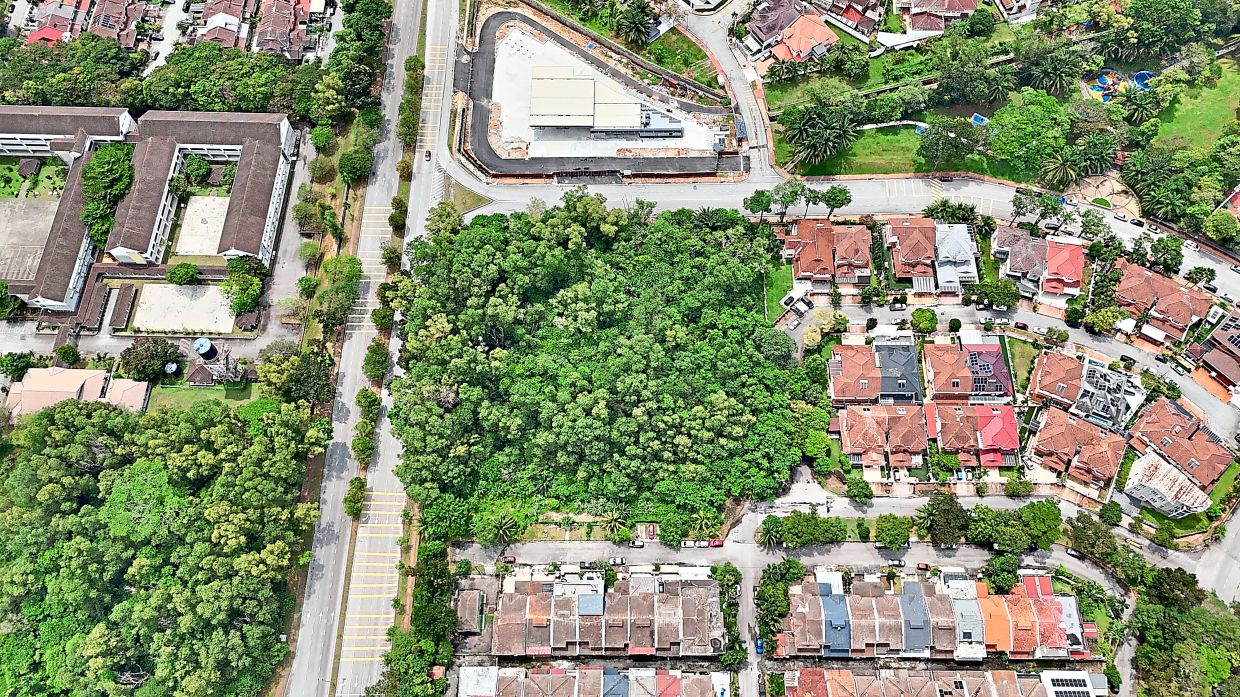
The developer behind a contentious data centre proposal in Kota Damansara has opted to retreat from the project, marking a significant victory for community activism in the suburban enclave. Petaling Jaya City Council received formal notification on July 28 from the project's consultant that the application for a business data centre in Section 9 would be withdrawn entirely. The decision came after weeks of mounting resident objections and regulatory complications that complicated the approval pathway.
In a statement released on July 30, MBPJ's Corporate Communications Unit explained that the withdrawal was designed to afford the developer breathing room to reassess the commercial viability of the proposed site and to fundamentally reconsider the project's design elements. The developer indicated a desire to pursue modifications that would enhance economic efficiency, environmental sustainability, and overall compatibility with the character of surrounding residential neighbourhoods. The pullback signals recognition that the initial conception of the project had encountered resistance too substantial to overcome without substantial redesign.
The original proposal encompassed two three-storey blocks dedicated to data centre operations, spread across nineteen parcels of private land and portions of a government road reserve situated along Jalan Rimba Riang 9/6. The site occupies a location designated under the Petaling Jaya Local Plan 2 for "business and services" as well as "transport" uses, theoretically making it available for commercial development. However, the project's advancement was complicated by procedural missteps that ultimately undermined its credibility with the community and regulatory authorities alike.
Critical problems emerged when residents identified significant deficiencies in the public notification process. The notice board displayed to announce the proposal contained inaccurate reference numbers and contact information, compounding community frustration at the compressed one-week window provided for lodging objections. The errors were sufficiently problematic that MBPJ issued a formal correction directive on July 15, compelling the developer to remedy the mistakes and extending the objection deadline through July 27. This regulatory intervention illustrated the council's concern that proper public consultation had not been conducted in accordance with established standards.
Opposition coalesced swiftly around Gabungan Penduduk Kota Damansara, a residents' coalition representing more than five hundred households within the immediate vicinity. Their formal objection articulated a comprehensive catalogue of operational and environmental concerns that would likely have persisted had the project advanced. Residents highlighted the prospect of persistent noise pollution from round-the-clock facility operations, the thermal and energy implications of large-scale data processing infrastructure, potential degradation of air quality from intensive power consumption, and the ecological ramifications for the adjacent Kota Damansara community forest. Additionally, they raised concerns about increased vehicular traffic flowing through residential streets and the prospective loss of government land previously intended for neighbourhood retail amenities.
Political representatives across multiple governance levels joined residents in objecting to the scheme. Sungai Buloh MP Datuk Seri R. Ramanan, Kota Damansara assemblyman Muhammad Izuan Ahmad Kasim, and MBPJ Zone 3 councillor Muhamad Shazwan Suhaimi each submitted formal written opposition to the development. Their objections focused on the project's inconsistency with the area's mixed-use character and expressed frustration at the inadequacy of early-stage community engagement. Izuan's subsequent social media announcement on July 30 thanking Kota Damansara residents for their mobilization acknowledged the grassroots pressure that ultimately influenced the outcome.
The regulatory framework governing the proposal had been established through PlanMalaysia's 2024 guidelines, which stipulate that data centre developments must maintain a fifty-metre buffer zone from residential boundaries. While the proposed site technically satisfied zoning requirements for commercial operations, the conjunction of procedural deficiencies and substantive environmental concerns created an increasingly untenable position for the developer. The project had not yet progressed to MBPJ's One-Stop Centre Unit for formal approval, meaning early withdrawal avoided prolonged administrative processing that would likely have encountered further community resistance.
The sequence of events reflects broader tensions in Malaysian urban development between commercial interests seeking to capitalize on technological infrastructure demand and residential communities asserting their right to participate meaningfully in decisions affecting their living environment. Data centre facilities have become increasingly valuable assets as digital transformation accelerates across Southeast Asia, yet their operational characteristics—continuous power demand, thermal output, and traffic generation—can conflict sharply with residential quality of life. The Kota Damansara case demonstrates that even projects meeting technical zoning requirements face substantial headwinds when community consultation is perceived as deficient or when operational impacts appear inadequately addressed.
The withdrawal also highlights the growing sophistication of resident mobilization in Malaysian suburban developments. Rather than passive acceptance of top-down planning decisions, communities are increasingly organizing formal coalitions, engaging elected representatives, and leveraging regulatory mechanisms to ensure their voices register in planning discussions. This dynamic has potentially significant implications for future data centre proposals throughout the Klang Valley and other rapidly urbanizing regions of Malaysia where residential and commercial interests compete for limited land resources.
Developers considering similar infrastructure projects in suburban areas must now account for the requirement that procedural transparency, community engagement, and environmental sensitivity figure prominently in planning applications. The Kota Damansara case suggests that cost-cutting measures affecting public notification, combined with operational models generating substantial local impacts, create conditions where community coalitions can effectively block developments even when technical requirements are nominally satisfied. For residents across Malaysia facing similar proposals, the outcome demonstrates that organized, sustained objection coupled with political support can produce tangible results in resisting projects perceived as incompatible with neighbourhood character.

