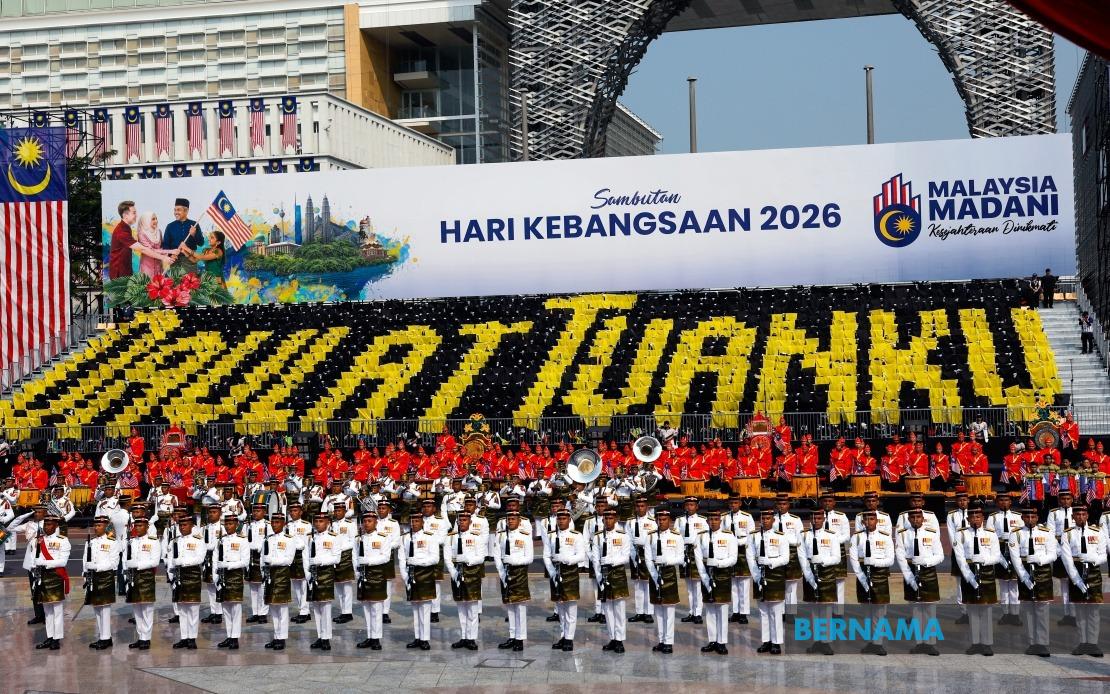
Tomorrow's National Day commemoration at Dataran Putrajaya will transform the nation's administrative heart into a vast stage for celebrating the 69th anniversary of Malaysian independence. The event carries the unifying theme 'Malaysia MADANI: Kesejahteraan Dinikmati' (Malaysia MADANI: Shared Prosperity), positioning this year's festivities as both a retrospective on national achievement and a forward-looking affirmation of collective well-being. The gathering will be graced by His Majesty Sultan Ibrahim, King of Malaysia, and Her Majesty Raja Zarith Sofiah, Queen of Malaysia, underscoring the ceremonial significance of the occasion. Prime Minister Datuk Seri Anwar Ibrahim and Cabinet members will also attend, lending political weight to a celebration designed to reinforce bonds between government and citizens across the nation's diverse communities.
The logistical scale of tomorrow's event reflects ambitious organisation befitting a major national milestone. Organisers have assembled nearly 11,000 parade participants organised into 76 distinct contingents, supported by 22 marching bands that will provide rhythmic accompaniment throughout proceedings. The parade infrastructure includes 11 specially designed float vehicles and an impressive array of 328 military assets spanning land, naval, and air dimensions. Additional participants include 112 working animals and 22 electric vehicles, symbolising Malaysia's contemporary commitment to sustainable mobility alongside traditional elements. The programme is scheduled to commence at 8:00 am, with proceedings divided into thematic components addressing statehood, well-being, public order, and national security before concluding with an airshow and special cultural performance.
Cultural expression lies at the heart of this year's celebration, with the opening segment titled 'Gema Inovasi MADANI' (MADANI Innovation Echo) serving as the creative centrepiece. Coordinated by the National Department for Culture and Arts under the Ministry of Tourism, Arts and Culture, this performance merges traditional heritage percussion with contemporary innovation. The segment deploys 150 musical instruments and 700 kompang (traditional Malay frame drums) to create a soundscape representing Malaysia's ethnic and cultural diversity. This approach reflects deliberate curatorial thinking about national identity—using percussion traditions associated with different communities as tangible symbols of harmony, well-being, and collective belonging. The performance thus functions as more than entertainment; it constitutes a pedagogical statement about the MADANI framework's emphasis on cultural continuity alongside modern renewal.
Representations of national resilience feature prominently throughout the parade formation. The statehood component includes a large contingent bearing the Jalur Gemilang national flag, accompanied by cadet officers from military academies including the National Defence University of Malaysia and the National Resilience Leadership Academy. A National Service Training Programme contingent will also march, connecting youth mobilisation to patriotic expression. This deliberate foregrounding of military and paramilitary institutions reflects long-standing Malaysian practice of linking national cohesion to defence preparedness and disciplined citizenship.
Athletic achievement receives dedicated emphasis, with the sports well-being component featuring national athletes and medalists from the Glasgow 2026 Commonwealth Games. This inclusion serves dual purposes: celebrating Malaysian sporting excellence while positioning athletic accomplishment as integral to national pride and aspiration. For Malaysian sports enthusiasts and the broader public, this representation of athletes on the national stage validates investment in sporting infrastructure and athlete development programmes.
Private sector participation underscores the Malaysia MADANI theme's economic dimension. The public well-being and economy component brings together diverse commercial entities including Munchy's Malaysia, ZUS Coffee, Siti Khadijah Apparel, and Carsome, among others. This inclusive approach to corporate participation signals integration of private enterprise into the national narrative, presenting economic activity and entrepreneurship as components of collective prosperity rather than separate from patriotic observance. The inclusion of the Malaysian Security Industry Association and cooperative movements alongside consumer brands demonstrates attempts to represent Malaysia's varied economic sectors.
Public safety and order are represented through dedicated contingents from the Malaysia Civil Defence Force, Road Transport Department, and Malaysian Fire and Rescue Department. These institutions' visible participation on parade reinforces their protective role in Malaysian society while demonstrating government commitment to citizen security across multiple domains. The Johor Military Force, the nation's oldest military unit, will also march, connecting contemporary celebration to historical military traditions and the special constitutional role of Johor's royal institution.
Tourism promotion intersects with cultural representation through Visit Malaysia Year 2026-2027 floats showcasing state-specific tourism assets, flora, fauna, traditional attire, and musical instruments from Malaysia's communities. Participation by Malaysia Airlines, AirAsia, Batik Air, and Air Borneo extends this tourism emphasis by presenting aviation as facilitating both national internal cohesion and international connectivity. The inclusion of Les' Copaque's animation characters Upin and Ipin constitutes explicit outreach to younger audiences and families, extending the celebration's appeal beyond formal commemorative frameworks.
Visual spectacle reaches its apotheosis through coordinated human graphics performance involving 1,500 students from 36 Selangor schools creating synchronised formations set to music. This mass choreography component requires extensive rehearsal and coordination yet produces moments of collective visual impact resonating across diverse viewers. The climactic air show, featuring Royal Malaysian Air Force fighter jets performing aerial manoeuvres above Dataran Putrajaya, concludes proceedings with unmistakable demonstration of national defence capabilities. This temporal positioning of military power at celebration's end carries symbolic weight—defence establishment functioning as ultimate guarantor of independence achieved and subsequently preserved.
The celebration's musical dimension receives additional emphasis through 'Aku Berjanji' (I Promise), the official theme song composed and performed by renowned singer Faizal Tahir. This composition functions as emotional crescendo, distilling celebration's patriotic sentiment into digestible cultural form accessible to broad audiences. The song's title itself—framing national sentiment as personal promise—invites individual emotional investment in collective national project.
Practical governance concerns emerge through health advisories addressing haze conditions affecting the region. The Communications Minister and Main Committee Chairman for National Day 2026, Datuk Seri Fahmi Fadzil, recommended N95 face mask usage, with organisers supplying masks to over 10,000 participants. This precautionary approach reflects Malaysia's experience managing environmental challenges while maintaining major public events. Simultaneously, the Ministry of Home Affairs announced comprehensive traffic restrictions, with Putrajaya's Core Island area fully closed from 5:00 am on August 30 through 6:00 pm on August 31. Five major bridges including Seri Wawasan, Seri Saujana, and Seri Gemilang will be inaccessible, necessitating public transport utilisation and advance travel planning. These logistical realities, while potentially challenging for attendees, underscore governmental capacity for large-scale event management and public communication.
The 69th National Day celebration thus functions as multivalent occasion—ceremonial commemoration of independence, cultural expression of diversity, economic and political statement, and demonstration of organisational competence. By integrating military might, commercial participation, cultural performance, youth mobilisation, and sporting achievement within unified narrative framework, tomorrow's event at Dataran Putrajaya articulates contemporary Malaysian society's self-understanding. The Malaysia MADANI theme provides conceptual coherence, positioning shared prosperity and inclusive well-being as animating principles transcending sectoral boundaries. For regional observers, the celebration demonstrates Malaysia's capacity for elaborate public pageantry while maintaining explicit links between ceremonial display and substantive governance priorities.

