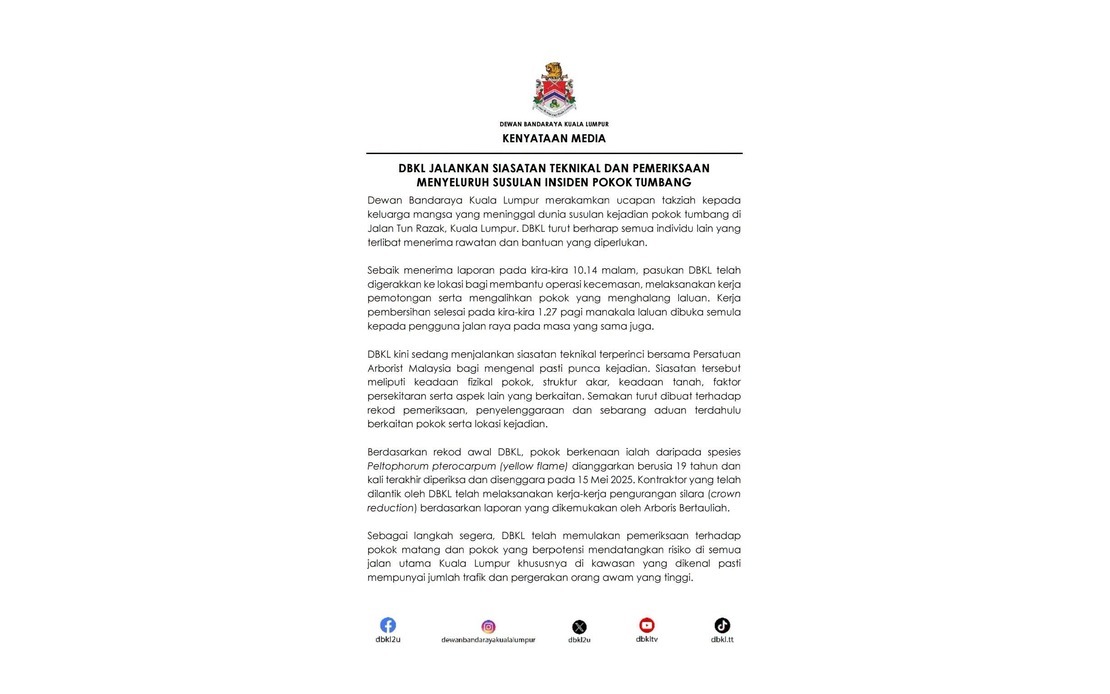
A fatal incident involving a falling tree on Jalan Tun Razak has prompted Kuala Lumpur City Hall (DBKL) to launch a comprehensive technical investigation, signalling mounting concerns about urban tree safety across the capital. The tragedy, which claimed the life of a man late last night, has spurred immediate action from municipal authorities working in tandem with the Malaysian Society of Arborist to pinpoint exactly what caused the tree to fail so catastrophically.
The joint investigation into this incident represents a multi-faceted approach to understanding how and why mature trees in densely populated urban environments can suddenly pose lethal risks. DBKL's technical team is examining the physical condition of the tree itself, scrutinising its root structure and the soil composition that anchored it to the ground. Environmental factors—including exposure to wind, water drainage patterns around the base, and cumulative stress from weather events—are all being evaluated as potential contributing causes. Critically, investigators are also reviewing the tree's maintenance history, previous inspection records, and any complaints that residents or authorities may have filed about its condition before the collapse occurred.
The Yellow Flame tree, scientifically identified as Peltophorum pterocarpum, stood for 19 years before the incident. Municipal records indicate that DBKL's appointed contractor had performed crown reduction works on the specimen following recommendations from a certified arborist. The most recent scheduled maintenance visit took place on May 15, suggesting that the tree had undergone relatively recent professional care. Yet these measures proved insufficient to prevent the disaster, raising uncomfortable questions about whether routine inspection protocols for mature urban trees are adequate or whether warning signs were missed.
DBKL's emergency response was swift. Upon receiving notification at 10:14 pm, response teams mobilised to the location, where they performed tree-cutting operations and cleared obstructions blocking the roadway. The full clearance of Jalan Tun Razak was achieved by 1:27 am, minimising disruption to traffic flow and allowing essential vehicle movement to resume. The efficiency of this reaction, however, cannot mask the sobering reality that a human life was lost before emergency crews arrived.
In response to this tragedy, DBKL has announced a scaled-up inspection programme targeting mature trees and specimens with potential vulnerability across Kuala Lumpur's major thoroughfares. The initial phase focuses on roads with the heaviest pedestrian and vehicular traffic, where the consequences of tree failure are most severe. Jalan Ampang, Jalan Sultan Ismail, Jalan Raja Laut, Jalan Datuk Keramat, and additional sections of Jalan Tun Razak itself are among the first areas receiving priority attention. Eight teams, comprising five qualified arborists and supporting personnel, have been assembled to conduct these inspections systematically. The authority estimates that this comprehensive survey will take approximately ten weeks to complete, reflecting the scale of assessment work required across an extensive network of roads.
Looking beyond immediate response measures, DBKL is developing longer-term preventive infrastructure designed to catch tree instability before it becomes catastrophic. The city hall is awaiting approval from SIRIM—the Standards and Industrial Research Institute of Malaysia—to deploy 400 specialised tree sensors across high-risk locations. These sensors represent a technological leap in urban arboriculture, moving beyond traditional visual inspection towards continuous, real-time monitoring of tree health and structural integrity. The devices will track soil moisture levels, ground movement beneath the tree, and stress indicators within the trunk itself. Critically, they will also register the impact of severe weather events such as heavy rainfall and flooding, conditions that can rapidly compromise root stability and water absorption in saturated soils.
The proposed installation programme follows a phased approach, beginning with four strategically selected locations: Jalan Bangsar, Dataran Merdeka, Jalan Ampang, and Jalan Raja Chulan. These sites likely represent areas of either high traffic volume, significant pedestrian concentration, or zones where previous concerns about tree health have been documented. By establishing this sensor network at priority locations first, DBKL can evaluate the effectiveness of the technology and refine deployment strategies before expanding to additional areas. The data collected from these sensors will feed into a predictive maintenance system, allowing arborists to intervene before a tree reaches the critical failure point that the Jalan Tun Razak tragedy represents.
The incident underscores a broader vulnerability affecting major cities throughout Southeast Asia, where rapid urban development has created dense concentrations of mature trees often planted decades ago without robust long-term management frameworks. As climate patterns become more volatile and urban infrastructure ages, the risk profile of these botanical assets shifts accordingly. Malaysia's tropical monsoon climate, with its intense seasonal rainfall and occasional severe wind events, places particular stress on tree root systems and structural integrity. For residents and authorities in Kuala Lumpur and other Malaysian cities, the Jalan Tun Razak collapse serves as a sobering reminder that urban forestry is not a passive aesthetic consideration but an active safety management challenge requiring sustained investment and expertise.
DBKL's statement extended formal condolences to the victim's family and committed the institution to full cooperation with police investigations and relevant agencies. This commitment to transparency and accountability is crucial, as the detailed findings from the technical investigation will inform future municipal policy decisions. The data generated from both the immediate inquiry and the subsequent inspection programmes will likely reshape how Kuala Lumpur approaches tree maintenance, risk assessment protocols, and public safety around mature vegetation in high-density areas. Whether this incident catalyses systemic improvements in urban tree management across Malaysia more broadly—influencing practices in other municipalities and federal territories—remains to be seen, but the urgency of the response suggests that authorities recognise the stakes involved.

