Kuala Lumpur City Hall (DBKL) has committed substantial resources to transform the city's informal food trading sector, announcing a RM200 million modernisation programme spanning 287 hawker locations throughout the federal capital. The Lestari Niaga @ Kuala Lumpur 2026 initiative represents one of the most ambitious infrastructure upgrades for street vendors and market traders in the region, directly affecting the livelihoods of more than 11,000 small business operators who form the backbone of Malaysia's informal economy.
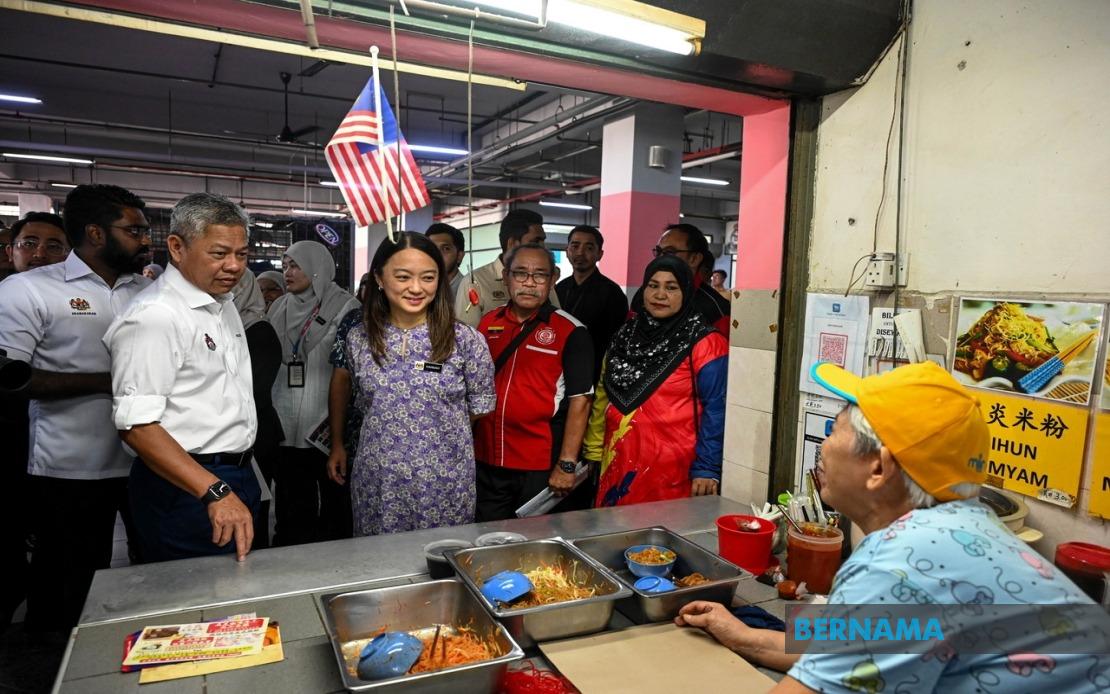
The programme addresses longstanding concerns about working conditions, safety standards, and urban organisation in hawker zones, which have become increasingly pressured as cities expand and regulations tighten. Minister in the Prime Minister's Department (Federal Territories) Hannah Yeoh emphasised during an inspection near UTC Sentul that the modernisation effort prioritises creating safer, more organised trading environments where vendors can operate with dignity and efficiency. The initiative also reflects growing government recognition that hawker traders deserve better infrastructure investment, a shift from earlier policies that sometimes marginalised informal sector operators.
A defining characteristic of DBKL's approach involves comprehensive stakeholder engagement before implementing changes. Rather than imposing top-down decisions, the council has established dialogue mechanisms with residents, traders, and building tenants whose interests often intersect in shared urban spaces. This consultative process acknowledges that hawker relocation decisions carry multiple dimensions—residents may seek reduced congestion and improved traffic flow, while traders prioritise foot traffic and operational convenience, and property owners balance commercial viability with neighbourhood character. Hannah Yeoh stressed that balancing these competing perspectives fairly represents a cornerstone of the redevelopment philosophy.
The UTC Sentul project exemplifies the initiative's practical implementation. Originally subject to social media scrutiny, the site underwent stakeholder consultations that shaped the final redevelopment plan. The RM1.6 million upgrade will replace existing informal structures with 20 modern modular kiosks designed for completion within three months, targeting completion before October. This compressed timeline demonstrates DBKL's commitment to minimising disruption during the transition phase, recognising that extended construction periods create financial hardship for traders who depend on daily sales.
Addressing trader welfare during construction, DBKL introduced a pioneering financial assistance scheme offering affected vendors RM1,500 monthly support throughout the redevelopment period. This direct cash assistance approach represents a strategic departure from traditional temporary trading site relocation, which often involves logistical challenges, unsuitable locations, and reduced customer access that collectively suppress income. Kuala Lumpur Mayor Datuk Seri Fadlun Mak Ujud noted that financial assistance proves more efficient and dignified than displacing traders to makeshift facilities, recognising that informal economy participants require income stability during transitions.
The broader Lestari Niaga programme encompasses considerable diversity in hawker categories and operational structures. Of the 11,000 affected traders, approximately 4,000 operate as street hawkers without fixed locations, roughly 5,000 utilise facilities managed by DBKL's municipal assets, while around 1,000 fall into reapplication categories requiring regulatory review. This segmentation reflects the complexity of informal sector governance, where traders operate under varying licence types, regulatory frameworks, and tenure arrangements. The initial implementation phase targets 224 locations, allowing DBKL to refine operational procedures and gather lessons before expanding comprehensively across all 287 sites.
Geographic expansion represents the next implementation stage, with simultaneous projects scheduled for Jalan Dato Senu, Pudu Ulu, and Bandar Tun Razak receiving the same enhanced financial assistance provisions introduced at UTC Sentul. This coordinated rollout approach enables DBKL to deploy resources strategically while maintaining momentum across multiple districts. The staggered expansion also permits workforce and contractor capacity management, ensuring quality standards remain consistent across all redevelopment sites and that individual project teams receive adequate supervision.
From a regional perspective, Malaysia's approach to hawker modernisation carries implications for Southeast Asian cities grappling with similar informal sector challenges. Countries including Thailand, Indonesia, and the Philippines manage vastly larger hawker populations within increasingly congested urban cores, where tensions between regulation and tradition remain acute. DBKL's model of combining infrastructure investment with direct financial assistance during transition periods offers a template that prioritises vendor welfare alongside urban development objectives, contrasting with approaches that prioritise formality enforcement over trader sustainability.
The financial commitment of RM200 million reflects recognition that hawker sector modernisation requires substantial capital injection beyond routine municipal budgeting. This investment demonstrates government willingness to allocate resources toward informal economy formalisation, a policy priority across the Association of Southeast Asian Nations (ASEAN) region where informal traders represent significant employment sources and consumer-facing commercial activity. The decision to fund modern modular kiosks rather than conventional permanent structures provides operational flexibility, allowing configurations to adapt as market conditions and vendor needs evolve.
The timing of the announcement during June 2024, with completion targets through 2026, positions Kuala Lumpur within Malaysia's broader urban modernisation agenda. Federal capital city management increasingly emphasises livability factors including trader welfare, pedestrian experience, and informal sector integration into broader urban planning frameworks. This contrasts with historical approaches that sometimes treated hawker zones as regulatory problems rather than legitimate economic infrastructure deserving investment and protection.
Longer-term success will depend on DBKL's capacity to sustain engagement with trader communities throughout implementation and beyond. Post-upgrade challenges including rental structures for modernised stalls, maintenance responsibilities, and ongoing regulatory compliance may generate new tensions if inadequately addressed. The direct financial assistance model, while progressive, remains temporary; permanent sustainability mechanisms ensuring modernised traders can maintain viable incomes require careful design.
The Lestari Niaga programme ultimately represents strategic recognition that informal economy formalisation works best when combined with vendor-friendly policies and genuine infrastructure improvement. By providing both modern facilities and income protection during transition, DBKL signals that hawker traders deserve better treatment than conventional regulatory enforcement alone typically delivers. The initiative's success could influence how other Malaysian cities and regional counterparts balance urban modernisation with informal sector operator welfare, potentially establishing a regional precedent for inclusive informal economy governance.