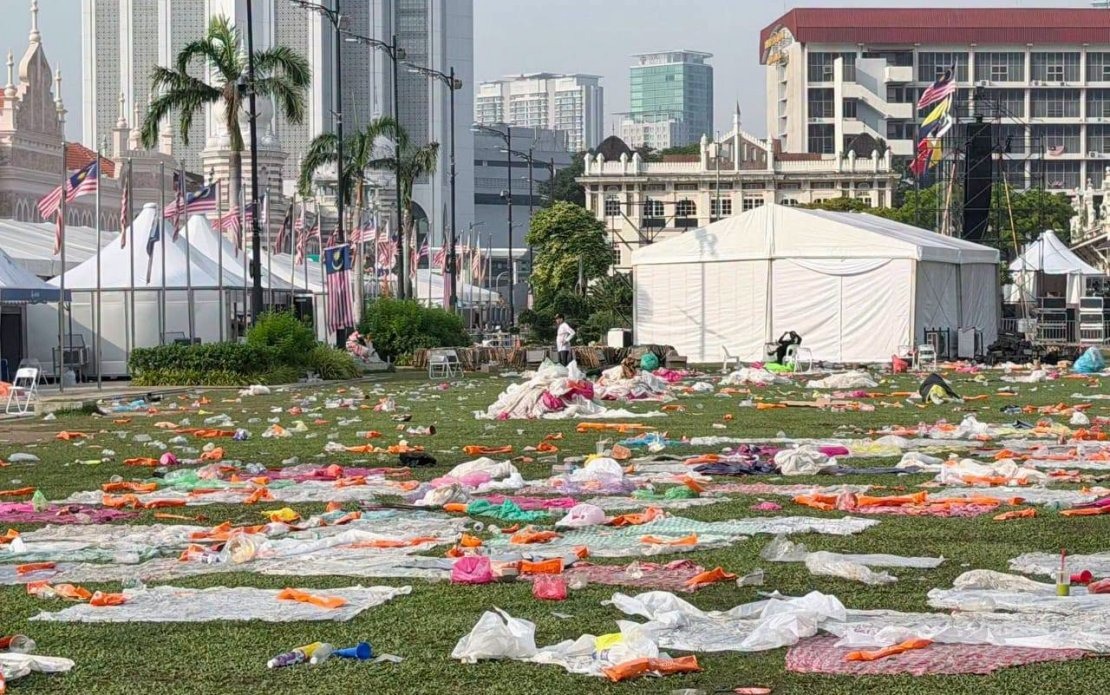
Kuala Lumpur City Hall (DBKL) has announced plans for an extensive cleaning operation at Dataran Merdeka following the early morning broadcast of the 2026 FIFA World Cup final on July 20, during which more than 25,000 supporters converged on the iconic national landmark to witness Spain's 1-0 victory over Argentina. The spontaneous gathering, which transformed the open field into a makeshift stadium, resulted in considerable amounts of rubbish being scattered across the site as celebratory crowds dispersed after the match concluded.
While DBKL's sanitation teams will undertake the necessary remedial work, the municipal authority used the occasion to deliver a pointed message about civic responsibility and shared accountability for maintaining the capital's cleanliness. In a Facebook statement released on the day of the incident, DBKL emphasised that the burden of keeping Kuala Lumpur clean should not fall solely upon municipal workers once members of the public have abandoned a location. The authority's response reflected frustration with the disconnect between the enjoyment citizens derive from public spaces and their willingness to maintain those spaces for collective benefit.
Dataran Merdeka holds profound symbolic significance within Malaysian national identity, serving as the ceremonial heart of the nation where independence was declared and major state occasions are commemorated. DBKL's statement stressed this historical importance, arguing that the manner in which citizens treat such spaces directly reflects their regard for national heritage and dignity. The authority drew an implicit contrast between the right to celebrate and express joy freely and the corresponding responsibility to exercise that freedom without degrading shared public property.
The specific language employed by DBKL in its statement—describing the post-event condition as one where the historic field "was left in a state of being filled with rubbish"—sought to highlight the jarring disparity between the elevated occasion and its aftermath. The municipality noted that although thousands had gathered during the early morning hours to "cheer, celebrate football and share joy," the conclusion of festivities saw participants depart without attempting to restore the space to acceptable condition. This pattern of behaviour, though not uncommon at large public gatherings globally, prompted DBKL to intervene with educational messaging about community stewardship.
The scale of the event underscores how international sporting occasions can mobilise significant public participation in Malaysia, even in an era of digital connectivity. The decision of over 25,000 people to physically assemble at Dataran Merdeka rather than watch the World Cup final in homes or commercial venues demonstrates the enduring appeal of collective, in-person celebration during major global sporting events. For many Malaysians, sharing such moments in public spaces creates a sense of community and national connection that isolated viewing cannot replicate.
Dataran Merdeka's role as an informal gathering point for spontaneous public celebrations has become increasingly pronounced in recent years. The venue regularly hosts large crowds during significant international sporting moments, cultural commemorations, and national celebrations, making it a de facto public assembly space despite its formal designation as a ceremonial ground. This informal function has created ongoing challenges for municipal authorities in balancing public access and enjoyment against the preservation of infrastructure and cleanliness standards.
DBKL's appeal to residents to regard Kuala Lumpur as a shared home requiring collective care addresses a broader urban governance challenge faced by rapidly developing cities throughout Southeast Asia. As metropolitan populations expand and public spaces become focal points for diverse activities, maintaining adequate cleanliness and amenity standards requires cooperation extending beyond municipal staff capabilities. The authority's statement implicitly recognised that enforcement alone—through fines or regulatory measures—cannot substitute for genuine internalisation of civic responsibility among residents and visitors.
The World Cup final broadcast incident also illuminates questions about how Malaysian society manages the intersection of spontaneous public participation and infrastructure maintenance. While the gathering itself represented successful public mobilisation around a shared cultural moment, the cleanup burden it created exemplifies how uncoordinated large-scale assemblies can strain municipal resources. Some Malaysian commentators have subsequently suggested that hosting such broadcasts with adequate sanitation arrangements—additional bins, cleaning stations, and post-event protocols—might mitigate future incidents.
For property management and urban planning authorities throughout Malaysia, the Dataran Merdeka situation offers practical lessons about anticipating demand during anticipated international events. Neighbouring Brunei and Singapore have implemented comprehensive protocols for large public gatherings, including pre-event communication about behavioural expectations and post-event cleanup responsibilities. Whether DBKL and other Malaysian municipalities will adopt similar preventive frameworks following this incident remains to be determined, though the agency's pointed public statement suggests heightened awareness of the issue among city administrators.
The underlying tension between facilitating public enjoyment of national spaces and protecting those spaces from degradation reflects broader questions about citizenship and urban participation. In democracies and developing nations alike, public spaces serve democratic functions by enabling citizens to gather, celebrate, and express collective identity. However, these same spaces generate maintenance challenges that disproportionately affect municipal workers, who frequently belong to lower socioeconomic strata and bear the physical burden of cleaning up after large gatherings. DBKL's statement, while framed diplomatically, highlighted this equity dimension implicitly by questioning whether municipal staff should bear sole responsibility for consequences of public behaviour.
Moving forward, the incident may catalyse broader conversations among Malaysian policymakers about how to foster civic consciousness regarding public space stewardship. Educational initiatives, targeted communication during major events, and possibly volunteer cleanup programmes could complement enforcement measures. The success of such approaches would depend significantly on whether citizens recognise themselves as stakeholders in maintaining shared infrastructure rather than viewing such spaces as disposable public property.
The 2026 World Cup final broadcast at Dataran Merdeka ultimately served as both celebration and cautionary moment. Whilst it demonstrated Malaysians' enthusiasm for international sporting moments and their attachment to iconic national venues, it equally exposed habits of public space usage requiring attention. DBKL's cleanup efforts will restore physical conditions, but whether the incident generates sustained behavioural change among citizens remains an open question for Kuala Lumpur's urban managers.

