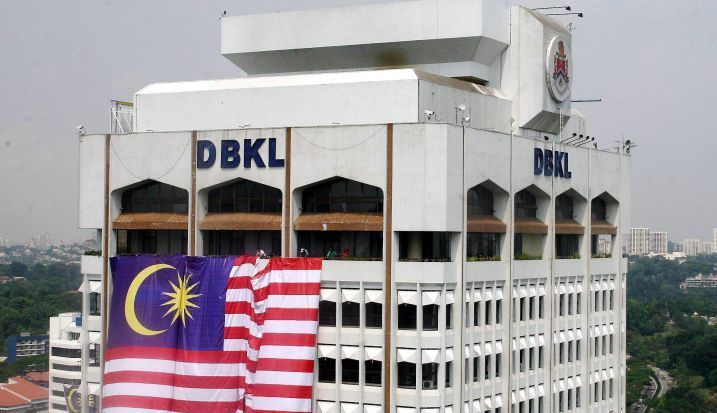
Kuala Lumpur City Hall (DBKL) has escalated its dispute with the Taman Desa Phase 1 Residents Association by issuing formal enforcement notices demanding the removal of unauthorised facial-recognition scanners and boom gates from public roads within a fortnight. The action, taken on Thursday, August 27, marks a significant hardening of DBKL's stance following months of failed negotiations with the residents' body over access controls and security infrastructure that officials say were installed without proper municipal approval.
Enforcement officers from City Hall placed red notices on facial scanners positioned at Guard Posts 1 and 4, marking the equipment with yellow DBKL enforcement tape. The notices explicitly cited violations of Section 70 of the Street, Drainage and Building Act 1974, establishing a clear legal basis for the authority's position. A DBKL spokesperson confirmed that the two-week deadline was determined after the municipal corporation's legal department reviewed the matter, lending weight to the formal nature of the directive.
The confrontation reflects an ongoing tension between residential security aspirations and municipal regulations governing public thoroughfares. The guarded-neighbourhood scheme operated by TDP1RA has become emblematic of broader debates across Malaysian urban areas about gated communities, privacy, and equitable access to shared spaces. DBKL's intervention suggests that municipal authorities are increasingly willing to enforce compliance with planning regulations even when faced with resident opposition, signalling a shift toward stricter governance of unauthorised private control over public infrastructure.
The dispute has festered for months, with DBKL issuing a March 5 letter objecting to the installation of CCTV cameras and facial-recognition systems that lacked municipal sanction. Despite receiving an additional 30-day notice to address deficiencies, the association failed to bring its operations into compliance with City Hall requirements. Following an inspection on August 17, DBKL determined that Posts 2, 5 and 6 remained improperly closed to vehicle traffic, prompting the August 18 order demanding full restoration of public road access.
Frustration among residents spilled into public protest on August 24, when more than 40 people, predominantly aged 50 and above, gathered at Gate 5 on Jalan Desa Ria to voice their objections to the restricted access regime. The permanent closure of that gate to vehicles, combined with its locking to pedestrians until 6am, has forced early-morning residents seeking recreational access to nearby parks to navigate significantly longer routes along busy thoroughfares. This practical inconvenience has resonated particularly with older residents for whom extended detours pose genuine health and safety concerns.
The facial-recognition technology itself has become a focal point of concern extending beyond the question of municipal jurisdiction. Residents have characterised the system as an invasive surveillance mechanism that contravenes expectations of privacy in shared neighbourhoods. Equally significant are emergency response implications raised by the barriers—residents worry that boom gates and access control systems could impede rapid response by ambulances or fire services during medical crises or accidents. These concerns mirror broader Malaysian conversations about balancing security measures with public welfare considerations.
TDP1RA president Frank Yeh has maintained that the association followed established procedures and secured backing from 81 percent of residents before implementing the security scheme. This invocation of resident consensus reflects a common argument deployed by gated-community advocates, suggesting that local democratic support should supersede municipal objections. However, DBKL's position underscores a principle established in Malaysian municipal law: individual resident preferences cannot override statutory requirements governing public roads and spaces, regardless of the voting margin supporting such preferences.
The stakes for DBKL's enforcement action extend beyond this single neighbourhood. A failure to compel compliance would weaken the municipal corporation's authority over public infrastructure across the city, potentially encouraging other residents' associations to pursue similar unauthorised security installations. Conversely, successful enforcement would reinforce DBKL's capacity to govern shared urban space, establishing a precedent that may influence how other gated communities operate within Kuala Lumpur. The two-week ultimatum effectively forces the residents' association to choose between compliance and confrontation with municipal authority.
The confrontation also highlights tensions within Malaysia's governance framework regarding the relationship between municipal authorities and resident associations. While community organisations play legitimate roles in enhancing neighbourhood amenities and organising collective action, their powers remain subordinate to municipal regulations. The Taman Desa dispute demonstrates what happens when these boundaries blur, with associations attempting to exercise quasi-governmental functions such as access control and surveillance without formal delegation of such authority.
For Malaysian residents contemplating similar security enhancements in their own communities, the Taman Desa case provides cautionary lessons about the necessity of securing municipal approval before installing infrastructure on public roads. The technical sophistication of the facial-recognition system at Taman Desa—which presumably represented significant financial investment by the residents' association—offers little protection once DBKL determined it violated established regulations. This suggests that even technologically advanced or well-intentioned security measures cannot substitute for procedural compliance with municipal authorities.
The coming two weeks will prove pivotal in determining whether TDP1RA opts for voluntary compliance or resists the enforcement order. If the association removes the equipment as directed, tensions may gradually diminish but likely will resurface around questions of alternative security arrangements and access-control mechanisms that satisfy both resident security concerns and municipal requirements. Should TDP1RA refuse compliance, DBKL has signalled it will proceed with removal, potentially escalating the dispute and consuming municipal resources better directed elsewhere. Either outcome will carry implications for how Kuala Lumpur manages the delicate equilibrium between community autonomy and municipal authority over shared urban infrastructure.

