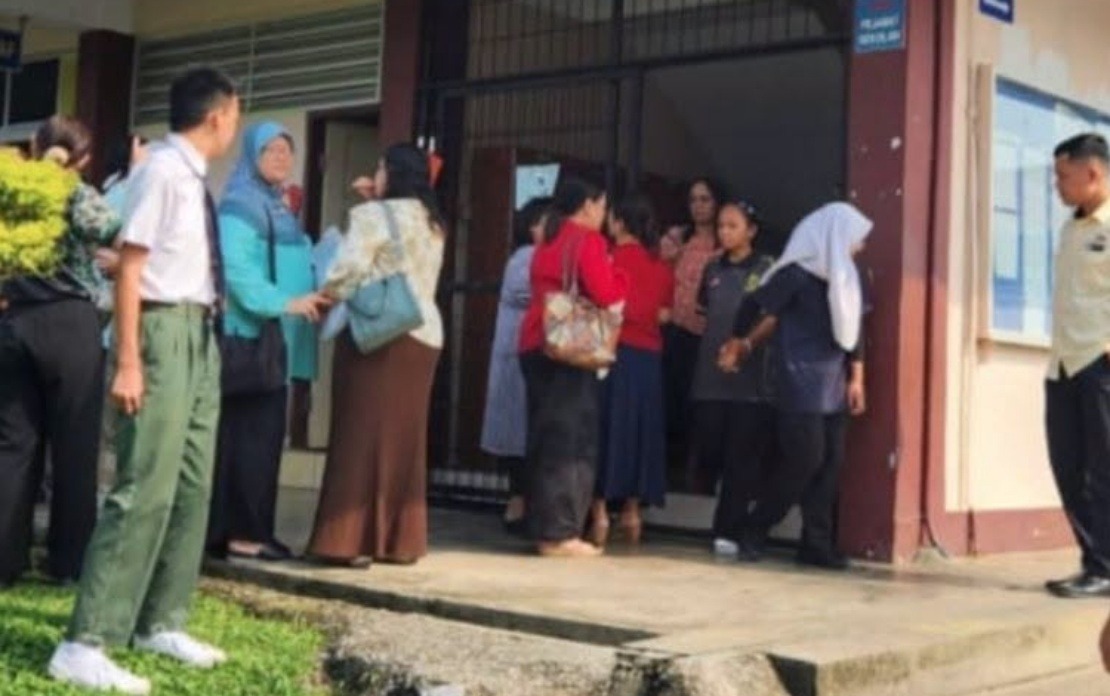
A science educator with a quarter-century of dedicated service at SMK Bau in Kuching died unexpectedly on Tuesday morning, prompting police to launch an investigation into the circumstances surrounding her passing. The woman was discovered unresponsive in the female teachers' toilet at the secondary school, with medical personnel confirming her death at the scene shortly after she was found. The incident has sent shockwaves through the educational community in Sarawak, where long-serving educators form the backbone of the state's schooling system.
Police in the Bau district received an emergency report at approximately 8.53 am, activating a rapid response from officers at the local station. According to Supt Mohd Haide A Rahman, the district police chief, the teacher had last been observed by fellow staff members in the teachers' common area around 8.15 am, shortly before she excused herself. The precise timeline of events that followed would prove crucial in understanding how quickly the situation deteriorated, though initial investigations yielded few clues about the underlying cause.
Approximately 20 minutes elapsed before colleagues grew concerned about her absence from scheduled classes. When no one could locate her in the staff areas, a fellow educator decided to check the female teachers' toilet, where the grim discovery was made. Upon opening the door, staff members found her lying on her back on the floor in an unconscious state, immediately prompting them to contact emergency services for urgent medical intervention.
Medical personnel from Bau Hospital arrived promptly and conducted their preliminary assessment of the victim. However, their efforts to revive her proved unsuccessful, and she was formally pronounced dead at the scene at 9.08 am, leaving her colleagues devastated and bewildered. The circumstances surrounding her collapse—whether sudden illness, accident, or some other factor—remained unclear at that critical moment, necessitating further investigation.
The police response to the incident focused initially on ruling out any criminal element or suspicious circumstances. Supt Mohd Haide noted that preliminary examinations of the body revealed no visible injuries or other indicators suggestive of foul play or unlawful activity. This absence of suspicious findings provided some measure of reassurance that the death did not result from violence or deliberate harm, though it did little to ease the shock felt by the school community.
The victim's two and a half decades of service to SMK Bau represented a significant institutional investment in science education, and her sudden departure leaves a substantial void in the school's teaching complement. Teachers who dedicate such extended periods to a single institution often become pillars of stability and continuity, shaping generations of students and mentoring younger faculty members. Her loss underscores the vulnerabilities inherent in the profession and the human costs of educational service.
Autorities have classified the case as a sudden death, a legal categorisation used when the cause is not immediately apparent. To determine the precise medical circumstances that led to her passing, her remains were transferred to Bau Hospital for a comprehensive autopsy examination. This post-mortem assessment would provide pathologists with critical information about whether she suffered from an undiagnosed medical condition, acute illness, or other physiological factors that may have contributed to her collapse.
The incident raises important questions about workplace safety and health monitoring in educational settings. Schools across Malaysia, like institutions worldwide, have limited capacity to monitor individual staff members' health status throughout the working day. Sudden medical events—whether cardiac episodes, strokes, or other acute conditions—can occur with little warning, presenting challenges for even the most attentive colleagues. The case highlights the need for schools to maintain adequate first aid training and emergency response protocols.
For the broader teaching profession in Sarawak and Malaysia, such tragedies serve as sobering reminders of the occupational hazards that extend beyond classroom management and administrative demands. Educators often work under considerable stress, managing large classes with diverse student populations while navigating evolving curriculum requirements and educational policies. The physical and mental toll of prolonged service in demanding environments deserves greater attention from policymakers and educational administrators.
The Bau school community will await the autopsy findings while grappling with the loss of a colleague whose contributions to science education spanned generations of students. Her family, students, and fellow educators face an uncertain period as they seek answers about what caused her sudden death. The incident serves as a poignant reminder of the fragility of life and the dedication shown by teachers who commit their careers to shaping young minds, often at considerable personal cost.

