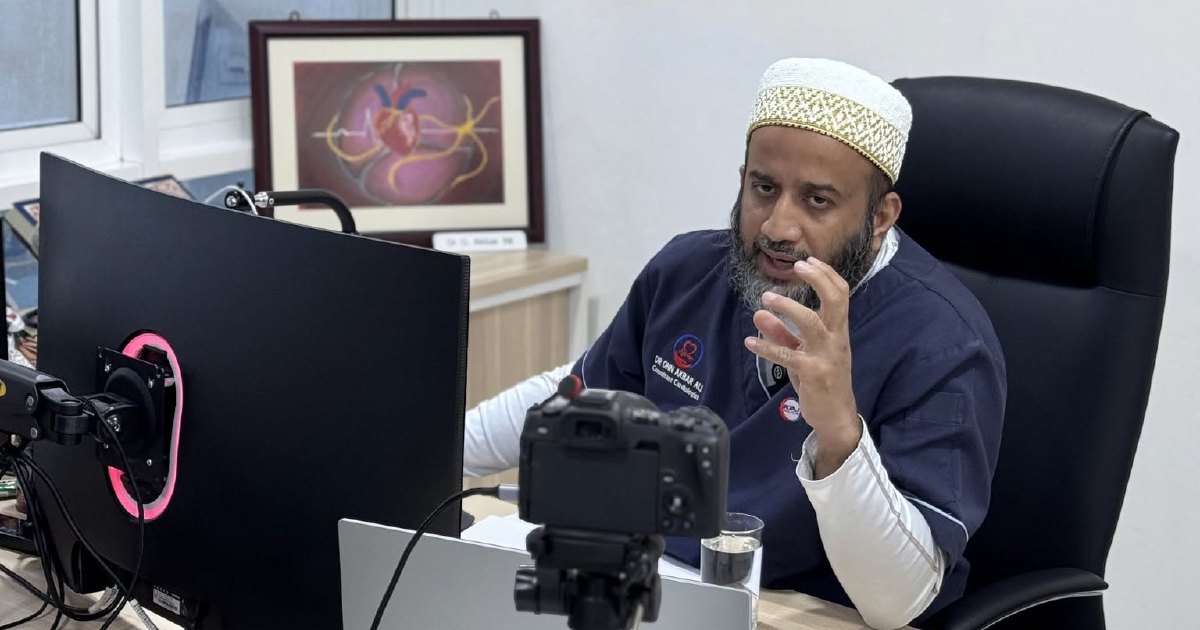
A Malaysian consultant cardiologist recently had his digital identity hijacked to peddle unproven herbal remedies, an unsettling experience that underscores how artificial intelligence technology is increasingly weaponised against medical professionals and the public they serve. Dr Onn Akbar Ali learned that someone had created a convincing deepfake video featuring his likeness and voice endorsing herbal tea as a cure for diabetes—a claim not only scientifically dubious but potentially dangerous to gullible consumers seeking alternatives to established medical treatment.
This incident represents far more than a personal embarrassment or professional violation. The emergence of deepfake health scams signals a troubling convergence of technological capability and criminal intent that threatens the very foundation of public trust in medical expertise. As artificial intelligence tools become more accessible and sophisticated, fraudsters can now manufacture seemingly authentic endorsements from reputable doctors with minimal resources, creating an information environment where patients struggle to distinguish legitimate medical guidance from elaborate fabrications designed solely to extract money.
The implications for Malaysia's healthcare ecosystem are particularly acute. With a population increasingly turning to online sources for health information—a trend that accelerated during the Covid-19 pandemic—the proliferation of deepfake medical endorsements creates a dangerous parallel market where bogus treatments gain false legitimacy through the stolen identities of genuine practitioners. Patients with chronic conditions like diabetes, who are already vulnerable to exploitation, face heightened risk when sophisticated AI-generated videos appear to come from trusted medical authorities.
Dr Onn Akbar Ali's experience reflects a pattern emerging across Southeast Asia and beyond. Medical professionals are discovering their faces and voices repurposed without consent to market everything from dubious herbal supplements to unproven stem cell therapies and cryptocurrency investment schemes disguised in health-related packaging. The financial motivation is straightforward: a single convincing deepfake video can reach thousands of potential victims across social media platforms, generating substantial revenue for fraudsters while damaging the reputations and professional credibility of the doctors impersonated.
The technical sophistication required to pull off such scams has dropped significantly in recent years. Generative AI models trained on publicly available videos and audio recordings can now create remarkably convincing deepfakes that fool not only casual viewers but sometimes even close colleagues of the impersonated individuals. Voice synthesis technology has advanced to the point where the subtle vocal mannerisms, accent patterns, and speech cadences of real doctors can be replicated with startling accuracy. What once required expensive Hollywood-level production capabilities now lies within reach of anyone with basic technical knowledge and malicious intent.
Regulatory bodies and law enforcement agencies across Malaysia and the region have been relatively slow to develop robust responses to this emerging threat. Unlike some Western jurisdictions that have begun crafting specific legislation against malicious deepfakes, Southeast Asian countries largely lack comprehensive legal frameworks addressing AI-generated impersonation in healthcare contexts. This regulatory gap leaves both medical professionals and the public vulnerable, with few mechanisms for rapid takedown of fraudulent content or prosecution of perpetrators operating across international borders.
The reputational damage inflicted on doctors extends beyond immediate financial loss. When a trusted physician's digital identity is hijacked for scam purposes, patients may lose confidence not only in that individual but in the institution they represent. Hospitals, clinics, and professional associations find themselves caught between the need to publicly distance themselves from fraudulent content while simultaneously managing the complex challenge of proving their doctors' innocence and removing malicious videos from circulation. The psychological toll on medical professionals who discover their likenesses being misused in this manner should not be underestimated.
For patients, the stakes are undeniably higher. A vulnerable person with uncontrolled diabetes, desperate for better treatment options, might be persuaded by an apparently authoritative doctor's endorsement to abandon proven pharmaceutical interventions in favour of ineffective herbal remedies. The downstream health consequences—ranging from delayed diagnosis of serious complications to outright medical emergencies—represent a hidden cost of these scams that extends far beyond the direct financial fraud component.
The intersection of AI technology, healthcare misinformation, and economic incentives creates a perfect storm. Unlike other sectors where deepfakes might cause embarrassment or minor financial harm, medical fraud can literally endanger lives. A bank might recover stolen funds or sue for reputational damages, but a patient persuaded to reject insulin therapy in favour of fake herbal remedies faces potentially irreversible health consequences. This asymmetry in harm potential demands that healthcare systems treat deepfake medical fraud as a public health emergency rather than a mere cybercrime problem.
Malaysia's healthcare community, alongside regional medical associations and government agencies, must accelerate efforts to build defences against this threat. Educational initiatives should help patients develop critical evaluation skills for online medical information. Technology platforms need to implement more sophisticated detection systems for deepfakes and automated removal protocols. Medical professionals require accessible mechanisms for rapid response when their identities are compromised. Additionally, collaborative international efforts become essential, as fraudsters typically operate across borders where jurisdictional limitations complicate enforcement.
The Dr Onn Akbar Ali case serves as a clarion call for the region's medical establishment and policymakers. As deepfake technology continues to improve and become increasingly accessible, the healthcare sector cannot afford to remain reactive. Proactive measures—from regulatory frameworks specifically addressing medical deepfakes to public awareness campaigns and industry-wide protocols for identity verification—need implementation now, before deepfake medical fraud becomes so commonplace that it fundamentally erodes public trust in the entire healthcare system.

