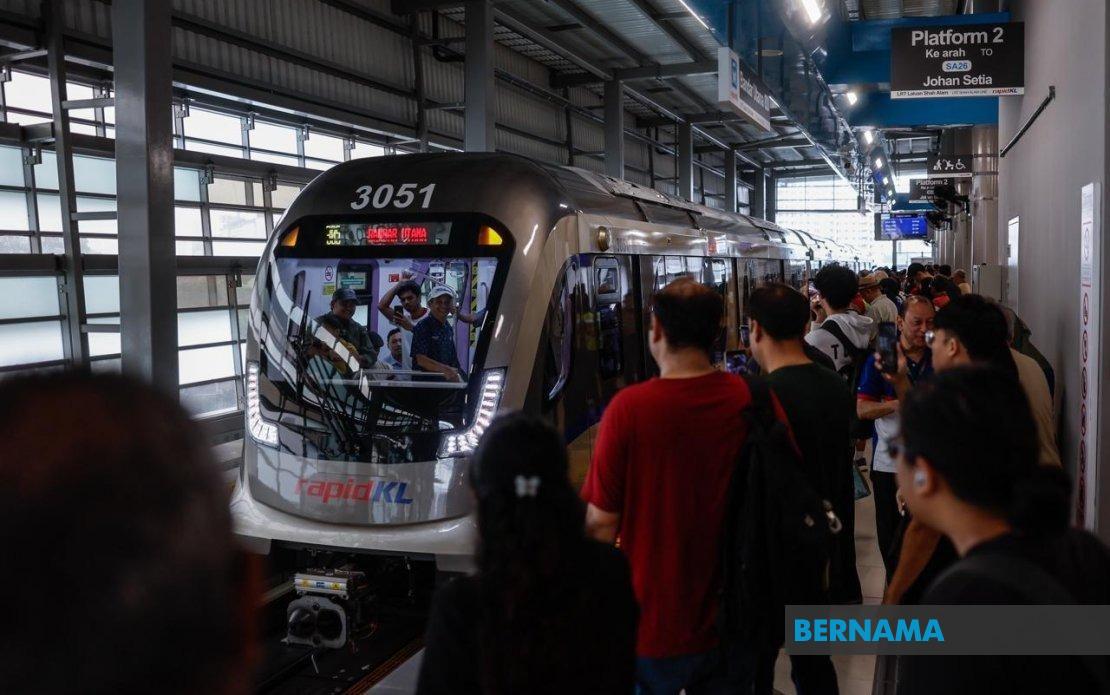
A mechanical defect in one of the train's systems was responsible for an incident that unfolded on the LRT3 Shah Alam Line on July 4, operator Rapid KL revealed this week. The faulty component made contact with the power conductor running overhead, creating a momentary flash and audible effect that alarmed passengers at Shah Alam Stadium Station shortly after 7 pm but caused no injuries to anyone aboard.
The incident, which lasted only seconds, generated both visible sparks and a noise resembling a small explosion as the electrical contact briefly disrupted the normal flow of power along the line. Despite the dramatic nature of what passengers experienced, operations on the commuter rail network continued without major disruption. Rapid KL moved quickly to manage the situation, ensuring that travellers were not stranded and that service reliability was maintained across the broader system.
Immediate action was taken once the problem became apparent. The affected train was withdrawn from passenger service at the next available station, where all occupants were safely disembarked before being transferred to a replacement vehicle to complete their journeys. This procedural response minimised inconvenience to commuters and prevented any compounding of the original incident. The train in question was then directed to the maintenance depot for comprehensive investigation and remedial work.
The technical inspection at the depot revealed the precise nature of the malfunction. Engineers identified the defective component as the root cause of the power conductor contact and proceeded to remove and replace the problematic part entirely. This complete replacement rather than repair ensured that the train would operate reliably once cleared for return to service. The company conducted thorough safety validation after the repair work was completed before allowing the train back into revenue-generating operations.
Rapid KL emphasised that passenger welfare remained its paramount concern in both immediate crisis management and the follow-up response. Beyond addressing the single compromised train, the operator initiated broader preventive inspections and monitoring procedures across its fleet. This precautionary extension of scrutiny to other vehicles represents a standard engineering protocol designed to detect any similar component degradation before it manifests as an operational incident. The approach acknowledges that systematic wear or manufacturing defects may not be confined to a single train and warrants fleet-wide vigilance.
The July 4 incident underscores the technical complexities inherent in operating urban rapid transit systems, where overhead power distribution systems must maintain precise relationships with moving train pantographs and related equipment. Any deviation from designed tolerances can result in unintended electrical contact, creating the distinctive audible and visible effects that characterised this event. The LRT3 Shah Alam Line, which serves a major corridor in the Klang Valley's western reaches, carries thousands of daily commuters and maintaining its reliability is essential to the broader integrated transport network serving the Selangor conurbation.
For Malaysian commuters who depend on rail transit for their daily movement, such incidents inevitably raise questions about infrastructure maintenance standards and the rigour of safety monitoring regimes. The rapid identification of the root cause and the decisive response by Rapid KL in this instance suggest established protocols are functioning as intended. However, the incident also highlights the importance of continuous investment in fleet maintenance and the replacement of ageing components before failure becomes imminent rather than waiting for problems to materialise during peak service hours.
The LRT3 system, which opened in 2016 and connects Shah Alam, Klang and Selangor Darul Ehsan through the commercial heart of greater Kuala Lumpur, represents a significant regional transport asset. Its reliability directly impacts economic activity and quality of life across multiple administrative jurisdictions. Maintenance incidents like this one, while ultimately resolved without harm, remind stakeholders of the continuous management effort required to sustain modern transport infrastructure at acceptable performance standards.
Rapid KL's transparency in disclosing the cause of the incident and the corrective measures undertaken reflects evolving standards of public accountability in Malaysia's transport sector. By communicating clearly about what went wrong and how it was fixed, the operator builds public confidence that safety is genuinely prioritised over operational convenience. This openness also sets expectations for similar disclosure from other transport operators when incidents occur, contributing to a broader cultural shift toward transparency in infrastructure management across the region.

