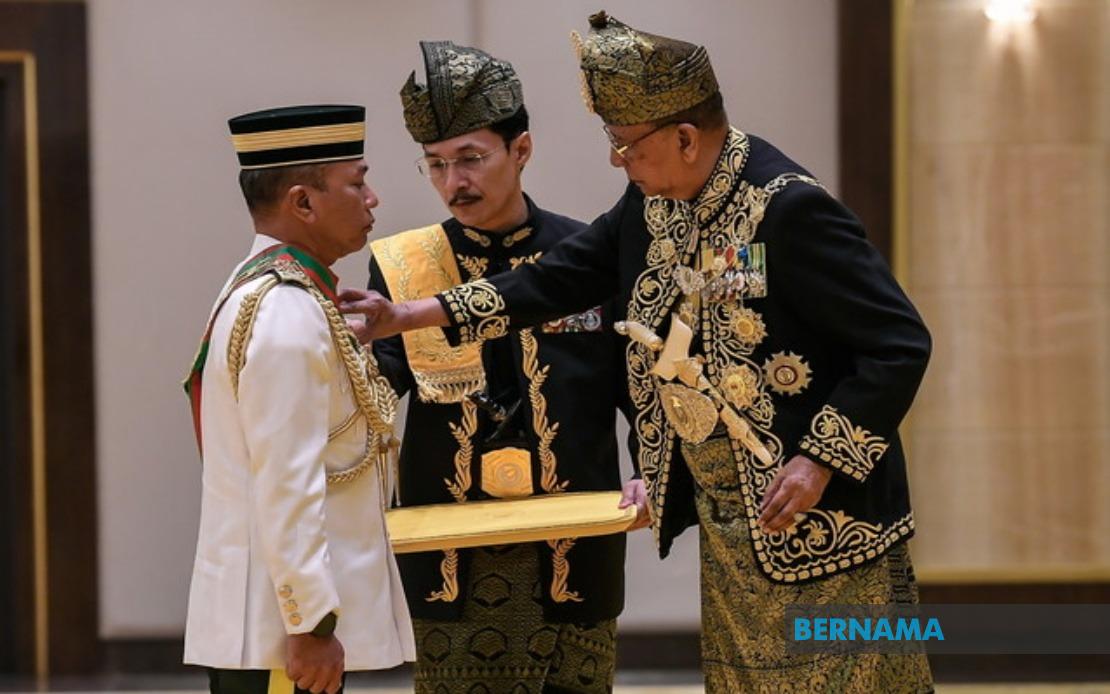
The Sultan of Kedah, Al Aminul Karim Sultan Sallehuddin Sultan Badlishah, conferred prestigious honours and medals on Tuesday during ceremonies marking his 84th birthday at Istana Anak Bukit in Alor Setar. Leading the distinguished roster of recipients were General Tan Sri Malek Razak Sulaiman, the nation's Chief of Defence Forces, and Tan Sri Mohd Khalid Ismail, the Inspector-General of Police, both receiving the Darjah Dato' Seri Setia Pahlawan Yang Amat Dihormati (S.S.P.K), the highest tier in the honours system.
The recognition of the country's two most senior security figures underscores the Crown's traditional role in acknowledging those at the pinnacle of Malaysia's defence and law enforcement establishments. These appointments reflect the deep institutional relationship between the monarchy and the armed forces, a constitutional arrangement that remains central to Malaysia's governance structure. The conferment of such elevated honours to military and police leadership is typically reserved for those deemed to have rendered exceptional service to the nation and their respective institutions.
Beyond the two apex figures, Sultan Sallehuddin bestowed the Orang Besar Enam Belas title on Datuk Syed Khairol Anuar Syed Abidin, recognising his status as one of the sixteen most senior palace officials. Datuk Mohamad Che Nai similarly received the Orang Besar Tiga Puluh Dua designation, placing him among the thirty-two highest-ranking members of the royal establishment. These traditional titles, which trace their origins to the Kedah sultanate's historical administrative structure, continue to carry significant ceremonial weight and mark distinction within the state hierarchy.
Four individuals qualified for the Darjah Dato' Setia Diraja Kedah (D.S.D.K), whilst Kedah's state police commander, Datuk Adzli Abu Shah, secured the Darjah Dato' Setia Pahlawan (D.D.S.P) honour. The inclusion of the state police chief acknowledges the critical role played by law enforcement in maintaining order and security within Kedah's borders, reflecting the Sultan's appreciation for frontline policing efforts across the state.
Among those receiving the Darjah Setia Sultan Sallehuddin Kedah (S.S.S) were Major (Retired) Mansor Zakaria, a member of Kedah's state executive council, and Afnan Hamimi Taib Azamudden, the national chief of PAS Youth. The recognition of state government officials alongside youth leaders from a major political party illustrates the Sultan's role as a unifying figure transcending partisan divides, symbolically acknowledging contributions from both government administration and organised civil society sectors.
A cohort of nine individuals received the Darjah Setia Diraja Kedah (S.D.K), spanning diverse sectors critical to Kedah's development and welfare. The recognition included Syeikh Mohamad Subhi Abdullah, director of the Kedah State Islamic Religious Affairs Department, reflecting the significance of Islamic administration in Malaysia's system of governance where sultans serve as heads of Islam in their respective states. Maznim Ismail, deputy chief executive of the Langkawi Development Authority, was similarly honoured, acknowledging the tourism and economic development contributions that Langkawi provides to Kedah's revenue streams.
The honours extended to technical and developmental leaders including Ir Mohd Fisal Ismail from the Kedah Public Works Department and Zulkifli Romli of the Muda Agricultural Development Authority (MADA), reflecting recognition of infrastructure and agricultural advancement. Healthcare professionals also featured prominently, with Dr Adam Mohd Zakaria, head of neurosurgery at Sultanah Bahiyah Hospital, and Dr Manisekar K. Subramaniam, the institution's senior general surgeon, receiving recognition. The inclusion of medical practitioners alongside administrators signals the Sultan's acknowledgement of healthcare provision as integral to state welfare. Dr Jamaliah Omar, deputy director of the Health Ministry's Dental Health Programme, received honours recognising her contributions to national oral health initiatives that extend beyond Kedah's borders.
Yeoh Su Guan, chairman of the Real Estate and Housing Developers Association for Kedah and Perlis, and Jaffri Ahmad, president of Bismi Empire Sdn Bhd, represented the private sector among S.D.K recipients, indicating the Crown's appreciation of business leaders' contributions to economic development and employment generation within the state.
The broader honours distribution revealed a comprehensive approach to recognition, with the Sultan conferring the Ahli Mahkota Kedah (A.M.K) to 31 recipients and the Ahli Setia Pahlawan (A.S.P) designation to five individuals. An additional 31 recipients received the Bintang Perkhidmatan Cemerlang Kedah (B.C.K), whilst 43 others were awarded the Bintang Kebaktian Masyarakat (B.K.M), honouring community service contributions. The Ahli Cemerlang Semangat Jerai Kedah (A.S.K) went to five recipients, recognising excellence in various fields.
The distribution extended to service medals, with 55 individuals receiving the Pingat Perkhidmatan Cemerlang Kedah (P.C.K) for distinguished service, 40 recipients honoured with the Pingat Jasa Kebaktian (P.J.K) for dedicated service, and 15 recipients receiving the Pingat Perkhidmatan Lama (P.P.L) in recognition of long service. Across all categories, approximately 240 individuals received formal recognition, demonstrating the Sultan's commitment to acknowledging contributions across Kedah society.
The honours system represents a crucial dimension of Malaysia's constitutional monarchy, providing formal mechanisms through which sultans recognise and incentivise service to state and nation. For recipients, these honours carry tangible prestige and advancement implications, particularly within public service hierarchies where official recognition often translates to career progression and elevated status. The breadth of the 2024 honours list, spanning security, government administration, healthcare, religious affairs, economic development, and community service, reflects a deliberate strategy to foster excellence across multiple societal sectors whilst reinforcing the Sultan's role as the ultimate arbiter and recogniser of merit and service within his state.

