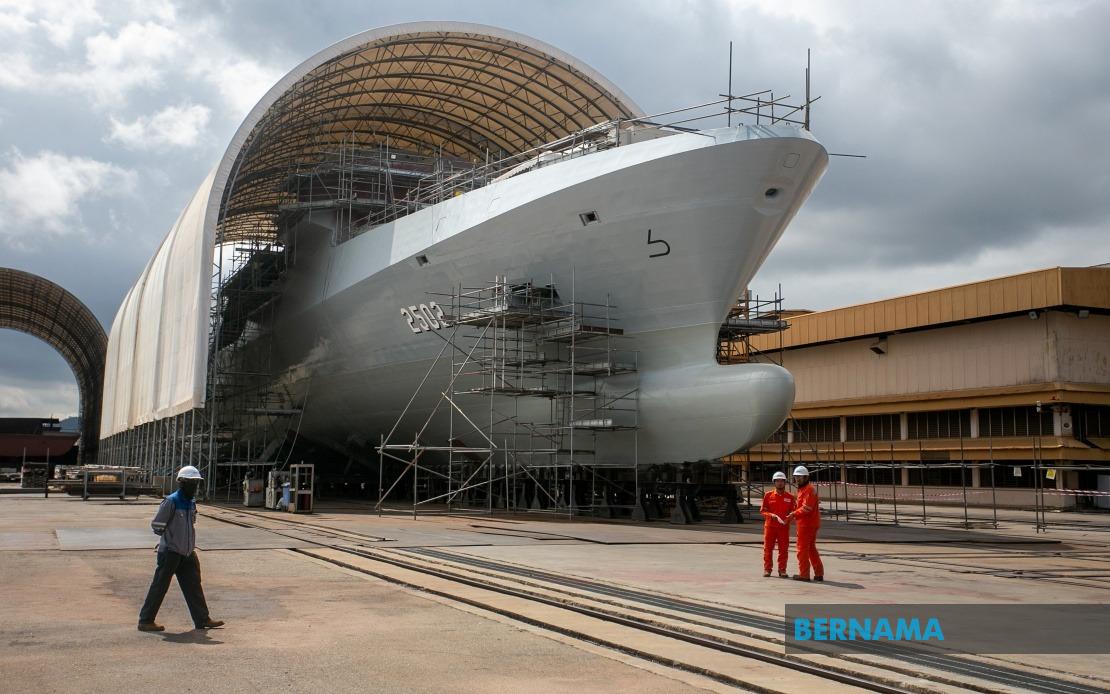
The Malaysian Ministry of Defence has moved to address parliamentary concerns about the timing and safeguards surrounding a RM571.9 million payment to a Norwegian defence contractor for anti-ship missile systems destined for the Navy's Littoral Combat Ship fleet. In a written parliamentary response, MINDEF rejected suggestions that the government had prematurely disbursed funds or neglected to include contractual protections, asserting instead that the payment aligned with agreed progress milestones and that the equipment had already been manufactured and validated before money changed hands.
The clarification responds to questions raised by opposition and government backbench MPs questioning both the financial prudence of the transaction and the adequacy of contractual safeguards. Hassan Abdul Karim from the Pakatan Harapan opposition had specifically challenged whether the full contract value had been released prematurely and whether the procurement agreement lacked protective clauses, whilst Mohd Kurniawan Naim Moktar from the Barisan Nasional had sought assurances about operational implications. These parliamentary inquiries suggest the Naval Strike Missile acquisition has attracted scrutiny from multiple political quarters, reflecting broader concern about major defence procurements.
According to MINDEF's account, the RM571.9 million transfer occurred only after the Norwegian supplier had completed manufacturing all systems and these had undergone rigorous testing protocols established by the Royal Malaysian Navy. This sequencing is crucial to the ministry's defence of the transaction, as it means the Malaysian government was paying for substantially completed and verified goods rather than funding development or speculative production. The systems were apparently certified as ready for delivery before the invoice was processed, distinguishing this arrangement from advance payments that carry greater financial risk.
The ministry's response also tackles the allegation that the procurement contract lacked adequate protections for government interests. MINDEF explicitly stated that the agreement includes provisions permitting the Malaysian government to take corrective action in response to non-performance or breach by the contractor. Such clauses typically allow for penalties, contract termination, or recovery of payments if the supplier fails to meet obligations. The existence of these protections would address a key concern raised in Parliament about whether Malaysian interests had been adequately safeguarded.
However, the transaction has been complicated by an external development beyond the control of either party: Norway's government revoked the export licence for the missile systems. MINDEF acknowledged this revocation as a circumstance neither the Malaysian government nor the Norwegian supplier could have anticipated or prevented. The licence withdrawal appears to have occurred after the payment was made and the systems completed, introducing a novel complication into what may have been a straightforward defence acquisition.
In response to this licence revocation, MINDEF indicated that it is now invoking the contractual remedies available to recover the payment and pursue claims for related damages. This suggests the ministry regards the Norwegian government's licensing decision as potentially constituting a breach or failure of performance that triggers the protective mechanisms embedded within the original agreement. Whether such claims would succeed, or whether the contract's language adequately addresses government-level export restrictions, remains unclear and may ultimately depend on legal interpretation.
The timing of Norway's licence withdrawal raises questions about the procurement process itself. Defence exports are typically subject to government-level oversight and approval, particularly for systems as sensitive as anti-ship missiles. Whether Malaysia's defence planners conducted adequate due diligence regarding potential export control risks before finalising the purchase remains an open question. For Malaysian defence procurement more broadly, the episode underscores the importance of anticipating geopolitical and regulatory obstacles that might affect the delivery of major military systems from allied nations.
From an operational perspective, MINDEF sought to minimise concerns about the impact on military readiness. The ministry stated that the Royal Malaysian Navy retains existing assets and weapons systems sufficient to maintain defence of Malaysia's maritime interests and territorial waters. This suggests the NSM acquisition, whilst important, was intended as a capability enhancement rather than a critical gap-filler. The Navy is reportedly evaluating alternative missile systems that could potentially substitute for the Norwegian equipment, indicating contingency planning is underway.
The broader context involves Malaysia's defence modernisation strategy and its relationship with strategic partners. Norway, a NATO member, has been a significant defence supplier to Malaysia and other Southeast Asian nations. The licence revocation may reflect Norway's foreign policy considerations, potentially including concerns about end-use or regional tensions. For Malaysia, which maintains relationships across multiple geopolitical poles, defence sourcing decisions must increasingly account for the possibility of export controls or licensing restrictions by supplier countries responding to their own government policies.
The incident also highlights a persistent vulnerability in major defence acquisitions by developing nations: dependence on suppliers' regulatory approval throughout the lifecycle of projects. Even when a contract is well-structured and payment follows delivery of completed goods, subsequent government action by the supplier country can disrupt implementation. This has implications for how Malaysia and other Southeast Asian nations structure future defence procurements, potentially favouring suppliers with greater certainty about licensing regimes or seeking contractual provisions addressing hypothetical licensing changes.
Parliamentary scrutiny of this transaction reflects healthy oversight of public expenditure on defence, an area where spending is often opaque and subject to strategic justifications that resist public examination. That multiple MPs from both government and opposition benches sought clarification suggests this issue has transcended partisan lines, anchoring itself in broader concerns about fiscal responsibility and effective management of defence resources. MINDEF's written responses attempt to address these concerns systematically, though the underlying question of whether Malaysia should have anticipated the Norwegian licence risk before committing funds remains relevant.

