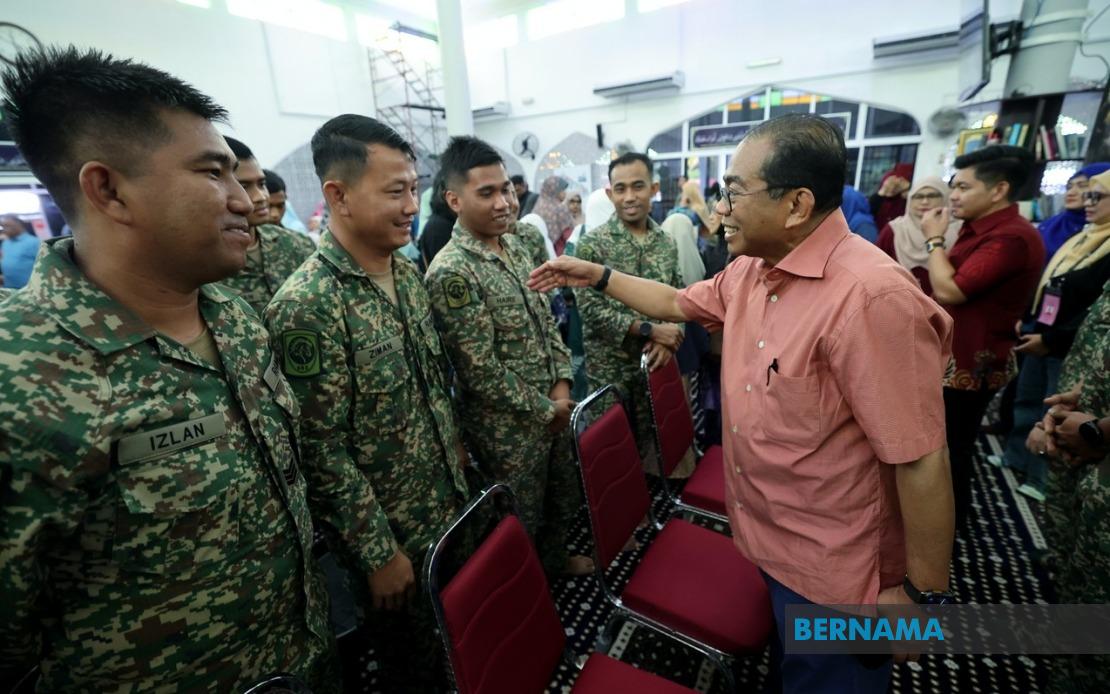
Defence Minister Datuk Seri Mohamed Khaled Nordin has confirmed that the probe into a fatal grenade explosion at Hobart Camp in Gurun will be concluded by the middle of July, with findings to be forwarded to the Ministry of Defence for consideration and potential action. The investigation into the incident, which resulted in the deaths of two military personnel during a routine training exercise, is in its final stages, the minister disclosed while addressing reporters in Kota Tinggi following attendance at the 'Ilmu dan Muafakat' (PIKAT) programme at Felda Air Tawar 2.
The tragic incident unfolded on June 16 when a grenade detonated during a training exercise at approximately 10.57 am. Corporal Norazmi Abu Bakar, serving with the Sixth Battalion, Royal Malay Regiment (RAMD), and Private Siti Khadijah Sungip of the First Squadron, Royal Engineers Regiment (RAJD), both sustained critical injuries from the blast. The two soldiers were immediately transported to Sultan Abdul Halim Hospital in Sungai Petani, but tragically died en route to the medical facility. The incident marked a significant loss for the Malaysian military and prompted urgent examination of training protocols and safety procedures.
Mohamed Khaled emphasised that once the investigation details are received, the ministry will conduct a thorough review before determining the appropriate course of action. The completion of the investigative report represents a crucial juncture in understanding how the accident occurred and what systemic factors may have contributed to the fatality. The minister's statement indicates that no hasty conclusions will be drawn, and that comprehensive analysis will precede any policy changes or disciplinary measures that may result from the findings.
Beyond the immediate investigation, the Malaysian Army has been instructed to undertake a broader assessment of its training methodology and safety culture. This review extends beyond the single incident in question to encompass lessons that can be extracted from related accidents and near-misses. The defence leadership has recognised that the training environment requires careful scrutiny to identify potential vulnerabilities or procedural gaps that could compromise soldier safety in future exercises.
The significance of this directive became apparent when, merely two weeks after the fatal explosion, a second serious incident occurred at the same Hobart Camp facility. On June 29, a firearm accidentally discharged during a combat enhancement training (LPT) exercise, resulting in injuries to two personnel. Sergeant Mohamad Firdaus Che Shaharudin and Corporal Felix Franchis, both attached to the Fourth Battalion, Royal Ranger Regiment (4 RRD), sustained leg injuries after being struck by shrapnel during the 6.15 pm incident. The proximity of these two accidents at the same location within a fortnight raised concerns about whether specific training programmes, supervision protocols, or equipment at the facility might require modification.
The occurrence of two separate accidents involving weaponry and explosive devices within such a compressed timeframe has underscored the importance of identifying whether systemic weaknesses exist at Hobart Camp or whether the incidents represent isolated lapses in procedural adherence. Mohamed Khaled's acknowledgment of the second incident in directing the military to conduct a comprehensive training review suggests that the ministry views both events as potentially interconnected signals of deeper issues requiring investigation.
For the Malaysian military and defence establishment, such incidents carry substantial implications beyond the immediate human tragedy. The deaths of Corporal Norazmi Abu Bakar and Private Siti Khadijah Sungip represent losses not only to their families but to military units and broader national defence capability. The investigation process becomes crucial not merely as an exercise in accountability but as an opportunity to implement safeguards that protect military personnel engaged in essential training exercises. The quality and rigour of the investigation report will determine whether the resulting recommendations generate meaningful improvements in training protocols and safety culture across the armed forces.
From a regional perspective, military accidents during training exercises occur periodically across Southeast Asia, and the manner in which nations respond to such incidents reflects their commitment to soldier welfare and institutional learning. Malaysia's approach to investigating these Hobart Camp incidents, combined with the directive for broader training methodology review, demonstrates an intention to treat the accidents as catalysts for systemic improvement rather than isolated tragedies to be archived. The defence minister's public commitment to updating stakeholders on investigation findings suggests a degree of transparency regarding military operations that may resonate with broader expectations for institutional accountability.
The investigation process underway carries particular weight given that one of the fatalities involved a female soldier, Private Siti Khadijah Sungip. Her death in a military training accident occurs within a context where Southeast Asian militaries have progressively expanded opportunities for women in combat and technical roles. The circumstances surrounding her death and the safety review emerging from it may influence discussions about appropriate training protocols for personnel across the military spectrum, regardless of gender.
As the Defence Ministry awaits the investigation report's submission mid-month, the military institution faces both a reckoning and an opportunity. The findings will inform whether Hobart Camp's training infrastructure, supervision standards, or exercise parameters require adjustment. More broadly, the comprehensive review of training approaches ordered by Mohamed Khaled represents institutional commitment to extracting learning from tragedy. The final report's quality and the subsequent implementation of its recommendations will determine whether the military can convert the loss of two personnel into systemic improvements that reduce accident risk and enhance soldier protection in future training cycles.

