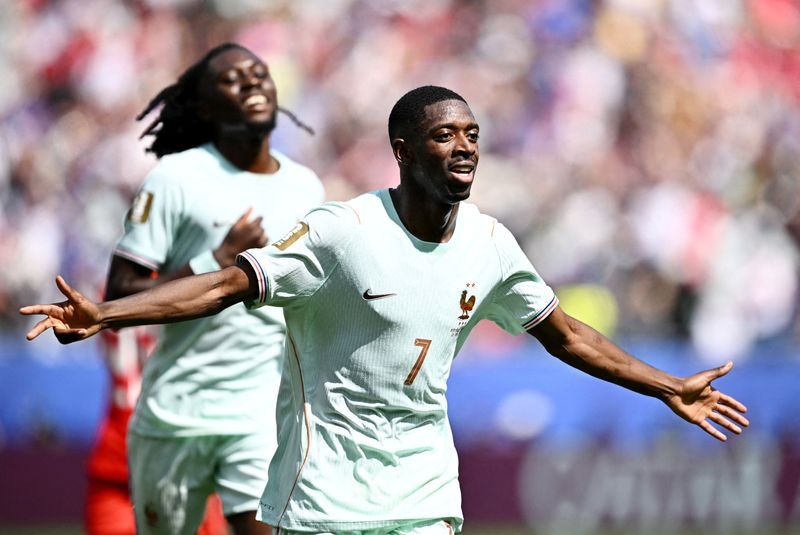
Ousmane Dembele's extraordinary finishing proved too much for Norway as France sealed first place in World Cup Group I with a resounding 4-1 victory in Foxborough, Massachusetts on Friday. The Paris St-Germain winger's devastating hat-trick came within a 25-minute spell in the opening half, establishing France's credentials as serious contenders in this year's tournament. Already assured of knockout football, the 2018 world champions and 2022 runners-up used the fixture to build momentum heading into the more demanding rounds ahead.
The performance carried special significance for the French camp, with players and staff having pledged to secure victory as a personal tribute to manager Didier Deschamps, who temporarily left the squad to attend his mother's funeral. This emotional undercurrent appeared to fuel France's aggressive approach from the opening whistle, with the team pressing forward relentlessly and showing a sharpness that suggested they had not lost focus despite having already qualified. The combination of tactical purpose and personal motivation created an environment where dominant football flowed naturally.
France's attacking intent manifested almost immediately when Kylian Mbappe, who remains in contention for the Golden Boot award, struck the bar within twenty seconds of kickoff. The Paris St-Germain forward's electrifying opener set the tone for what would become a one-sided contest, with his incisive passing and movement creating opportunities that Dembele would capitalise upon with clinical finishing. The partnership between these two French superstars proved particularly devastating, with Mbappe's creativity unlocking Norway's makeshift defensive structure repeatedly.
Dembele opened his account in the sixth minute after receiving a cross-field pass of remarkable accuracy from Mbappe. The winger's ability to manufacture space was evident as he shifted both inside and outside his marker before unleashing a precisely angled shot beyond goalkeeper Egil Selvik. Fourteen minutes later, following another Mbappe assist, Dembele doubled his tally with a dipping effort that left the Norwegian goalkeeper helpless. The speed at which France built a commanding position underscored the gulf in class between the teams, made stark by Norway's decision to field a heavily rotated lineup.
Norwegian coach Stale Solbakken's squad selection strategy significantly influenced the match's trajectory. With qualification already secured, the coach rested virtually all the players who featured in the previous encounter against Senegal, most notably prolific striker Erling Haaland and captain Martin Odegaard. This pragmatic approach, designed to manage fatigue heading toward knockout football, effectively surrendered any realistic prospect of contesting the result. Thelo Aasgaard's goal shortly after Dembele's second did provide brief respite for the Scandinavians, but it merely interrupted rather than altered the dominant flow of the encounter.
Dembele completed his historic hat-trick in the 32nd minute with a curled low finish that settled into the bottom corner, becoming only the third French player to achieve the feat at World Cup level. His name now joins Just Fontaine and Mbappe in this exclusive French company, a testament to the rarity of such individual performances on football's grandest stage. More remarkably, this trio of goals arrived in just 25 minutes, making Dembele's display the second-quickest hat-trick in World Cup history, surpassed only by Austria's Erich Probst, who netted three times in 24 minutes during the 1954 tournament against Czechoslovakia.
Norway did stage limited second-half resistance, with goalkeeper Mike Maignan forced to make important saves from Jorgen Strand Larsen's penalty and Oscar Bobb's attempt. These moments revealed occasional fragility in France's defensive organization, a concern that could assume greater importance when facing more formidable opponents in the knockout stages. However, France's attacking dominance ultimately overwhelmed any defensive vulnerabilities, with substitute Desire Doue adding a fourth goal via a header from Bradley Barcola's cross in the closing stages.
The victory carries significant logistical implications for France's tournament progression. Topping Group I positions them to potentially face Sweden in the Round of 32, whereas second-placed Norway will encounter Ivory Coast. France's preference for group leadership stemmed from the tournament's North American route structure, which determines travel distances based on final group standings. Controlling this variable provides Les Bleus with a tangible advantage as the competition intensifies, allowing superior rest and recovery between fixtures.
For Southeast Asian followers of international football, France's clinical display offers insights into the tactical sophistication and individual brilliance required at football's elite level. The manner in which France exploited a rotated Norwegian defense, through rapid ball circulation and precise finishing, illustrates principles applicable across different competitive contexts. Dembele's performance in particular demonstrates how positional flexibility and technical excellence can overwhelm conventional defensive arrangements, a lesson relevant to regional clubs and national teams seeking to develop their attacking capabilities.
France's progression to the knockout stages with three maximum wins signals their status among tournament favourites, despite the absence of their manager during this fixture. The depth and quality within the squad—evidenced by substitute contributions and tactical flexibility—suggests they possess the resources to navigate the increasingly demanding challenges ahead. With Dembele's confidence sky-high and the squad operating cohesively, Deschamps' return should find a team primed for the tournament's decisive stages.

