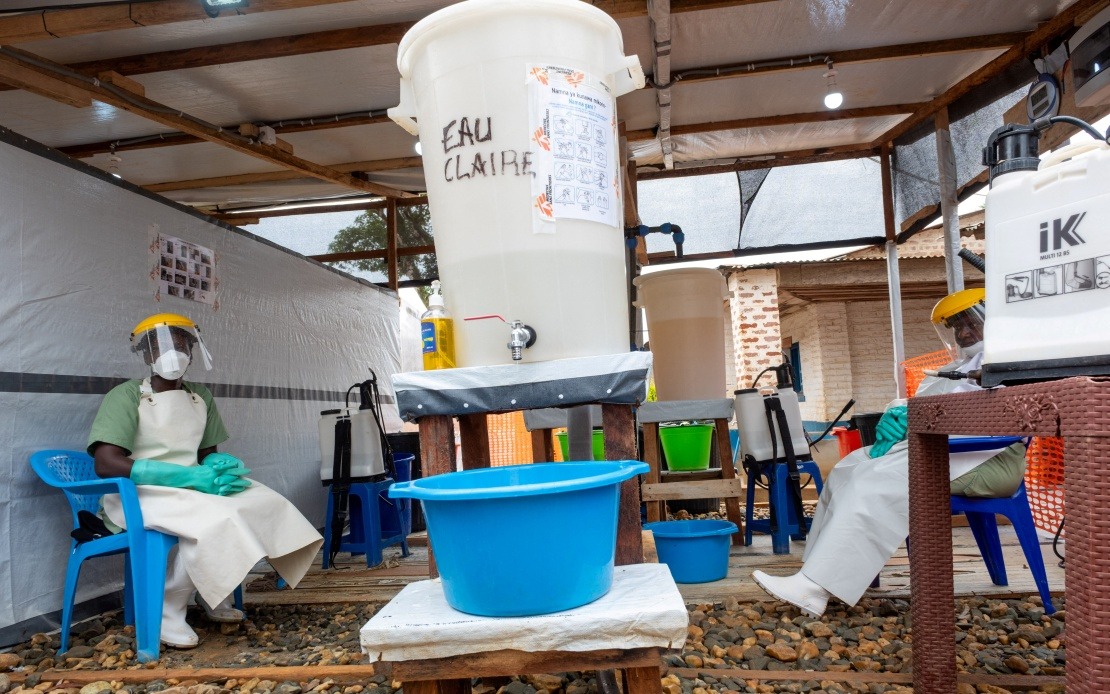
The Ebola crisis in the Democratic Republic of Congo has escalated to a critical juncture, with health authorities confirming that confirmed cases have now exceeded 3,000 individuals. The cumulative toll reflects the severity of the outbreak affecting multiple regions across central Africa, a development that carries implications for regional health security and international disease surveillance efforts across the continent and beyond.
Official figures released on Saturday paint a sobering picture of the outbreak's trajectory. Among the 3,075 confirmed cases documented by the DRC's health ministry, 1,354 people have died from the virus, while 556 patients have recovered from infection. A further 755 individuals remain hospitalized or under isolation protocols, indicating ongoing transmission despite containment efforts. The mortality rate implied by these figures underscores the severity of the Bundibugyo ebolavirus strain responsible for this particular outbreak, which appears to claim lives at a substantial rate among confirmed cases.
The geographical spread of the virus across five provinces demonstrates how widely the outbreak has permeated the DRC's territory. Ituri, North Kivu, South Kivu, Haut-Uele and Tshopo provinces are all experiencing active transmission, presenting formidable logistical challenges for response teams working in regions where infrastructure limitations and ongoing insecurity complicate disease control measures. For Southeast Asian health officials and pandemic preparedness planners, the multi-province nature of this outbreak serves as a reminder of how rapidly Ebola can establish footholds across vast territories when early containment fails.
Prime Minister Judith Suminwa Tuluka has attempted to inject optimism into the response efforts by announcing that researchers are actively developing both treatment and vaccine options specifically targeting Bundibugyo ebolavirus. Her statement on Friday acknowledged the government's financial commitment to accelerating these research initiatives, though she refrained from providing detailed information about the current development stage or the regulatory pathways these candidates would need to follow. The optimistic timeline she projected—suggesting availability within two to four months—reflects the urgency surrounding this public health emergency, though such timelines in vaccine development historically carry substantial uncertainty.
The current absence of approved vaccines or licensed treatments for Bundibugyo ebolavirus stands in stark contrast to progress made against other Ebola strains in recent years. Several experimental vaccines and therapeutic agents are undergoing clinical evaluation, yet the gap between having candidates and having approved, deployable interventions represents a critical vulnerability in the global response capacity. This situation highlights a persistent challenge in global health: rare or emerging pathogen strains often lack pre-positioned medical countermeasures, forcing response efforts to rely on standard infection control measures while developmental timelines race forward.
A significant milestone emerged when the University of Oxford announced that the world's first human volunteer has received an injection of ChAdOx1 BDBV, an experimental vaccine designed specifically to protect against Bundibugyo ebolavirus. This first-in-human trial marks an important transition from laboratory and animal studies into the clinical domain where efficacy and safety in human populations can begin to be assessed. The selection of Oxford to lead this trial reflects the institution's prior experience with viral vaccine development and clinical trial management, though the compressed timeline and urgent global circumstances surrounding this research create both opportunities and pressures on the research team.
For Malaysian and Southeast Asian observers of international health crises, the DRC Ebola situation carries several instructive lessons about disease outbreak response infrastructure. The ability to rapidly establish human vaccine trials depends upon existing research capacity, regulatory frameworks that can expedite but not eliminate safety reviews, and international cooperation mechanisms that can mobilize resources quickly. The DRC outbreak also underscores how outbreaks in under-resourced regions can persist longer and spread more widely than might occur in settings with more developed healthcare infrastructure, a sobering reminder of how global health security depends fundamentally upon strengthening capacity everywhere.
The ongoing nature of this outbreak, with thousands still in active infection status and recovery efforts continuing, suggests that the crisis remains far from resolution even with vaccine development proceeding. Hospital and isolation facilities managing 755 patients simultaneously face constant pressure, particularly given the high mortality rate and the specialized infection control measures Ebola demands. Supply chain issues, staff fatigue, and the challenge of maintaining isolation protocols in resource-constrained settings all create conditions where outbreaks can smolder for extended periods.
The emergence of Bundibugyo ebolavirus as a major outbreak strain also reflects broader epidemiological patterns where different viral variants maintain circulation in animal reservoirs across Central Africa. Understanding which animal populations harbor these viruses and how human-animal contact facilitates spillover events remains crucial to preventing future outbreaks. The existence of multiple Ebola species—each potentially capable of triggering major outbreaks—means that global preparedness must account for pathogen diversity rather than assuming all future Ebola outbreaks will resemble previous ones.
As research efforts accelerate and vaccine trials progress, the international community watches to determine whether these experimental interventions will eventually help bend the curve on this outbreak. The ability to rapidly develop, test, and deploy countermeasures for emerging pathogens represents a critical frontier in modern epidemiology, with implications extending far beyond the DRC's borders into every nation concerned with pandemic preparedness.

