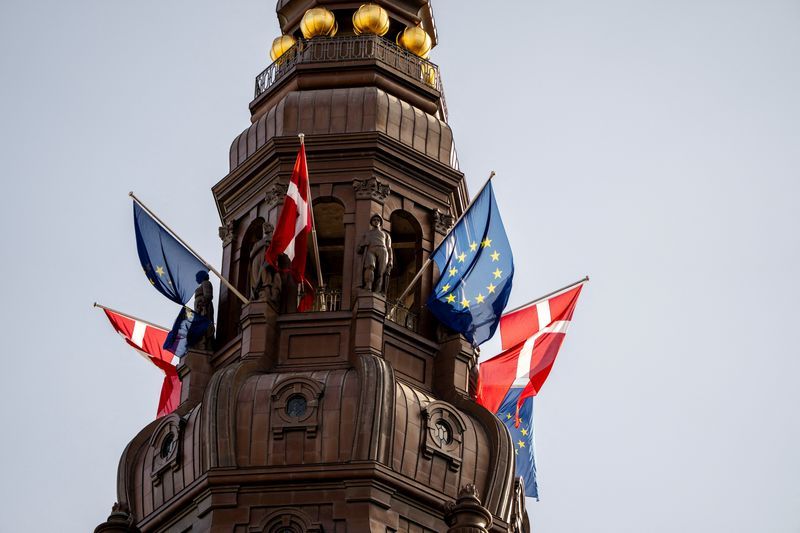
Denmark has stepped into a pivotal legal dispute at the European Court of Justice, filing a formal intervention to support Belgium's position in a landmark case challenging how technology companies handle publishers' rights in the digital age. The Danish government participated in oral hearings on July 6-7, aligning itself with Belgium against Streamz, Google, Meta, Spotify, and Sony—firms that launched their lawsuit in 2023 objecting to how Belgium implemented Article 15 of the European Union's Digital Single Market Directive. The move reflects growing concern among European governments that tech platforms have exploited a legal grey area to use professional journalism and media content without adequate compensation.
At the heart of the dispute lies a fundamental question about digital economics and media sustainability. The tech companies argue that Belgium's application of the DSM Directive's Article 15 breaches EU law by imposing payment obligations when their platforms host or link to news content. Belgium contends that news publishers deserve remuneration when major technology firms profit from distributing their work. This tension between platform business models and creator compensation has escalated across Europe, where smaller publishers particularly struggle against the commercial power of Silicon Valley giants. Denmark's decision to intervene signals that Nordic countries—traditionally protective of their media landscapes—view the case outcome as potentially threatening their own regulatory frameworks.
Danmark's Culture Ministry framed the intervention as essential to protecting Danish media interests. Culture Minister Zenia Stampe stated plainly that tech giants should not be permitted to use media content without paying for it, emphasizing that allowing such practices would directly harm Danish news organisations and, by extension, the democratic information ecosystem. This perspective resonates across Scandinavia, where public broadcasting and independent journalism have historically received state support and where citizens expect robust investment in quality news gathering. The minister's warning that a loss would damage Danish democracy reflects a philosophical position held by several Northern European governments: that a well-informed society depends on sustainable funding for professional journalism.
Denmark's strategic focus during the court proceedings centred on two interconnected objectives. First, the delegation sought to ensure that Meta, Google, Spotify, and other platforms face enforceable accountability for compensating publishers when their content appears on these services. Second, Denmark urged the European Court of Justice to provide a clear legal definition of what publishers' rights entail under the DSM Directive and what corresponding obligations technology companies must fulfil. Currently, ambiguity in how these rules apply has allowed various interpretations across member states, creating a fragmented regulatory landscape that disadvantages smaller players and increases compliance uncertainty.
A ruling in favour of the tech companies would fundamentally weaken the protections built into the DSM Directive, according to the Danish government's assessment. Article 15 was designed to give publishers leverage in negotiations with platforms, recognising the commercial value of professionally produced news and creative content. If the European Court sided with Streamz, Google, Meta, Spotify, and Sony, it would essentially declare those protections unenforceable or contradictory to other EU law—a outcome that would ripple across the bloc's publishing industry. Smaller Nordic publishers, which lack the negotiating power of international media corporations, would face particular difficulty in extracting fair licensing agreements from dominant platforms.
Denmark's intervention also reflects broader anxieties within the European Union about digital market power concentration. The case touches on how six technology companies control the distribution channels through which billions of Europeans access information. When platforms determine which content appears first, whose stories reach audiences, and how revenue flows back to creators, they exercise significant influence over public discourse. European policymakers increasingly view this concentration as a governance challenge requiring legal safeguards. Denmark's participation underscores that member states are prepared to use court proceedings to resist interpretations of EU law that would further entrench platform dominance.
The Danish government has shown consistent commitment to defending publishers' interests in digital copyright disputes. Beyond the Streamz case, Denmark has also participated in another landmark European copyright lawsuit examining Google's use of press releases to train artificial intelligence systems. That parallel case addresses whether technology companies can use journalistic content without permission or payment as raw material for AI development. These two proceedings illustrate how copyright and digital rights issues now permeate technology regulation, with fundamental questions about whether news organisations can maintain economic viability in an environment where their work continuously feeds proprietary algorithms and platform systems.
The intervention strategy pursued by Denmark represents a deliberate effort to shape European jurisprudence on digital media rights from within the legal process rather than simply accepting court outcomes. By presenting arguments emphasising the public interest in sustainable journalism, Denmark and other intervening states seek to influence how judges weigh competing interests: platform innovation and business freedom against publisher survival and democratic information quality. The oral hearings provided an opportunity to voice these concerns directly, potentially swaying judicial reasoning in a case with implications for media across the entire European Union.
For regional readers, particularly in Southeast Asia where digital platform dominance and media sustainability questions similarly preoccupy policymakers, Denmark's approach offers a template for how governments can use legal mechanisms to contest technology company interpretations of law. As digital platforms increasingly shape how information flows globally, questions about fair compensation for content creators and preservation of viable journalism models transcend European boundaries. The European Court's eventual ruling will influence how courts elsewhere evaluate similar disputes, making this case consequential well beyond Denmark's borders.

