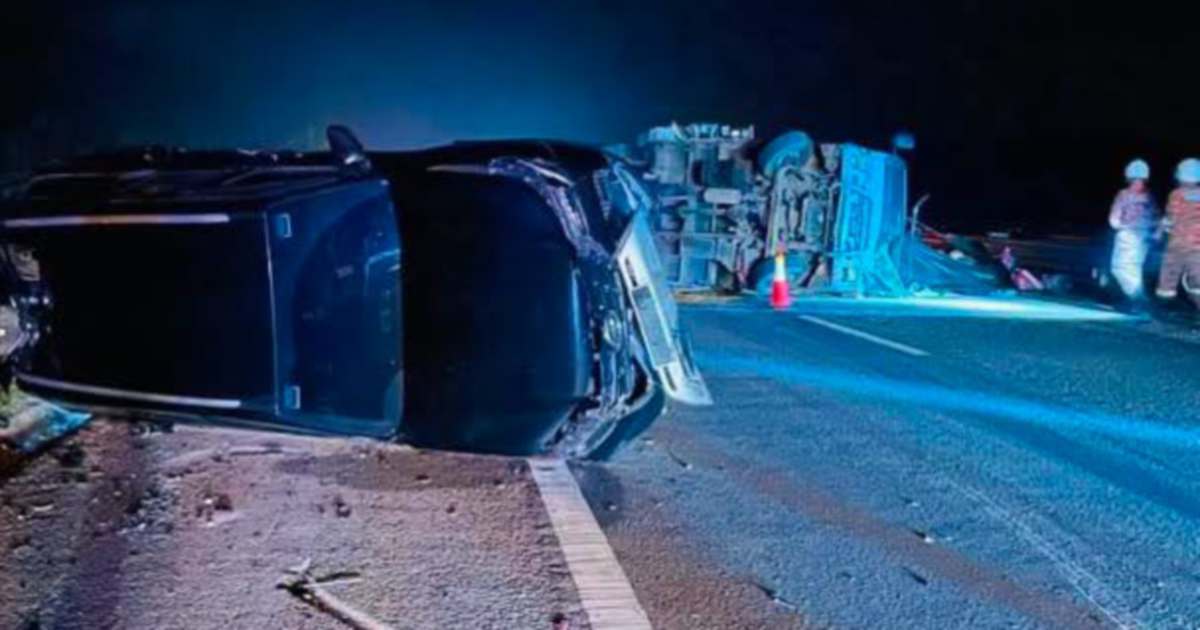
Three media officers attached to Deputy Prime Minister Datuk Seri Dr Ahmad Zahid Hamidi sustained injuries after a multi-vehicle collision unfolded on the East Coast Expressway near Maran in Pahang during the early morning hours. The incident involved three vehicles at Km144 of the expressway and resulted in a total of seven people being hurt, though fortunately none of the media team members were reported to have suffered critical injuries. The accident highlights the ongoing safety concerns on Malaysia's major highway corridors, particularly during periods of high traffic flow and early morning travel when visibility conditions can be compromised.
The East Coast Expressway represents one of the nation's critical transportation arteries, connecting key population centres across the east coast peninsula. This section of the route, which passes through Pahang state, regularly handles significant volumes of commercial and personal traffic. Incidents along this stretch have been an ongoing concern for authorities and road users alike, with the expressway's high-speed nature contributing to the severity of collisions when they do occur. The involvement of media personnel travelling with a high-ranking government official underscores how traffic accidents remain an indiscriminate hazard affecting individuals across all segments of society.
The circumstances surrounding the crash remain under investigation by the relevant authorities, with officers likely examining factors such as vehicle speeds, road conditions, visibility levels, and the sequence of events that led to the three-vehicle collision. Early morning driving presents particular challenges for motorists, as dawn hours often coincide with reduced visibility, fatigue-related impairment among travellers, and transitional lighting conditions that can affect driver perception and reaction times. The presence of multiple vehicles in the incident suggests that the collision may have involved a chain-reaction scenario, where an initial impact triggered subsequent collisions among other vehicles in the vicinity.
For media organisations operating in Malaysia's political sphere, incidents affecting their personnel raise practical questions about duty of care, travel protocols, and risk management when covering high-profile government figures and their movements. Media teams accompanying senior officials often operate under tight schedules and demanding conditions, sometimes necessitating early morning or late-night travel to meet coverage deadlines and coordinate with official engagements. This accident serves as a reminder of the professional hazards inherent in journalism and political reporting, beyond the traditional editorial and ethical challenges the profession faces.
The injury of media officers working alongside Ahmad Zahid Hamidi, who serves as Malaysia's second-highest ranking government position, also illustrates the broader support ecosystem surrounding senior officials. Deputy Prime Ministers typically maintain substantial entourages including security personnel, advisors, and media teams to manage public relations and ensure comprehensive coverage of official activities. When members of these teams are affected by accidents, it creates logistical complications for government communications and official scheduling. The fact that the injuries were not classified as serious represents a fortunate outcome given the inherent dangers of expressway collisions at speed.
From a transportation safety perspective, the accident adds to the growing record of incidents on Malaysia's expressway network. The East Coast Expressway, which spans several hundred kilometres connecting various states, has been the site of numerous accidents over recent years. Authorities have implemented various safety measures including speed limit enforcement, improved signage, rest areas for fatigued drivers, and emergency response protocols. However, human factors—including driver fatigue, inattention, and speed—remain among the leading contributors to expressway accidents across the region. The education of motorists regarding safe driving practices, particularly during long-distance travel and early morning journeys, continues to be an area requiring sustained attention and public messaging.
The incident occurred against a backdrop of Malaysia's ongoing efforts to improve road safety statistics, which remain a concern for public health officials and transportation authorities. The nation has implemented various campaigns and enforcement strategies aimed at reducing accident rates and severity of injuries. Government support for infrastructure improvements, driver education programmes, and emergency medical response capabilities all contribute to this broader safety agenda. Accidents involving public figures and their staff sometimes generate increased media attention and scrutiny, which can catalyse discussions about safety improvements and policy reviews.
For the three media officers involved, recovery from their injuries will likely require varying amounts of time depending on the severity and nature of their wounds. The fact that they avoided serious injury represents a positive outcome, allowing them to potentially resume their professional duties relatively quickly. Their experience will likely be shared within media and political circles as a cautionary tale about the risks inherent in covering high-profile government movements and official activities. The incident underscores the sometimes-overlooked dangers faced by support personnel working in political communication and news gathering roles.
Investigations into the accident will likely reveal specific contributing factors that authorities can use to develop targeted safety interventions for the affected expressway section. Whether the collision resulted from mechanical failure, driver error, adverse weather conditions, or a combination of factors will influence recommendations for preventive measures. The East Coast Expressway authority and the Royal Malaysian Police will coordinate to ensure comprehensive analysis of the incident and implementation of any necessary safety enhancements. Such investigations contribute incrementally to the body of knowledge about highway safety in Malaysia and inform ongoing efforts to protect motorists and road users across the nation.
%22%2F%3E%3C%2Fpattern%3E%3C%2Fdefs%3E%3Crect%20width%3D%22100%25%22%20height%3D%22100%25%22%20fill%3D%22url(%23ph48y62g)%22%2F%3E%3Crect%20width%3D%22100%25%22%20height%3D%22100%25%22%20fill%3D%22url(%23ph48y62p)%22%2F%3E%3Ctext%20x%3D%2250%25%22%20y%3D%2250%25%22%20text-anchor%3D%22middle%22%20dominant-baseline%3D%22central%22%20fill%3D%22rgba(255%2C255%2C255%2C0.95)%22%20font-family%3D%22Georgia%2C%20'Times%20New%20Roman'%2C%20serif%22%20font-weight%3D%22700%22%20font-size%3D%22320%22%20letter-spacing%3D%22-0.02em%22%3EPKR%3C%2Ftext%3E%3C%2Fsvg%3E)
%22%2F%3E%3C%2Fpattern%3E%3C%2Fdefs%3E%3Crect%20width%3D%22100%25%22%20height%3D%22100%25%22%20fill%3D%22url(%23ph50dweg)%22%2F%3E%3Crect%20width%3D%22100%25%22%20height%3D%22100%25%22%20fill%3D%22url(%23ph50dwep)%22%2F%3E%3Ctext%20x%3D%2250%25%22%20y%3D%2250%25%22%20text-anchor%3D%22middle%22%20dominant-baseline%3D%22central%22%20fill%3D%22rgba(255%2C255%2C255%2C0.95)%22%20font-family%3D%22Georgia%2C%20'Times%20New%20Roman'%2C%20serif%22%20font-weight%3D%22700%22%20font-size%3D%22320%22%20letter-spacing%3D%22-0.02em%22%3EUS%3C%2Ftext%3E%3C%2Fsvg%3E)