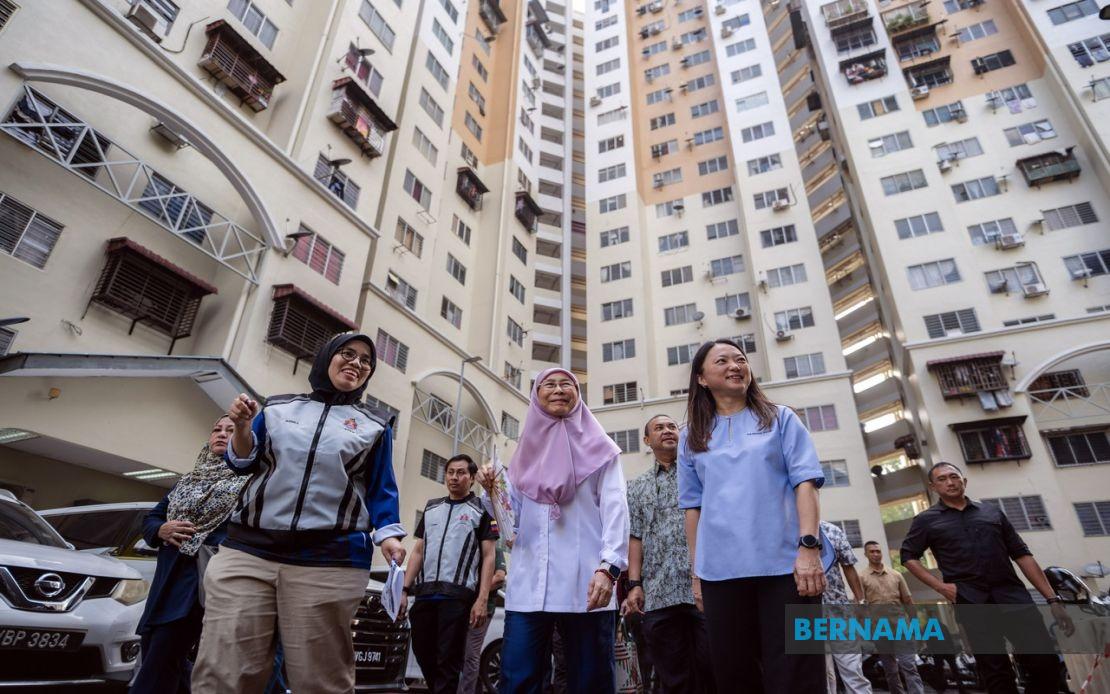
The federal government has marked another milestone in its systematic overhaul of public housing conditions in Kuala Lumpur, with the completion of upgrading works at the Desa Tun Razak People's Housing Project at a cost of RM9.6 million. The project forms part of a broader initiative to revitalise the capital's aging PPR blocks, which house thousands of lower-income families across multiple estates. So far, 22 of the planned 61 upgrading projects across Kuala Lumpur have reached completion, signalling accelerating progress in what has been identified as a priority renewal programme.
Minister in the Prime Minister's Department (Federal Territories) Hannah Yeoh has emphasised that the completion of the Desa Tun Razak upgrade reflects a shift in government philosophy towards proactive maintenance rather than reactive repairs. The RM300 million allocation approved for the current year was decided collectively by all Kuala Lumpur Members of Parliament, indicating cross-party consensus on the urgency of addressing infrastructure decay within residential complexes that have served residents for decades. This strategic commitment to dedicated maintenance funding represents recognition of a critical gap that existed previously, where PPRs would deteriorate rapidly between sporadic intervention periods, compromising resident safety and quality of life.
The Desa Tun Razak estate, which has housed residents continuously since 1998, accommodates more than 8,000 people within its blocks. The upgrade works specifically targeted areas that had become critical safety concerns and quality-of-life issues. Electrical wiring systems underwent complete replacement to meet current safety standards, addressing the risk of fire hazards that posed an ongoing threat to the densely populated complex. Road surfaces throughout the estate were resurfaced to restore safe access and reduce accidents, while fire safety installations were substantially enhanced following several fire incidents recorded at the site during the previous year.
The itemised breakdown of the RM9.6 million expenditure reveals how funding was prioritised according to identified needs. Repainting works accounted for RM7 million of the total, addressing both aesthetic deterioration and providing a protective coating that extends structural lifespan. Fire prevention systems and electrical infrastructure improvements consumed RM1.68 million, directly tackling the hazards that had endangered residents. Road resurfacing consumed nearly RM1 million, ensuring accessible and safe passage throughout the complex. Additionally, both the fire riser system and drainage infrastructure received upgrades, indicating comprehensive attention to essential building systems.
Kuala Lumpur Mayor Datuk Fadhlun Mak Ujud projected that all PPR upgrading projects funded under the RM300 million allocation would reach completion by the end of the calendar year. This timeline, if achieved, would represent a substantial acceleration in the pace of improvement across the capital's public housing stock. The compressed schedule suggests coordinated planning and resource mobilisation across multiple PPR sites simultaneously, rather than the sequential approach that characterised earlier phases. For residents across Kuala Lumpur's various PPR estates, this trajectory offers concrete assurance that improvements are moving from planning documents to physical reality.
The parking shortage that affects the Desa Tun Razak PPR illustrates the multifaceted challenges facing dense residential complexes. Kuala Lumpur City Hall has committed to identifying suitable vacant land for temporary parking arrangements, acknowledging that the original design specifications for these estates did not anticipate the volume of private vehicles that residents now own. This ongoing adjustment to modern urban conditions extends beyond the capital maintenance works into broader questions of how public housing must evolve to meet contemporary living standards.
Bandar Tun Razak Member of Parliament Datuk Seri Dr Wan Azizah Wan Ismail has underscored the importance of resident responsibility in preserving upgraded facilities. Her intervention highlights an often-overlooked dimension of public housing improvement: the necessity for community stewardship to ensure that infrastructure investments translate into sustained benefits rather than rapid deterioration. Building a culture of shared responsibility for common facilities remains essential if government expenditure is to yield lasting returns rather than perpetuating cycles of deterioration and remediation.
The significance of the Desa Tun Razak completion extends beyond the immediate estate to broader implications for Malaysian public housing policy. PPRs have historically been constructed to address urgent housing needs for low-income households, yet maintenance budgets have frequently lagged behind the cumulative wear from intensive use. By establishing a dedicated annual allocation and committing to systematic completion timelines, the current approach suggests structural change in how the government conceptualises its responsibilities toward public housing residents. This shift from episodic intervention to structured, comprehensive maintenance reflects evolving standards for public administration accountability.
For residents across Kuala Lumpur's various PPR complexes, the Desa Tun Razak completion provides tangible evidence that government commitments translate into observable improvements. The replacement of aging electrical systems addresses fundamental safety concerns that have caused tragic incidents in similar facilities across Southeast Asia. Enhanced fire prevention infrastructure demonstrates responsiveness to documented hazards, while road resurfacing and repainting restore dignity to residential environments that had deteriorated visibly over years of inadequate maintenance. These improvements matter not merely as infrastructure upgrades but as affirmations of resident rights and government respect for citizens regardless of economic status.
The broader RM300 million commitment must be understood within Malaysia's context of affordable housing scarcity and increasing urbanisation pressures. As Kuala Lumpur and other major cities grapple with housing affordability crises, the existing PPR stock represents irreplaceable assets that must remain viable for current and future residents. Investing in systematic upgrading preserves this inventory while improving living conditions for existing households, creating dual benefits of maintenance and social stability. The cross-party parliamentary agreement on funding allocation suggests recognition that public housing maintenance transcends partisan politics and constitutes fundamental infrastructure for urban stability.
Looking forward, the success of this initiative will substantially depend on execution consistency across the remaining 39 projects and sustenance of maintenance discipline beyond the current funding cycle. The RM300 million represents substantial investment, yet its impact will be judged by whether improvements endure and whether residents experience tangible benefits in safety, comfort, and environmental quality. Establishing mechanisms for ongoing maintenance funding beyond the current year will be critical to preventing the cycle of renovation and decay that has historically afflicted Malaysian public housing. The completion of 22 projects already demonstrates that comprehensive upgrading is logistically feasible; the challenge now lies in maintaining momentum and ensuring that improved facilities remain well-maintained for decades ahead.

