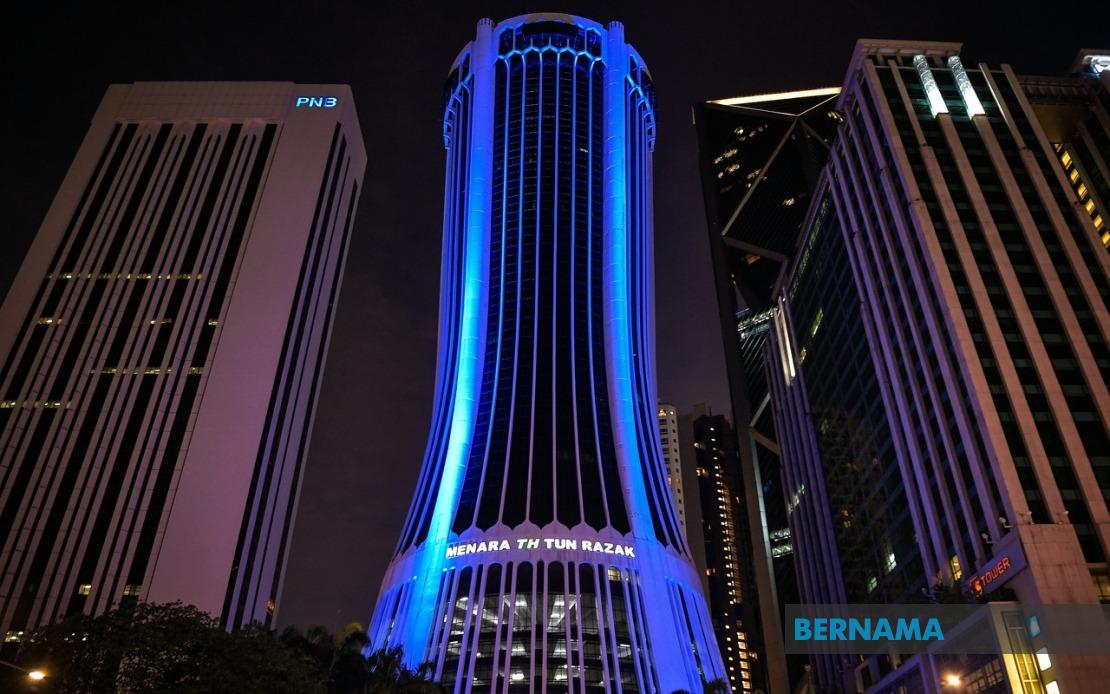
The release of the Royal Commission of Inquiry report examining Tabung Haji's management and operational practices has not significantly dented public confidence in the institution, with Muslim depositors continuing to view the organisation through the lens of religious duty rather than conventional financial performance. For millions of Malaysians, Tabung Haji transcends its role as a mere savings vehicle, embodying instead a sacred trust that bridges spiritual aspiration with practical financial planning. This unique positioning gives the institution a resilience that traditional financial institutions might struggle to achieve, as depositors' commitment extends beyond investment returns to encompass the fulfilment of one of Islam's five pillars.
The personal stories emerging from the broader depositor base reveal the depth of this commitment. Atiqah Shah Hadi, a 40-year-old tailor, exemplifies this mindset. She has maintained her Tabung Haji account since childhood, when her father opened it on her behalf, and she has continued contributing steadily. When she recently enquired about her position in the haj queue, she was informed that her expected turn would arrive in 2033—a decade away. Rather than expressing concern about the wait or the institution's governance challenges, she views this timeline as simply another reason to persist with her savings discipline. Her confidence remains anchored to the fundamental proposition that Tabung Haji will eventually deliver on its promise to facilitate her pilgrimage when her turn arrives.
Similarly, Muhammad Haikal Abdul Halim, a 35-year-old civil servant, has made deliberate decisions to deepen his engagement with Tabung Haji despite being aware of the controversies surrounding the institution's management. He has not wavered in his commitment, nor has he contemplated withdrawing his existing savings. Instead, he is taking an affirmative step forward by arranging automatic monthly salary deductions to boost his Tabung Haji account, conscious that his current position on the waiting list places his haj opportunity around 2032. His forward-looking approach extends to the next generation: he intends to open Tabung Haji accounts for each of his three children, aged seven, four, and three respectively. This intergenerational dimension underscores how the institution has become woven into the fabric of family financial planning and spiritual preparation among Malaysian Muslims.
Academic observers point to two essential pillars that Tabung Haji must maintain to sustain this confidence during a period of heightened public scrutiny. Dr Saizal Pinjaman, director of the Centre for Economic Development and Policy at Universiti Malaysia Sabah, emphasises that the institution must prioritise the safeguarding of depositors' savings while simultaneously reinforcing its capacity for long-term financial and business sustainability. These objectives are interconnected but require careful navigation. Tabung Haji must calculate its distributable profits only after subjecting its accounts to transparent independent audits, fully accounting for any losses, investment impairments, and asset write-downs that reflect changing economic circumstances and market fundamentals. The institution cannot afford to distribute profits that lack genuine financial substance.
Dr Pinjaman further stresses that Tabung Haji should maintain robust reserve buffers sufficient to absorb market volatility and economic shocks without compromising its capacity to meet depositor obligations. Profit distribution should occur only when the institution can genuinely afford the payments to depositors without jeopardising its operational viability. This conservative approach to capital management may limit short-term dividend announcements, but it serves the longer-term goal of institutional stability—a consideration that carries particular weight in an organisation entrusted with managing the spiritual and financial aspirations of millions of people. Additionally, transparency regarding the actual costs incurred in delivering haj-related services to depositors would provide concrete information against which the public can assess the institution's stewardship.
Another perspective comes from Dr Noor Nirwandy Mat Noordin, a senior lecturer specialising in media and information warfare studies at Universiti Teknologi MARA Shah Alam. She observes that Tabung Haji has demonstrated resilience through previous periods of institutional stress, emerging from earlier crises with strengthened operations and restored credibility. Recent years have seen the organisation gain international recognition as one of the world's leading haj management bodies, a status that reflects operational improvements and restored stakeholder confidence. Dr Noor Nirwandy expresses measured optimism that Tabung Haji will continue to discharge the responsibilities that the Muslim community has vested in it, executing its mandate with effectiveness, excellence, and integrity that would justify the trust placed upon it.
The contrast between the RCI report's institutional focus and depositors' individual behaviour reveals something significant about how Malaysians engage with organisations tied to religious obligations. While governance issues and management shortcomings merit scrutiny and reform, many depositors appear to partition their concerns, separating anxiety about institutional performance from confidence in the fundamental mission. This psychological separation allows individuals to maintain faith in the ultimate outcome—their opportunity to perform haj—even while acknowledging that the path to that outcome requires institutional improvement.
For Malaysia's broader financial ecosystem and Islamic banking sector, Tabung Haji's experience offers instructive lessons. Institutions that carry profound cultural and religious significance operate within a different framework of public expectation and tolerance compared to conventional commercial entities. However, this does not absolve them of accountability for proper governance, fiduciary responsibility, and transparent operations. Rather, it suggests that stakeholders will forgive operational missteps and management errors more readily when convinced that the institution genuinely prioritises their ultimate welfare and operates with integrity in its core mission.
The waiting lists that characterise Tabung Haji's operations—with depositors anticipating their turns to perform haj spanning years or even decades into the future—create a temporal dimension that shapes how individuals evaluate the institution's performance. Unlike commercial investments where returns are measured in quarterly or annual cycles, Tabung Haji operates on timescales measured in decades. This extended horizon can work to the institution's advantage, permitting patience with near-term governance challenges if the long-term trajectory appears sound. Conversely, it creates acute pressure for the institution to maintain absolute reliability over extended periods, as any failure to deliver on promises made years earlier would constitute a breach of profound significance.
Moving forward, Tabung Haji's challenge involves translating depositor confidence into concrete institutional improvements that justify that faith. The RCI report, while potentially uncomfortable for leadership, provides a roadmap for prioritisation and reform. Implementation of recommendations must occur at a pace and with a transparency that reinforces rather than undermines public confidence. The stakes are distinctly higher than for conventional financial institutions: Tabung Haji holds not merely people's money but their dreams of spiritual fulfilment, making institutional accountability inseparable from religious responsibility.

