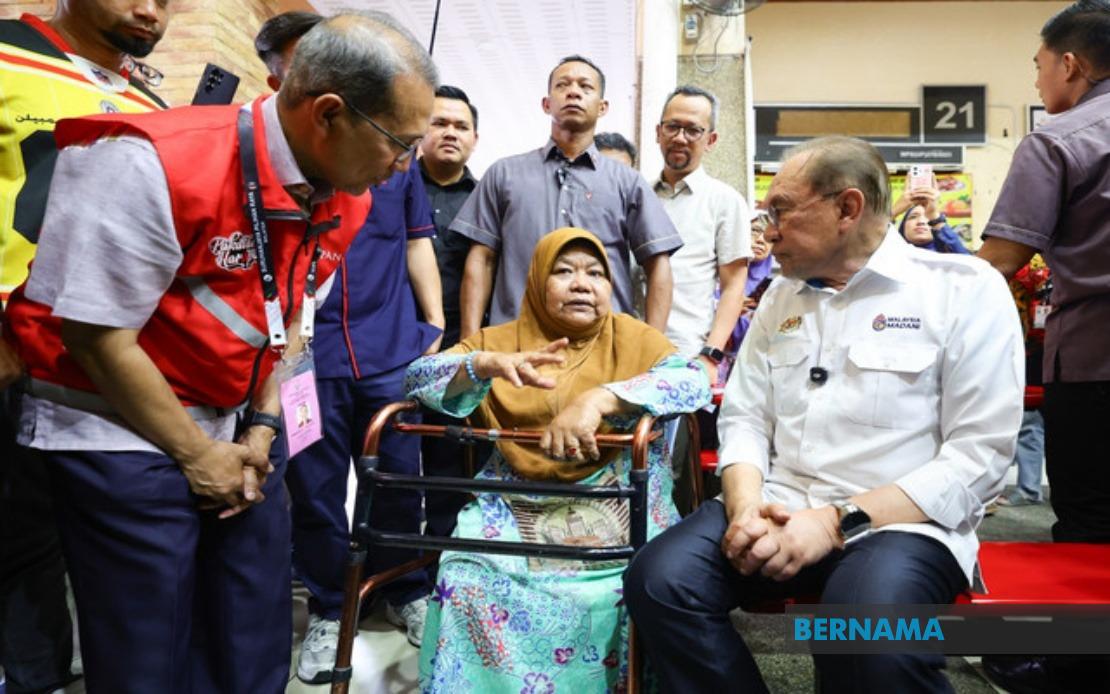
In an inspiring display of determination, 68-year-old Jumaah Mohd Alif navigated the rain and her physical limitations to ride her three-wheeled motorcycle from her village to Benteng Ampangan in Seremban, driven by the opportunity to meet Prime Minister Datuk Seri Anwar Ibrahim. The encounter marks a poignant moment for the disabled woman, who lost her left leg in an accident three and a half decades ago but refused to let inclement weather or her mobility challenges prevent her from seizing this rare opportunity to greet the nation's leader.
Jumaah's journey reflects the determination of many Malaysians with disabilities who continue to participate actively in public life despite facing daily obstacles. Her decision to undertake the motorcycle ride in drizzly conditions, without waiting for better weather, underscores the significance she attached to meeting Anwar in person. For someone who had previously only glimpsed the Prime Minister from a distance or through television broadcasts, the chance to interact with him directly represented something far more valuable than mere weather inconvenience.
The Prime Minister was in Negeri Sembilan as part of his campaign efforts on behalf of Pakatan Harapan, the coalition seeking to consolidate and expand its political influence ahead of the upcoming state elections. His presence in Ampangan drew crowds from surrounding areas, with locals keen to witness the head of government and engage with the coalition's political message during this critical electoral period. For many residents in the region, such visits provide rare opportunities for direct engagement with national leadership.
When Jumaah spoke to journalists about her experience, she expressed profound emotion about finally achieving her long-held aspiration. The elderly woman explained that neighbouring villagers had informed her of the Prime Minister's planned visit just the day before, prompting her to immediately prepare for the journey. Despite the weather forecast and the physical exertion required, she determined that missing this opportunity was unthinkable. Her willingness to push through these barriers speaks volumes about her resilience and the personal significance she invested in the encounter.
For persons with disabilities in Malaysia, access to public spaces and participation in civic activities remains a persistent challenge. Jumaah's journey highlights both the enthusiasm of disabled citizens to engage politically and socially, and the practical difficulties they navigate daily. Her three-wheeled motorcycle represents an adaptive solution many individuals with limb disabilities employ to maintain mobility and independence in contexts where public transportation and accessibility infrastructure remain inadequate in many regions.
During her interaction with Anwar, Jumaah voiced concerns that resonate deeply within the disabled community and among elderly Malaysians. She appealed to the government to continue emphasising the welfare of seniors and persons with disabilities, recognising that such populations often face financial vulnerability, healthcare challenges, and social isolation. Her direct appeal to the Prime Minister reflects a broader advocacy effort by disabled groups pushing policymakers to translate electoral promises into concrete improvements in support systems and accessibility standards.
The Negeri Sembilan state election campaign, which prompted Anwar's visit to the region, represents a significant political moment for Pakatan Harapan. The coalition aims to strengthen its position in the state through increased grassroots engagement and high-profile campaign appearances. Elections in Malaysian states serve as important indicators of national political sentiment and provide opportunities for coalitions to fine-tune their messaging and mobilisation strategies ahead of potential federal contests.
The Election Commission has established a clear timeline for the electoral process, with early voting scheduled for July 28 and the official polling day set for August 1. This compressed schedule requires political parties and candidates to execute efficient campaign strategies, making personal visits by senior leaders like the Prime Minister particularly valuable for generating media coverage and demonstrating commitment to voters. Such visits also allow leaders to encounter constituents directly and understand local concerns beyond polling data and focus group research.
Jumaah's story exemplifies a broader narrative about Malaysian political participation and the diverse demographics engaging in civic processes. Her determination to meet the Prime Minister transcends typical political calculation; instead, it reflects genuine faith in democratic engagement and the belief that direct communication with leadership can influence policy priorities. This grassroots enthusiasm, particularly among traditionally marginalised groups like the disabled and elderly, constitutes an important element of Malaysia's democratic health.
The encounter between Jumaah and Anwar also highlights the symbolic importance of such moments in political communication. When leaders engage with citizens from vulnerable communities, it signals governmental attention to their concerns and validates their participation in civic life. For Jumaah personally, the meeting represents validation of her voice and lived experience, creating a memorable moment she intends to carry with her indefinitely.
Looking ahead, the Negeri Sembilan state election will provide insight into whether Pakatan Harapan can maintain and expand its support base. Encounters like the one between the Prime Minister and Jumaah contribute to this broader political narrative, demonstrating the coalition's willingness to engage with diverse constituencies and acknowledge the specific challenges faced by marginalised groups. As the election campaign intensifies toward the August 1 polling day, such human-interest moments help ground political messaging in the lived realities of ordinary Malaysians.
Jumaah's journey also serves as a broader reminder about accessibility and inclusion in Malaysian society. Her determination to overcome physical and environmental barriers to participate in civic life should prompt reflection among policymakers, urban planners, and community organisers about whether Malaysia's public spaces and electoral processes adequately accommodate citizens with disabilities. As the nation aspires toward more inclusive governance, stories like Jumaah's underscore both the progress already achieved and the work that remains.

