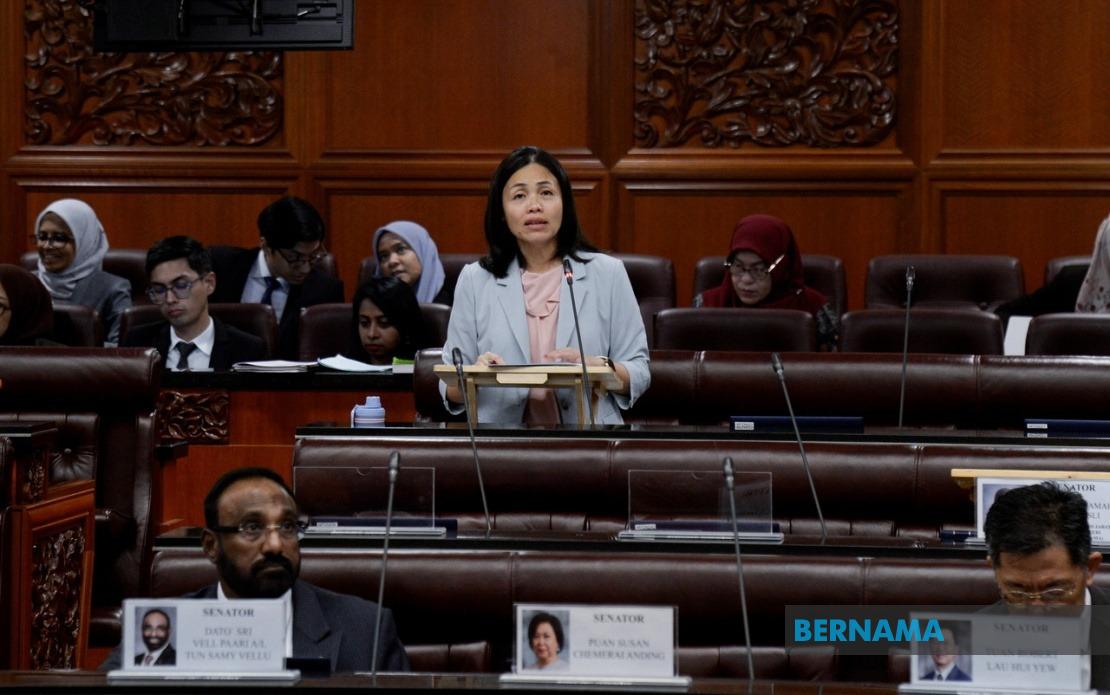
Malaysia's Dewan Negara unanimously endorsed the Communications and Multimedia Commission (Amendment) Bill 2026 on August 3, marking a significant step toward overhauling how the country governs its rapidly expanding digital communications sector. The legislation, which previously cleared the Dewan Rakyat on July 15, represents a comprehensive recalibration of the MCMC's authority, operational framework, and structural independence as Malaysia grapples with mounting challenges in an increasingly complex digital environment.
The upper house debate, featuring contributions from 11 senators, underscored growing recognition that communications infrastructure now ranks among Malaysia's critical strategic assets rather than merely an economic sector. This conceptual shift explains the urgency behind the amendment package. Senator Datuk Abdul Halim Suleiman emphasised that the reform's ultimate success hinges not simply on legal powers granted to the regulator, but on its demonstrated capacity to execute functions with professionalism, transparency, and genuine accountability to ordinary Malaysians navigating the digital sphere.
Among the bill's most consequential provisions is a structural constraint preventing any politician from serving as the MCMC's chairman. The restriction extends further: no sitting members of Parliament or state assemblymen may occupy the commission's top position. Deputy Minister of Communications Teo Nie Ching explained that this amendment deliberately curtails ministerial discretion in appointments, ensuring that any appointed chairman genuinely possesses requisite qualifications rather than serving as a political appointee. This guardrail addresses longstanding concerns about regulatory capture and the intersection of political patronage with technical governance.
Senator Muhammad Hasbie Muda cautioned that reform encompasses far more than distributing expanded functions and powers to MCMC. Rather, meaningful progress demands that each delegated power be implemented with full transparency, operational effectiveness, and clear mechanisms for public accountability. His intervention highlighted that structural independence means little without institutional cultures that genuinely prioritise merit-based decision making and professional standards across all commission activities.
The amendment package substantially broadens MCMC's regulatory scope by clarifying its mandate to develop and regulate digital infrastructure and platform standards. This expansion acknowledges the reality that Malaysia's communications landscape has fundamentally transformed. The digital economy now integrates telecommunications, content delivery, platform regulation, cybersecurity considerations, and infrastructure resilience into an interconnected ecosystem demanding coordinated oversight. The 17-clause bill provides the statutory foundation for this more expansive regulatory role.
Measurable outcomes from MCMC's existing enforcement operations demonstrate why strengthened governance structures matter. During the first seven months of 2026, the regulator recorded the removal of 222,257 online gambling content items, reflecting an acceleration of what Teo described as "increasingly aggressive digital enforcement actions." This figure reveals a dramatic upward trajectory: from a mere two content items removed in 2022, the regulator escalated removals to 18,814 in 2023, climbing to 189,484 in 2024, and reaching 289,486 across all of 2025. The cumulative impact becomes clearer when examining website blocking: between 2022 and July 31, 2026, authorities have successfully blocked 6,982 gambling-related domains.
These enforcement metrics reflect a crucial collaboration between MCMC and private sector platform operators. The regulator requests takedowns based on official enforcement agency directives while simultaneously providing technical assistance and digital forensic analysis. This division of labour clarifies that gambling regulation itself remains the Royal Malaysia Police's responsibility; MCMC functions as the technical and digital enforcement backbone. The surge in platform operators proactively removing flagged content demonstrates how statutory clarity and regulatory cooperation can amplify enforcement effectiveness without requiring MCMC to duplicate functions already assigned to law enforcement agencies.
The timing of this legislative overhaul arrives amid broader regional trends toward stronger digital governance frameworks. Southeast Asian governments increasingly recognise that fragmented regulatory architectures struggle to manage cross-border content flows, platform accountability, and infrastructure security. Malaysia's amendment positions the MCMC as a more coherent, technically capable, and politically insulated regulator—a model that other regional governments may scrutinise as they contemplate their own governance reforms.
For Malaysian citizens and businesses, the amendment's implications extend across multiple domains. Enhanced MCMC independence should theoretically reduce regulatory uncertainty stemming from political interference while creating more predictable enforcement environments for telecommunications providers and digital platforms. The explicit focus on merit-based appointments could attract higher-calibre leadership to the commission, potentially improving technical decision-making and strategic foresight. Simultaneously, stronger governance standards may improve consumer protections by ensuring that regulatory decisions reflect public interest rather than ministerial preference.
The bill's passage also signals that Malaysia intends to maintain aggressive stances against particular digital harms, particularly illegal gambling operations that generate criminal proceeds and pose social risks. The documented removal of hundreds of thousands of gambling content items and blockade of thousands of domains demonstrates MCMC's capacity for large-scale digital enforcement. As online gambling operations become increasingly sophisticated—utilising encrypted communications, decentralised platforms, and international hosting—the regulator requires sustained technical capabilities and regulatory clarity, both of which this amendment endeavours to provide.
Looking forward, the amendment's effectiveness will depend substantially on implementation rather than statutory language alone. The commission must cultivate organisational cultures prioritising professional expertise, transparent decision-making processes, and meaningful consultation with stakeholders spanning telecommunications operators, consumer advocates, civil society, and academic institutions. Senator Muhammad Hasbie Muda's warning about ensuring accountability mechanisms function effectively deserves particular attention as MCMC exercises its expanded mandate.
The passage of this legislation reflects Malaysia's recognition that digital communications infrastructure underpins modern economic activity, national security, and social cohesion. By insulating the MCMC from political interference while clarifying its regulatory scope and enforcement authority, lawmakers have attempted to construct a more resilient institutional framework for managing one of Asia's most dynamic digital economies. Whether this structural overhaul translates into demonstrably superior regulatory outcomes will become evident as the amended framework operates in practice.

