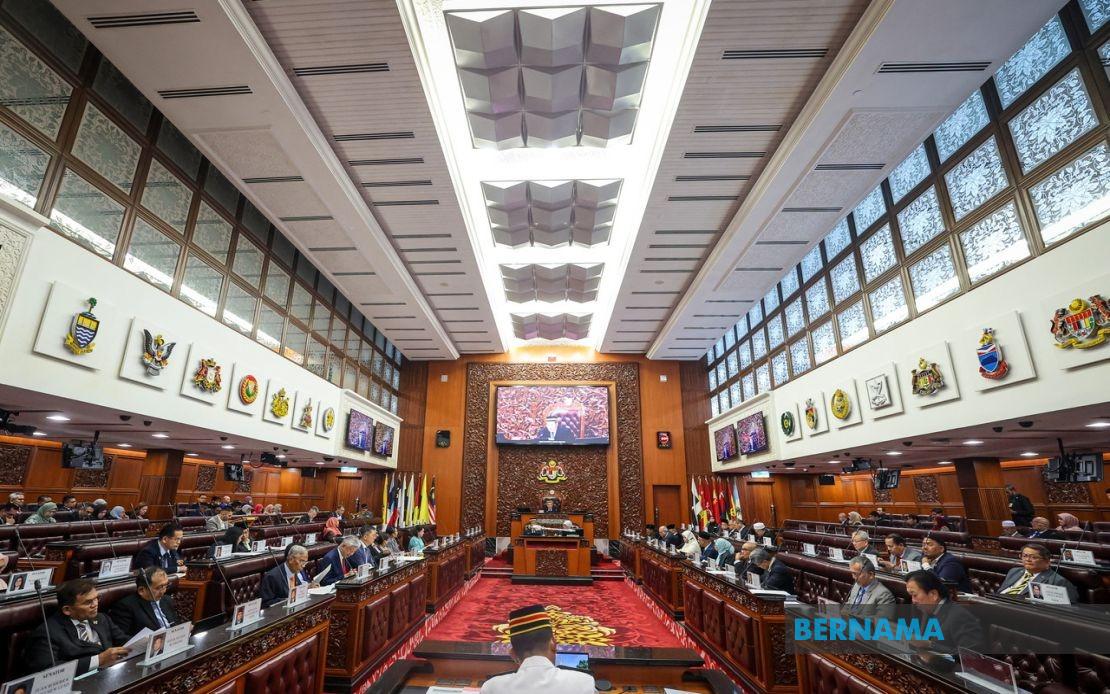
Malaysia's upper house of Parliament, the Dewan Negara, has completed its Second Meeting of the Fifth Term with the successful passage of 12 pieces of legislation after sitting for 10 consecutive days, marking a productive legislative period that addressed diverse policy areas spanning from digital security to agricultural management. The session, which commenced on July 20 and concluded on August 4, demonstrated the chamber's ability to process substantive policy amendments across multiple sectors whilst maintaining rigorous parliamentary scrutiny.
Despite the Upper House's traditional role as a revising chamber with limited legislative initiation powers, this session showcased the Dewan Negara's capacity to thoroughly examine and approve complex bills touching on critical national concerns. The legislative output reflects government priorities in modernising Malaysia's legal and regulatory frameworks to address emerging challenges whilst maintaining established governance structures. The breadth of legislation—spanning cybersecurity, transport safety, child protection, and economic competition—indicates coordinated effort to update multiple legislative areas simultaneously.
Among the most significant measures approved was the Cybercrimes Bill 2026, which represents Malaysia's response to the accelerating digital threat landscape facing the nation. This legislation arrives at a critical juncture as Malaysian individuals, businesses, and institutions face mounting risks from sophisticated online criminal enterprises operating across borders. The passage of this bill strengthens Malaysia's capacity to investigate, prosecute, and prevent cybercriminal activities whilst establishing clearer legal frameworks for digital security obligations across public and private sectors.
Equally notable is the Road Transport (Amendment) Bill 2026, which modernises regulatory provisions governing the nation's transportation sector. This amendment package addresses safety standards, vehicle compliance mechanisms, and enforcement procedures within Malaysia's increasingly complex road transport ecosystem. For Malaysian motorists and transport operators, this legislation codifies enhanced safety standards and clarifies regulatory responsibilities during a period of rapid vehicle technology advancement and growing traffic management challenges.
The legislative agenda also prioritised child protection through the Sexual Offences against Children (Amendment) Bill 2026, strengthening Malaysia's legal arsenal against paediatric abuse and exploitation. This measure acknowledges escalating concerns regarding child safety in both physical and digital environments, providing prosecutors and law enforcement with enhanced tools whilst establishing more robust penalties for offenders. The amendment reflects evolving societal understanding of child protection requirements and Malaysia's international commitments to safeguarding vulnerable populations.
Beyond these headline measures, the Dewan Negara approved amendments to competition law through the Competition (Amendment) Bill 2026 and Competition Commission (Amendment) Bill 2026, advancing Malaysia's commitment to fair market practices and consumer protection. These reforms address market distortions, predatory pricing practices, and monopolistic behaviours affecting Malaysian consumers and small businesses. The legislation strengthens competition authorities' investigative capacities whilst providing clearer guidelines for business conduct across the economy.
Additional bills encompassed the National Trust Fund Bill 2026, establishing mechanisms for managing national financial assets, the Witness Protection (Amendment) Bill 2026 enhancing safety for individuals providing testimony in legal proceedings, and the Communications and Multimedia (Amendment) Bill 2026 alongside corresponding Malaysian Communications and Multimedia Commission amendments, modernising Malaysia's digital regulatory framework. The Social Work Profession Bill 2026 professionalises social work practice, whilst the Padi and Rice Control (Amendment) Bill 2026 addresses agricultural sector concerns. The Statistics Bill 2026 modernises data collection and management protocols essential for evidence-based policy making.
Notably, the Dewan Negara also debated substantive motions during this session, marking the resumption of Adjournment Speech proceedings since 2022 under Standing Order 16. These discussions addressed pressing economic concerns regarding the threat posed by cross-border e-commerce platforms such as Pinduooduo and Temu to Malaysia's micro, small, and medium enterprises and traditional retail sector. This debate reflects growing anxiety among Malaysian small business operators facing intense competition from heavily subsidised foreign digital commerce platforms operating with minimal local regulatory oversight. The parliamentary attention to this issue signals recognition that Malaysia's MSME ecosystem requires strategic policy intervention to remain viable against multinational digital commerce competitors.
A second motion concerned electoral access for auxiliary police members, specifically examining proposals for early voting and postal voting facilities. This debate acknowledges the operational constraints faced by law enforcement auxiliary personnel whose duty schedules frequently conflict with standard polling arrangements, raising broader questions about ensuring inclusive political participation across all citizen categories whilst maintaining electoral integrity and accessibility.
Dewan Negara Speaker Datuk Awang Bemee Awang Ali Basah characterised the session as exemplifying parliamentary democracy's strength through diverse senatorial perspectives enriching legislative scrutiny and policy refinement. He emphasised how the chamber's composition—drawing upon senators with varied professional backgrounds, expertise, and regional representation—strengthens checks and balances whilst enhancing legislative quality. The speaker's comments underscore the Upper House's distinctive role in providing technical expertise and considered deliberation often absent from partisan lower house dynamics.
Connecting the legislative programme to national commemorations, the speaker invoked Malaysia Day and National Day 2026 celebrations as occasions for reaffirming constitutional commitments, particularly defence of national sovereignty, Federal Constitution supremacy, rule of law principles, and national unity. This framing situates legislative modernisation within broader narratives of institutional renewal and democratic resilience as Malaysia navigates complex economic, security, and technological transformations. For Malaysian citizens and regional observers, this legislative session demonstrates the machinery of parliamentary democracy functioning to update legal frameworks addressing genuine contemporary challenges whilst maintaining constitutional equilibrium.

